CM Joseph Vijay Orders High-Level Panel on TN Prison Security
Synopsis
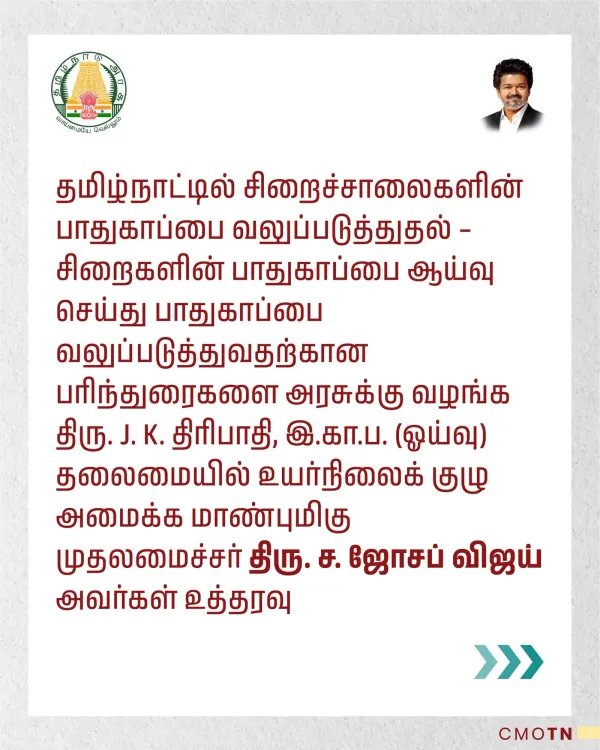
Chief Minister C. Joseph Vijay has ordered a high-level committee chaired by retired IAS officer J.K. Tripathi to study prison security across Tamil Nadu and submit recommendations for strengthening it — a direct, policy-grade intervention in the state's correctional infrastructure.
Key Takeaways
Joseph Vijay ordered the formation of a high-level committee on 2 November 2026 to review Tamil Nadu prison security.
The committee will be chaired by J.K.
Tripathi , a retired IAS officer.
The panel's mandate is to audit existing security measures and submit strengthening recommendations to the Tamil Nadu government.
Prisons are a state subject under India's constitution, making Tamil Nadu solely responsible for its correctional facilities.
Key stakeholders affected include prison staff and inmates across the state's jail network.
The committee's report could trigger budget allocations, infrastructure upgrades, and new security protocols.
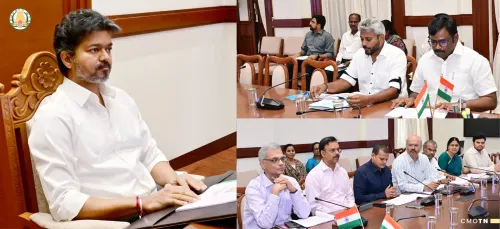
Tamil Nadu's prisons are about to face a hard, expert look — and the findings could reshape how the state locks down its correctional facilities. Chief Minister C. Joseph Vijay on Monday, 2 November 2026, ordered the formation of a high-level committee to audit prison security across Tamil Nadu and submit concrete recommendations to the government.
The Chief Minister's Office announced via the official CMO Tamil Nadu account that the panel will be chaired by J.K. Tripathi, a retired Indian Administrative Service (IAS) officer. The committee's mandate: examine the current state of security protocols in Tamil Nadu's jails and return with actionable measures to strengthen them.
Who Is J.K. Tripathi and Why His Experience Matters
Appointing a retired IAS officer to head such a review is a deliberate signal of seriousness. Senior IAS alumni bring institutional memory, administrative credibility, and the distance from active politics needed to make uncomfortable recommendations. Tripathi's assignment places the review above day-to-day departmental pressures — giving the panel room to be candid about systemic gaps.
Prison Security as a State Responsibility
Under India's constitutional framework, prisons are a state subject — meaning Tamil Nadu alone carries the full weight of managing its correctional infrastructure. Periodic security reviews are part of the governance cycle for states, but they vary sharply in rigour and follow-through. A committee of this stature, reporting directly to the Chief Minister's government, suggests this particular review is intended to produce policy-grade change rather than a routine compliance audit.
Tamil Nadu operates one of the country's more administratively active prison systems. The state has periodically revisited jail administration, staffing, and infrastructure — but independent expert reviews with a formal report-and-recommendation structure are less common and carry greater binding force when they land on the government's desk.
What the Committee's Report Could Unlock
The real test will come when Tripathi's committee submits its findings. A rigorous report could trigger budget allocations for surveillance upgrades, changes to staffing ratios, new protocols for high-security wards, or structural improvements to ageing facilities. The two groups with the most at stake — prison staff and inmates — stand to be directly affected by whatever the panel concludes.
Watch for the committee's timeline, the scope of facilities it inspects, and whether the government acts swiftly on its recommendations — or lets the report gather shelf-dust. In Tamil Nadu's political calendar, how fast this moves will say a great deal about how seriously the Vijay administration treats correctional governance as a public-safety priority.
Frequently Asked Questions
Why has CM Joseph Vijay formed a committee on prison security in Tamil Nadu?
CM C. Joseph Vijay ordered the committee to conduct a thorough review of security conditions in Tamil Nadu's prisons and provide specific recommendations to strengthen them, signalling a proactive governance push on correctional infrastructure.
Who is J.K. Tripathi heading the Tamil Nadu prison security panel?
J.K. Tripathi is a retired IAS (Indian Administrative Service) officer appointed by Chief Minister Joseph Vijay to chair the high-level committee examining and recommending improvements to prison security in Tamil Nadu.
What will the Tamil Nadu prison security committee actually do?
The committee will study the current security setup across Tamil Nadu's jails and submit recommendations to the state government on how to strengthen protocols, infrastructure, and procedures.
Is prison security a state or central government responsibility in India?
Prisons are a state subject under India's constitutional framework, meaning each state government — in this case Tamil Nadu — is solely responsible for managing and upgrading its prison security.
What happens after the committee submits its report to the Tamil Nadu government?
Once J.K. Tripathi's panel submits its report, the Tamil Nadu government is expected to consider its recommendations, which could lead to budget allocations, new security protocols, staffing changes, or infrastructure upgrades across the state's jails.