CM Joseph Vijay Pushes Southern Railways to Fast-Track TN Projects
Synopsis
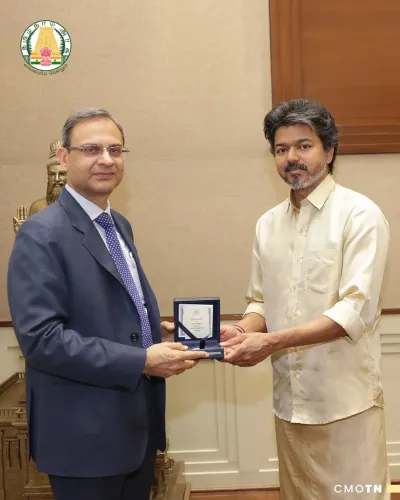
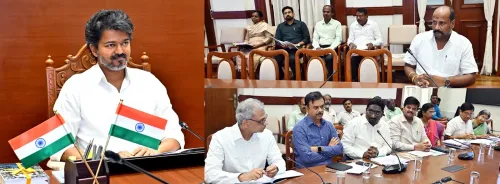
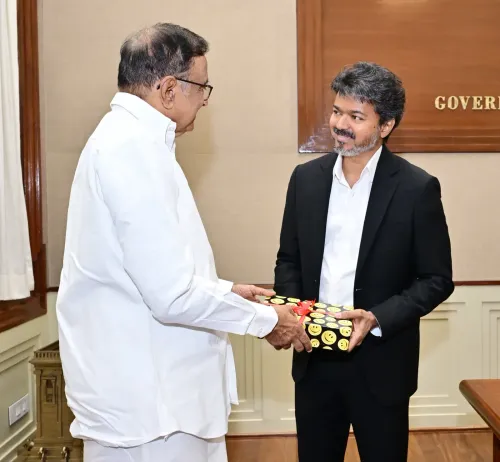
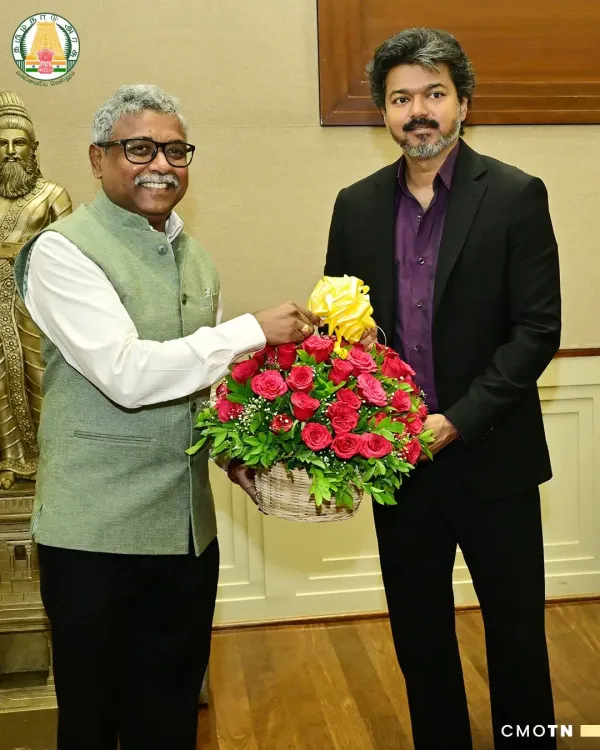
Chief Minister C. Joseph Vijay met Southern Railways General Manager U. Subba Rao at the Tamil Nadu Secretariat on 22 October 2026, pressing for faster execution of pending railway projects and pledging the state government's full support to remove bottlenecks.
Key Takeaways
Joseph Vijay held a meeting with U.
Subba Rao, General Manager of Southern Railways (IRSME) , at the Tamil Nadu Secretariat on 22 October 2026 .
The Chief Minister called for the expeditious execution of ongoing railway projects across Tamil Nadu.
CM Vijay assured 'all necessary support from the Government of Tamil Nadu' to facilitate project delivery.
State-level facilitation — covering land acquisition and clearances — is the key enabler for centrally sanctioned railway schemes.
Indian Railways has sanctioned multiple track-doubling, electrification, and station-redevelopment projects in Tamil Nadu since 2019 .
The meeting signals high-level political accountability for railway project timelines in the state.
Railway connectivity in Tamil Nadu just got a high-level push. On 22 October 2026, Chief Minister C. Joseph Vijay met U. Subba Rao, General Manager of Southern Railways, at the Tamil Nadu Secretariat in Chennai — and came away from the courtesy call with a clear message delivered: speed up, and the state will back you fully.
The Chief Minister's Office confirmed that CM Vijay urged the expeditious execution of ongoing railway projects across the state and gave a firm assurance of 'all necessary support from the Government of Tamil Nadu.' Subba Rao, an officer of the Indian Railway Service of Mechanical Engineers (IRSME), called on the Chief Minister in a formal courtesy visit — the kind of meeting that, in Indian infrastructure governance, often functions as a pressure valve and a problem-solver rolled into one.
Why Land and Clearances Hold the Key
The real bottleneck for most pending railway projects in Tamil Nadu — as with much of India — is not funding but ground-level facilitation: land acquisition, local clearances, and coordinated utility shifting. That is precisely where state governments hold the lever. CM Vijay's assurance of support is, in effect, a commitment to unblock those choke points.
Indian Railways has sanctioned multiple track-doubling, electrification, and station-redevelopment projects in Tamil Nadu through successive annual budgets since 2019. Several of these have moved slower than projected, caught between central execution timelines and state-level procedural requirements. A high-level signal from the Chief Minister's office — addressed directly to the zonal general manager — carries real operational weight.
Southern Railways' Footprint Across Tamil Nadu
Southern Railways, headquartered in Chennai, is the zonal railway authority covering Tamil Nadu and parts of neighbouring states. Its project pipeline includes corridor upgrades feeding into broader economic connectivity — port links, industrial-cluster access, and suburban network expansion in the Chennai metropolitan region. Each of these ties directly to the state's growth agenda.
Centre-state coordination on railway infrastructure is a recurring feature of Indian governance: the Ministry of Railways sanctions and funds, but execution on the ground depends critically on state cooperation. Southern states, including Tamil Nadu, have seen sustained emphasis on connectivity upgrades to support emerging economic corridors along India's southern coast.
What Commuters and Businesses Are Watching
For millions of Tamil Nadu commuters and businesses that depend on freight and passenger rail, the pace of project delivery translates directly into daily convenience and commercial cost. Track-doubling reduces delays; electrification cuts emissions and running costs; modernised stations signal a changed passenger experience. The Chief Minister's personal intervention puts political accountability squarely behind the delivery timeline — and puts the Southern Railways GM on notice that the state is watching.
The next indicator to track: whether today's meeting is followed by a formal review mechanism between state officials and the Railway Board, or whether specific project milestones are set in the weeks ahead.
Point of View
Where political visibility accelerates bureaucratic momentum. By personally flagging the need for speed and coupling it with a state-support pledge, Vijay is placing himself at the centre of a delivery narrative that matters to voters across Tamil Nadu's rail-dependent districts. The broader pattern is significant: as India pushes connectivity upgrades along its southern economic corridors, states that actively coordinate with railway authorities tend to see faster disbursement and execution. The real test will come in the follow-through — whether this meeting seeds a formal review mechanism or fades as a one-off courtesy.
NationPress
22 Oct 2026
Frequently Asked Questions
Who did CM Joseph Vijay meet regarding Tamil Nadu railway projects?
CM C. Joseph Vijay met U. Subba Rao , General Manager of Southern Railways (IRSME), at the Tamil Nadu Secretariat on 22 October 2026 to discuss expediting railway projects in the state.
What did CM Vijay say about Tamil Nadu railway projects?
CM Vijay urged the expeditious execution of ongoing railway projects in Tamil Nadu and assured the Southern Railways General Manager of 'all necessary support from the Government of Tamil Nadu.'
What is Southern Railways and what projects does it handle in Tamil Nadu?
Southern Railways is the Indian Railways zonal authority headquartered in Chennai , responsible for rail operations and projects in Tamil Nadu and neighbouring states, including track-doubling, electrification, and station-redevelopment schemes.
Why do railway projects in Tamil Nadu get delayed?
A major reason for delays is ground-level facilitation — land acquisition, local clearances, and utility shifting — which requires active state government cooperation alongside central Railways funding and execution.
What is the significance of state support for railway infrastructure?
While the Ministry of Railways sanctions and funds projects, state governments control land acquisition and clearances that are critical to actual execution. A Chief Minister's personal assurance of support can directly unblock stalled projects.