CM Karnataka Celebrates State's Four UNESCO Heritage Sites
Synopsis
The Chief Minister's Office of Karnataka celebrated the state's four UNESCO World Heritage Sites on 9 November 2026 — Hampi (1986), Pattadakal (1987), the Sacred Ensembles of the Hoysalas (2023), and the Western Ghats (2012) — in a proud Kannada tribute to Karnataka's cultural and natural legacy.
Key Takeaways
Hampi was inscribed as a UNESCO World Heritage Site in 1986 for its Vijayanagara-era Dravidian architecture.
Pattadakal received UNESCO status in 1987 as a Chalukya site blending northern and southern temple styles.
The Sacred Ensembles of the Hoysalas — covering Belur, Halebidu, and Somanathapura — were inscribed in 2023 , the most recent addition.
The Western Ghats were designated a UNESCO natural World Heritage Site in 2012 for exceptional biodiversity.
Karnataka is among the few Indian states with four UNESCO World Heritage Sites spanning both cultural and natural categories.
The Hoysala nomination succeeded as a clustered ensemble bid , reflecting India's strategic approach to UNESCO nominations.
Four UNESCO World Heritage Sites in a single state — Karnataka wears that distinction with quiet, extraordinary pride, and the Chief Minister's Office of Karnataka put that pride on full display on Monday, 9 November 2026, with a sweeping tribute to the heritage landmarks that define the land.
The post, written in Kannada, declares: 'ನಮ್ಮ ಕರುನಾಡ ಪರಂಪರೆಯ ಚೆಲುವಿಗೆ ಯುನೆಸ್ಕೋ ಮನ್ನಣೆ!' — 'UNESCO recognition for the beauty of our Karnataka's heritage!' It names Hampi, Pattadakal, Belur-Halebidu and Somanathapura, and the Western Ghats as symbols of the state's enduring glory, closing with the declaration: 'Our land, which cradles a magnificent history, is great for all time.'
From Vijayanagara to Chalukya: the stone legacy UNESCO first recognised
The story begins in 1986, when UNESCO inscribed the Group of Monuments at Hampi — the ruined capital of the Vijayanagara Empire — as a World Heritage Site for its breathtaking Dravidian architecture spread across a boulder-strewn landscape on the banks of the Tungabhadra. Just a year later, in 1987, the Group of Monuments at Pattadakal joined the list. A Chalukya-era ceremonial site, Pattadakal is rare for its seamless blend of northern nagara and southern dravida temple styles — a stone dialogue between two great architectural traditions.
Together, these two inscriptions placed Karnataka on the global heritage map within two consecutive years, a feat few Indian states can claim.
The Hoysala triumph of 2023 and the Western Ghats' natural crown
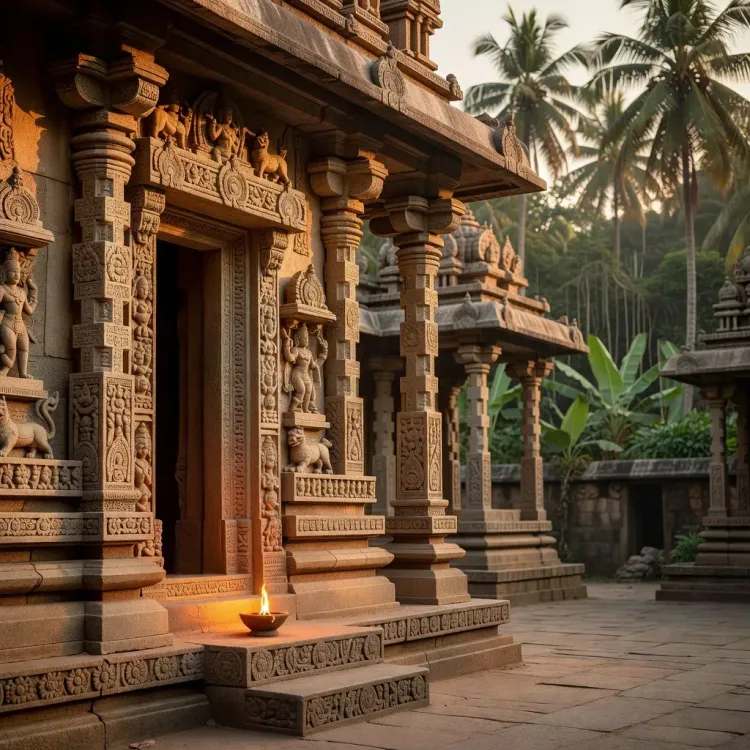
The most recent cultural milestone came in 2023, when the Sacred Ensembles of the Hoysalas — encompassing the temples at Belur, Halebidu, and Somanathapura — received UNESCO inscription. These 12th-century masterpieces are celebrated for their stellate ground plans and an almost obsessive intricacy of stone carving: friezes of elephants, horses, mythological narratives, and celestial figures stacked in horizontal bands across every surface. The Kesava Temple at Somanathapura, compact and perfectly proportioned, is considered among the finest surviving examples of Hoysala craftsmanship anywhere.
Alongside this cultural heritage sits a natural one. The Western Ghats, inscribed by UNESCO in 2012, stretch along Karnataka's western edge as one of the world's eight hottest biodiversity hotspots. Older than the Himalayas, they shelter thousands of plant species, tigers, Asian elephants, and critically endangered amphibians — a living archive of evolution that the UNESCO inscription formally acknowledged.
Karnataka's heritage as a strategic asset
Karnataka's UNESCO portfolio is not merely a source of cultural pride — it is a tourism and conservation framework. Successive state governments have channelled central and state archaeology department funds into site conservation at Hampi and the Hoysala cluster, while the Western Ghats listing has reinforced environmental protection arguments in a range of forest-use debates. India's broader strategy of nominating clustered heritage ensembles — rather than single monuments — to maximise UNESCO recognition is well illustrated by the Hoysala grouping, which bundled three sites into a single successful bid.
Four UNESCO designations. Centuries of empire, devotion, and biodiversity compressed into stone and forest. Karnataka's argument for greatness doesn't need to be made — it has already been carved.
Point of View
Lending international legitimacy to what are essentially domestic tourism and conservation priorities. The 2023 Hoysala inscription — the most recent in the state's portfolio — demonstrates that India's clustered-nomination strategy is bearing fruit, and Karnataka is its clearest exhibit. For the ruling government, associating itself publicly with UNESCO-recognised heritage is low-risk, high-return politics: it signals custodianship of civilisational pride without entering contested policy terrain. The real governance test, however, lies in whether conservation funding and site-management quality keep pace with the prestige these designations confer.
NationPress
9 Nov 2026
Frequently Asked Questions
How many UNESCO World Heritage Sites are in Karnataka?
Karnataka has four UNESCO World Heritage Sites: the Group of Monuments at Hampi (1986), the Group of Monuments at Pattadakal (1987), the Sacred Ensembles of the Hoysalas — Belur, Halebidu, and Somanathapura (2023) — and the Western Ghats (2012).
When was Hampi declared a UNESCO World Heritage Site?
Hampi was inscribed as a UNESCO World Heritage Site in 1986, recognised for the Dravidian architectural ruins of the Vijayanagara Empire capital along the Tungabhadra River.
When did the Hoysala temples get UNESCO status?
The Sacred Ensembles of the Hoysalas, covering temples at Belur, Halebidu, and Somanathapura, were inscribed as a UNESCO World Heritage Site in 2023, making it Karnataka's most recently recognised listing.
Why are the Western Ghats a UNESCO World Heritage Site?
The Western Ghats were designated a UNESCO natural World Heritage Site in 2012 for their exceptional biodiversity, including thousands of plant species and endangered wildlife such as tigers and Asian elephants.
What is the Kesava Temple at Somanathapura known for?
The Kesava Temple at Somanathapura is a well-preserved 12th-century Hoysala monument celebrated for its stellate ground plan and densely carved stone sculptures depicting mythological narratives and celestial figures.