Hormuz Strait oil tanker hits mines, Iran warns of closure amid US blockade
Synopsis
Three oil tankers hit naval mines in the Strait of Hormuz in a single day — and the US simultaneously disabled a vessel in the Gulf of Oman that defied the blockade against Iran. With Tehran warning the strait will stay shut until all threats are lifted, one of the world's most vital energy corridors is now a live warzone.
Key Takeaways
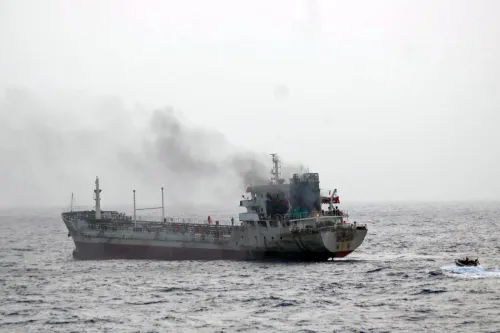
An oil tanker caught fire after hitting naval mines east of the Strait of Hormuz on 9 November 2026 — the third such incident within a single day.
Iran's Army Navy warned the strait will remain closed to vessels unless 'all threats are lifted.' The IRGC Navy confirmed the tanker explosion caused a 'massive fire' and said the vessel was in an 'unauthorised' corridor with its identification systems switched off.
US CENTCOM disclosed that a military aircraft fired precision munitions at the St.
Kitts -flagged M/V Huda in the Gulf of Oman after it repeatedly attempted to breach the naval blockade.
Since July , US forces have redirected 147 commercial vessels and disabled five merchant ships for non-compliance.
Iran barred passage to Israeli- and US-affiliated vessels from 28 February following strikes on Iranian territory; the US responded with a naval blockade.
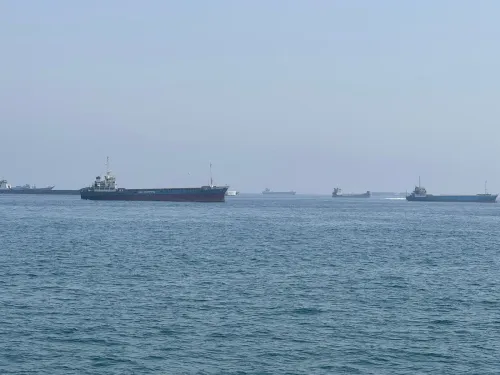
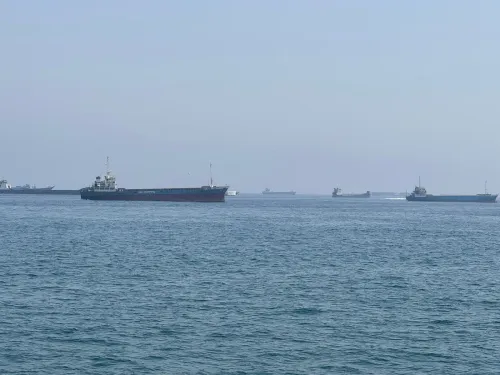
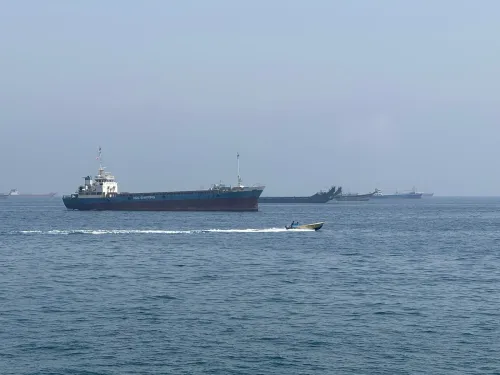
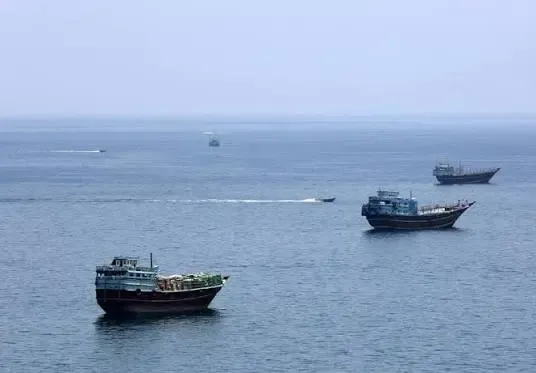
An oil tanker caught fire after striking naval mines east of the Strait of Hormuz on 9 November 2026, with Iran's Army Navy confirming the vessel had disabled its identification systems and was transiting a 'forbidden' zone when the explosion occurred. The incident marks the third oil tanker to hit mines in the strait's 'unauthorised' route within a single day, dramatically escalating tensions in one of the world's most critical energy chokepoints.
Key Developments
Iran's Army Navy, in a statement on its official website, said the tanker had switched off its transponders and entered a restricted corridor east of the strait before hitting the mines. The navy issued a stark warning: the Strait of Hormuz will remain closed to vessels unless 'all threats are lifted.'
Earlier the same day, the navy of Iran's Islamic Revolutionary Guard Corps (IRGC) had separately confirmed the incident via its official outlet Sepah News, stating that the explosion triggered a 'massive fire' on the vessel. The IRGC Navy noted this was the third such incident since the start of 9 November.
US Military Action in the Gulf of Oman
US Central Command (CENTCOM) announced on X that its forces had disabled a commercial vessel in the Gulf of Oman after the civilian crew 'ignored repeated warnings and attempted to violate the naval blockade against Iran multiple times.' According to CENTCOM, 'A US military aircraft fired precision munitions at the stern of St. Kitts-flagged M/V Huda, disabling the ship after CENTCOM forces directed the crew to abandon targeted spaces. The cargo vessel tried to depart regional waters after visiting an Iranian port.'
CENTCOM further stated that since July, US forces have redirected 147 commercial vessels and disabled five merchant ships that refused to comply with the blockade — underscoring the sustained scale of enforcement operations in the region.
How the Standoff Began
The crisis traces back to 28 February, when Iran tightened its grip on the strait, barring safe passage to vessels belonging to or affiliated with Israel and the United States following what Tehran described as joint strikes on Iranian territory. The United States subsequently imposed a naval blockade against Iran, setting up a persistent confrontation in waters through which roughly 20% of globally traded oil passes.
Notably, the simultaneous actions by Iran's Army Navy and the IRGC Navy — two distinct military structures — signal a coordinated posture rather than isolated incidents, analysts would likely note. The convergence of Iranian mine activity and US vessel-disabling operations in the same 24-hour window represents one of the sharpest single-day escalations since the blockade began.
What This Means for Global Energy Markets
Three tanker incidents in a single day at the Strait of Hormuz — through which a significant share of Gulf crude exports flow — will almost certainly draw emergency attention from energy traders and importing nations, including India, which sources a substantial portion of its oil from the Persian Gulf. Any sustained closure of the strait would have immediate knock-on effects on global crude prices and Indian fuel costs. The situation remains fluid, with no ceasefire or diplomatic resolution in sight.
Point of View
Not merely threaten them. The simultaneous US disabling of the M/V Huda shows Washington is equally determined to enforce its blockade, creating a volatile standoff where both sides are now actively shooting. For India, which depends heavily on Gulf crude and whose tankers transit the strait routinely, this is not a distant geopolitical drama — it is an energy security emergency in real time. The critical question mainstream coverage underplays is what happens to global insurance markets and spot freight rates if three-strikes-a-day becomes the new normal in Hormuz.
NationPress
9 Nov 2026
Frequently Asked Questions
What happened to the oil tanker in the Strait of Hormuz on 9 November?
An oil tanker caught fire after hitting naval mines east of the Strait of Hormuz on 9 November 2026. Iran's Army Navy said the vessel had disabled its identification systems and was transiting a 'forbidden' zone when the explosion occurred, and it was the third tanker to hit mines in the strait's unauthorised route that day.
Why is Iran mining the Strait of Hormuz?
Iran tightened control over the Strait of Hormuz from 28 February, barring safe passage to vessels belonging to or affiliated with Israel and the United States following what Tehran described as joint strikes on Iranian territory. The mines are part of Iran's enforcement of this restriction on what it terms 'unauthorised' routes.
What did US CENTCOM do in the Gulf of Oman?
US Central Command said its forces disabled the St. Kitts-flagged cargo vessel M/V Huda in the Gulf of Oman after its crew repeatedly attempted to violate the naval blockade against Iran. A US military aircraft fired precision munitions at the stern of the ship after the crew ignored warnings to abandon targeted spaces.
How many vessels has the US blockade redirected or disabled so far?
Since July, US forces have redirected 147 commercial vessels and disabled five merchant ships, including M/V Huda, for refusing to comply with the naval blockade against Iran, according to CENTCOM.
What does the Hormuz closure warning mean for global oil supplies?
The Strait of Hormuz is one of the world's most critical energy chokepoints, through which a significant share of Gulf crude exports flows. Iran's warning that the strait will remain closed until all threats are lifted raises the risk of supply disruptions that could sharply push up global crude prices and directly affect countries like India that source large volumes of oil from the Persian Gulf.