CM Karnataka Hails 1902 Shivanasamudra as Asia's First Hydro Plant
Synopsis
The Chief Minister's Office of Karnataka honours the 1902 Shivanasamudra Hydroelectric Power Station on the Cauvery river — Asia's first commercial hydro facility — crediting it with igniting the state's modern industrial and technological story.
Key Takeaways
Karnataka's CMO posted a tribute on 8 November 2026 to the 1902 Shivanasamudra Hydroelectric Power Station .
The station, built on the Cauvery river in the erstwhile Mysore state, is recognised as Asia's first commercial hydroelectric facility .
Its earliest power consumers were the Kolar Gold Fields and the city of Bangalore .
The project is seen as the starting point of a hydroelectric lineage that later produced the Sharavathi Valley Project in the 1960s.
Karnataka continues to position this 1902 milestone as central to its identity as India's technology and innovation hub.
A waterfall on the Cauvery river quietly rewired the future of an entire subcontinent — and Karnataka's Chief Minister's Office wants the country to remember it. On Sunday, 8 November 2026, the office posted a tribute to the Shivanasamudra Hydroelectric Power Station, calling it the foundation of the state's modern industrial and technological revolution.
The post, written in Kannada, notes: '1902ರಲ್ಲಿ ಶಿವನಸಮುದ್ರದಲ್ಲಿ ಆರಂಭವಾದ ಏಷ್ಯಾದ ಮೊಟ್ಟಮೊದಲ ವಾಣಿಜ್ಯಿಕ ಜಲವಿದ್ಯುತ್ ಕೇಂದ್ರ' — 'Asia's first commercial hydroelectric power station, which began at Shivanasamudra in 1902, laid the firm foundation for Karnataka's modern industrial and technological revolution. The glory of transforming a natural resource into the power of progress belongs to our Karnataka.'
The waterfall that lit up the Kolar gold mines
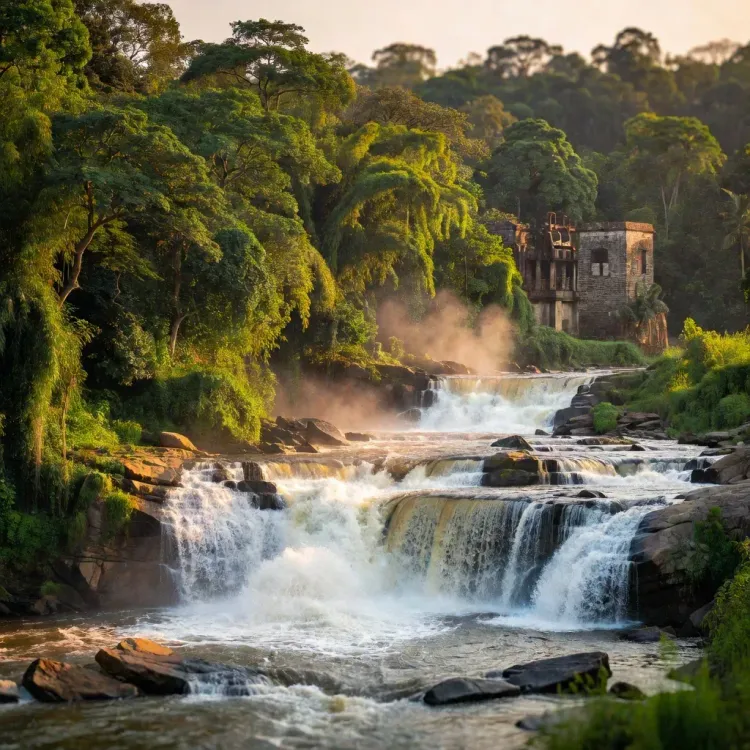
Commissioned in 1902 near the dramatic falls of the Cauvery river in what was then the princely state of Mysore, Shivanasamudra holds a singular place in South Asian industrial history — it is widely recognised as Asia's first commercial hydroelectric facility. The station's earliest customers were not city homes but the deep-shaft Kolar Gold Fields, which needed reliable, high-volume power to run their pumps and hoists. Bangalore followed, becoming one of the earliest cities in India to receive grid electricity.
The ambition behind the project was remarkable for its era. The then-Mysore administration was running infrastructure experiments that most colonial territories would not attempt for decades. Harnessing the natural drop of the Cauvery's twin falls — Gaganachukki and Bharachukki — the engineers of 1902 converted gravity into industry.
A lineage that runs from 1902 to pumped-storage today
Shivanasamudra was not a one-off triumph. It seeded a broader electrification ambition in what became Karnataka after the States Reorganisation Act of 1956. The Sharavathi Valley Project in the 1960s extended that hydroelectric lineage into the Western Ghats, eventually becoming one of the state's largest power assets. Successive state governments have consistently cited the 1902 milestone when framing Karnataka's identity as a technology-forward state — a narrative that today extends to the IT corridors of Bengaluru and emerging renewable-energy investments in the Cauvery basin.
The post arrives as Karnataka and other southern states are actively exploring pumped-storage hydroelectric projects as a complement to solar and wind capacity, giving the 124-year-old story a live policy echo.
Point of View
Especially as the renewables transition puts hydropower back at the centre of energy policy debates. For Karnataka specifically, reminding voters that the state led Asia in power infrastructure as far back as 1902 serves as a soft argument for continued investment in hydro and pumped-storage projects on the Cauvery. The timing, absent a confirmed anniversary, suggests the CMO is cultivating a running heritage narrative rather than responding to a single event.
NationPress
8 Nov 2026
Frequently Asked Questions
Where is the Shivanasamudra Hydroelectric Power Station?
The station is located near the Shivanasamudra falls on the Cauvery river in the Mandya district of Karnataka, roughly 130 km from Bengaluru.
Why is Shivanasamudra called Asia's first commercial hydroelectric plant?
Commissioned in 1902 , Shivanasamudra was the first plant in Asia to generate and transmit hydroelectricity on a commercial scale — initially supplying power to the Kolar Gold Fields over a long-distance transmission line, a pioneering feat for the era.
Who built the Shivanasamudra power station?
The station was developed under the patronage of the Mysore princely state , which had an ambitious programme of industrial and infrastructure development in the late 19th and early 20th centuries.
What was the first use of Shivanasamudra's electricity?
The electricity generated was first transmitted to the Kolar Gold Fields to power mining operations, and subsequently extended to Bangalore for urban lighting and industrial use.
What is Karnataka's role in India's hydropower sector today?
Karnataka remains a significant hydropower producer, with major assets including the Sharavathi Valley Project . The state is now also exploring pumped-storage hydroelectric projects as part of its renewable-energy expansion strategy.