CM Pema Khandu Receives Book on Mopin Festival History
Synopsis
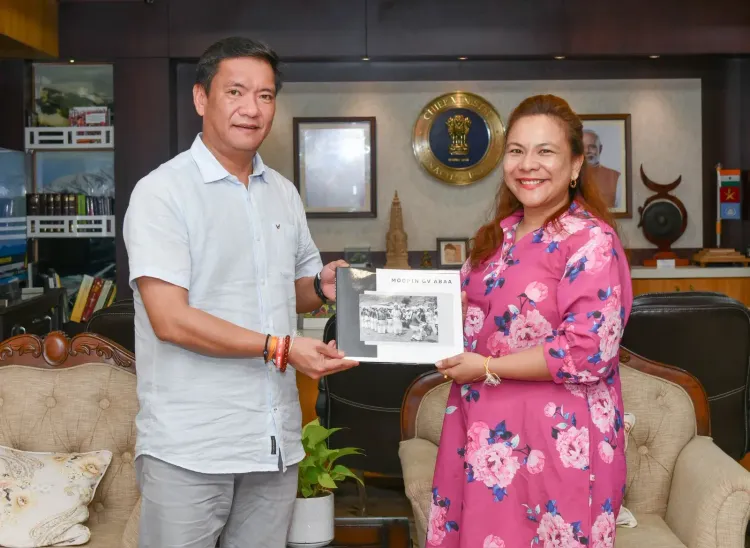
Arunachal Pradesh Chief Minister Pema Khandu received 'MOOPIN GV ABAA, A Brief History of Mopin' by Dambi Jini, praising the book as a vital effort to preserve the Galo tribe's spring festival in written form for future generations.
Key Takeaways
CM Pema Khandu received a copy of 'MOOPIN GV ABAA, A Brief History of Mopin' authored by Dambi Jini .
The book documents the journey of the Mopin festival as celebrated in Itanagar , Arunachal Pradesh's state capital.
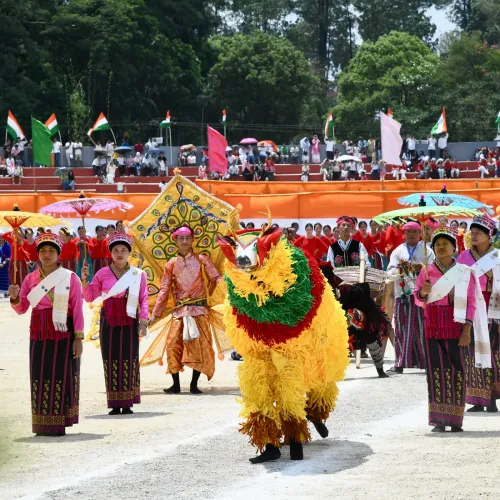
Mopin is the traditional spring and agricultural festival of the Galo tribe , rooted in oral tradition.
Khandu described the work as 'an important effort to preserve the journey of Mopin in written form.' The gesture aligns with a broader pattern of state leaders in Arunachal Pradesh supporting written documentation of tribal heritage.
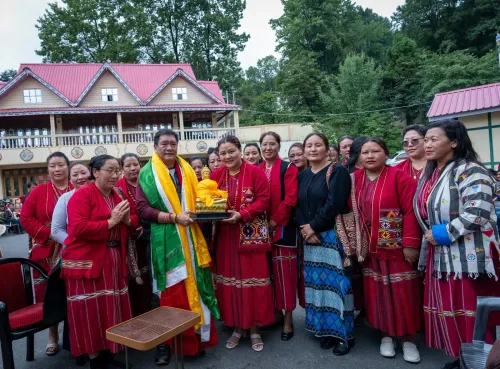
A handwritten record of a living tradition just found a powerful new reader. Arunachal Pradesh Chief Minister Pema Khandu received a copy of 'MOOPIN GV ABAA, A Brief History of Mopin' — a work by author Dambi Jini documenting the journey of the Mopin festival as celebrated in the state capital, Itanagar — and used the moment to spotlight what he called 'a sincere effort' to carry the spirit of Mopin forward to the next generation.
What Mopin is — and why writing it down matters
Mopin is the spring and agricultural festival of the Galo tribe, one of Arunachal Pradesh's most prominent indigenous communities. Celebrated with folk dance, ritual, and communal feasting, it marks the onset of a new agricultural cycle and is deeply embedded in Galo oral tradition. That oral dimension is precisely what makes a written record significant: traditions passed down through performance and memory are inherently vulnerable to generational erosion, and a documented history creates an anchor that survives displacement, urbanisation, and the drift of time. Dambi Jini's book focuses specifically on Mopin celebrations in Itanagar — the state capital — tracing the festival's journey in an urban, administrative setting rather than its rural heartland. That distinction carries weight. How a tribal festival adapts, persists, and is reinterpreted in a capital city is itself a story worth preserving.A Chief Minister's reception — and what it signals
Khandu's acknowledgement is more than a courtesy. State leaders in Arunachal Pradesh have periodically championed publications that document indigenous festivals and oral traditions, and such gestures carry tangible consequence: they lend cultural legitimacy to preservation efforts, signal state-level interest to funding bodies, and encourage similar documentation across the state's more than 26 major tribes. Arunachal Pradesh is among India's most ethnically and linguistically diverse states, and the gap between living practice and written record remains wide for many communities. By publicly appreciating Jini's work, the Chief Minister places it within a broader conversation about what it means to safeguard intangible heritage — not through museum glass, but through ink and intention.Point of View
Rather than direct funding, to validate preservation efforts. The real test will be whether such endorsements translate into institutional support — archiving, curriculum inclusion, or state-backed publishing — for the many Galo and non-Galo traditions that still lack a written record.
NationPress
22 Sept 2026
Frequently Asked Questions
What is the Mopin festival in Arunachal Pradesh?
Mopin is a traditional spring and agricultural festival celebrated by the Galo tribe of Arunachal Pradesh, marked by folk dance, ritual, and communal feasting to welcome a new agricultural cycle.
Why did CM Pema Khandu receive the Mopin book?
Khandu received the book as a gesture of appreciation for Dambi Jini's effort to preserve the history of the Mopin festival in written form, publicly endorsing the work's cultural significance.
What is the Galo tribe?
The Galo are one of the prominent indigenous tribes of Arunachal Pradesh, with a rich oral tradition that includes the Mopin spring festival as a central cultural practice.
Why is documenting tribal festivals in Arunachal Pradesh important?
Arunachal Pradesh is home to more than 26 major tribes whose traditions are largely oral. Written documentation creates a durable record that can survive generational change, urbanisation, and cultural drift.