CM Majhi deploys 5 engineers to Berhampur after Cyclone Arnab floods
Synopsis
Odisha CM Mohan Charan Majhi on 1 November 2026 deployed five additional engineers to Berhampur Municipal Corporation to restore drainage, resolve waterlogging, and accelerate relief after post-Cyclone Arnab flooding — calling every life the government's highest priority.
Key Takeaways
Five additional engineers deployed by Odisha state government to Brahmapur Municipal Corporation (BeMC) on 1 November 2026 .
Deployment targets three specific goals: normalising drainage, eliminating waterlogging, and delivering relief to affected residents.
Action follows Cyclone Arnab and resulting urban flooding in Berhampur , Odisha's key southern commercial city.
CM Majhi stated that 'every life and public safety is the highest priority' during the disaster.
Odisha's response draws on institutional infrastructure built under the Disaster Management Act 2005 and refined after Cyclone Fani 2019 .
Progress on drainage restoration and further resource allocation will be watched in coming weeks.
When floodwaters linger after a cyclone, the fight shifts from rescue to recovery — and Odisha Chief Minister Mohan Charan Majhi is moving fast on that second front. On Sunday, 1 November 2026, the state government announced the deployment of five additional engineers to the Brahmapur Municipal Corporation (BeMC) to accelerate relief and rehabilitation in the wake of Cyclone Arnab.
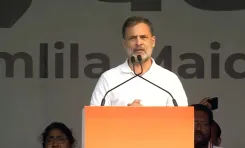
Posting in Odia on X, CM Majhi stated: 'Five additional engineers have been deployed by the state government at Brahmapur Municipal Corporation to strongly tackle the post-cyclone Arnab flood situation and speed up relief and recovery work.' He added that the administration is 'completely alert and active' to normalise drainage, resolve waterlogging immediately, and ensure essential assistance reaches affected residents. His message closed with a direct commitment: 'During a disaster, every life and public safety is the highest priority of our government.'
Why Berhampur, and why engineers?
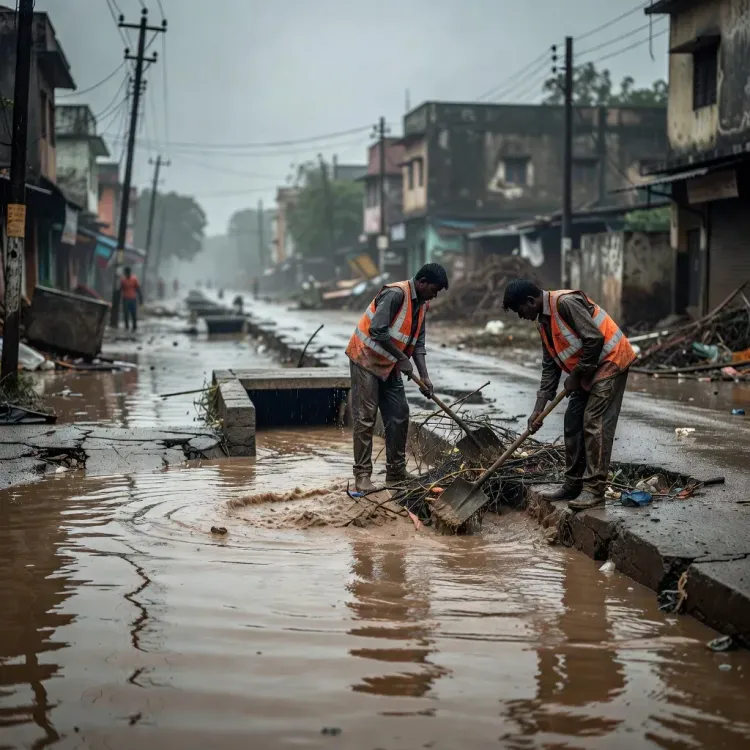
Berhampur — Odisha's third-largest city and a commercial hub in the state's southern belt — sits in a coastal zone repeatedly battered by Bay of Bengal weather systems. When a cyclone crosses the coast nearby, urban drainage infrastructure takes the first and hardest hit: channels silt up, stormwater backs into streets, and waterlogging can persist for days even after rain stops. Sending qualified engineers directly into the municipal body puts technical decision-making at the point of failure rather than in a distant state capital office.
The Brahmapur Municipal Corporation, the urban local body responsible for civic services across the city, now has this rapid technical reinforcement to run round-the-clock drainage restoration operations. The three stated priorities — normalising the drainage network, eliminating waterlogging, and pushing relief supplies to last-mile beneficiaries — follow a sequenced logic: clear the water first, then move aid.
Odisha's deep muscle memory on cyclone response
Odisha has spent three decades building one of India's most battle-tested disaster-management systems. The Odisha State Disaster Management Authority, set up under the Disaster Management Act 2005, coordinates cyclone and flood response across the state's 30 districts. The template was stress-tested and refined after Cyclone Fani in 2019, which made landfall near Puri at wind speeds of up to 175 km/h — and yet resulted in remarkably low civilian casualties because of pre-positioned resources and rapid administrative mobilisation.
The pattern CM Majhi is following — deploying additional technical staff to municipal bodies during emergencies — is a direct continuation of that institutional muscle memory. What changes under the current BJP-led administration, which came to power after the 2024 Odisha assembly elections, is the political ownership of that machinery, not the machinery itself.
What comes next for flood-hit residents
The immediate test is speed. Floodwater that sits in urban areas for more than 48–72 hours compounds health risks — contaminated water, vector-borne disease, structural damage — and every hour of delay in drainage restoration is a multiplier on those risks. The deployment of engineers signals intent; the restoration timeline will determine impact. Majhi's government has said progress on drainage normalisation and further resource allocations in coming weeks will be the metrics to watch.
Point of View
Engineering capacity on the ground is as critical as rescue operations. The move also carries political messaging — that the BJP-led government inherited Odisha's disaster-management apparatus and intends to use it visibly and effectively. Berhampur's strategic importance as a southern commercial hub means prolonged flooding there carries both humanitarian and economic costs that the administration cannot afford to be seen ignoring. The real test of this posture will be the speed and completeness of drainage restoration, not the announcement alone.
NationPress
1 Nov 2026
Frequently Asked Questions
What did Odisha CM Mohan Majhi announce after Cyclone Arnab?
CM Mohan Charan Majhi announced on 1 November 2026 that five additional engineers have been deployed to the Brahmapur Municipal Corporation to accelerate relief, drainage restoration, and waterlogging resolution in flood-affected areas.
Which city was most affected by post-Cyclone Arnab flooding in Odisha?
Berhampur (also spelled Brahmapur), Odisha's third-largest city and a southern commercial hub, was specifically targeted for emergency deployment of engineers to address post-Cyclone Arnab flooding.
What is the Brahmapur Municipal Corporation (BeMC)?
The Brahmapur Municipal Corporation is the urban local body responsible for civic services — including drainage, infrastructure, and sanitation — in Berhampur city in Odisha's Ganjam district.
How does Odisha manage cyclone and flood disasters?
Odisha operates through the Odisha State Disaster Management Authority, established under the Disaster Management Act 2005. The state built one of India's strongest cyclone-response frameworks following major events like Cyclone Fani in 2019.
When did Mohan Charan Majhi become Chief Minister of Odisha?
Mohan Charan Majhi became Chief Minister of Odisha in 2024 after the BJP won the state assembly elections, ending the Biju Janata Dal's long run in power.