CM Majhi Deploys Vet Teams to Guard Livestock in Odisha Floods
Synopsis
Odisha CM Mohan Charan Majhi has directed veterinary teams to provide field-level health checks, medicines, and treatment to livestock as the state prepares for potential monsoon flooding, declaring equal priority for animal and human safety.
Key Takeaways
Odisha CM Mohan Charan Majhi announced on 31 July 2026 that the state is giving equal priority to livestock and human safety during potential floods.
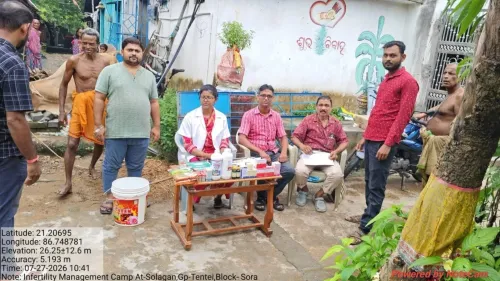
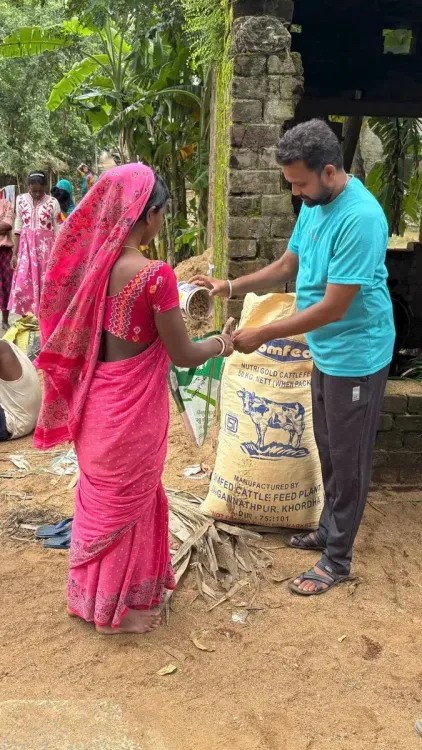
Veterinary teams have been deployed at the field level to provide health examinations, medicines, and treatment to animals.
The post specifically emphasised sensitivity toward livestock as 'voiceless' beings unable to communicate their needs.
Odisha has formally integrated animal husbandry into disaster management since the 1999 super cyclone .
State efforts align with national guidelines from the Ministry of Fisheries, Animal Husbandry and Dairying on animal disaster response.
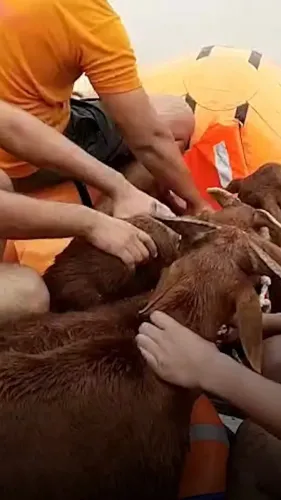
Livestock protection in Odisha is a livelihood issue — animals represent critical economic assets for rural farming households.
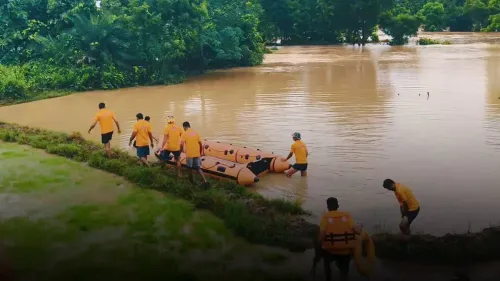
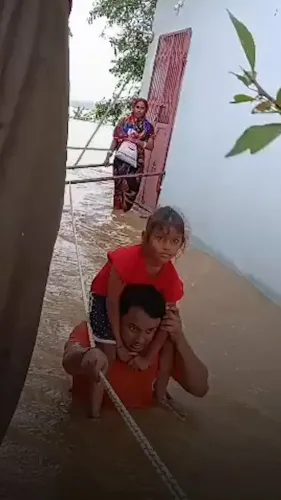
As monsoon floodwaters threaten Odisha's villages, Chief Minister Mohan Charan Majhi has made an unusual public commitment — that the state's disaster response will treat animal lives with the same urgency as human ones.
Posting in Odia on 31 July 2026, Majhi stated that the state government is giving equal importance to protecting citizens and livestock in the face of a potential flood situation. 'କଥା କହିପାରୁ ନଥିବା ଏହି ପ୍ରାଣୀସମ୍ପଦ' — 'these voiceless animals' — he wrote, framing the deployment as an act of sensitivity toward creatures that cannot speak for themselves. Veterinary teams have been mobilised to provide on-the-ground health checks, medicines, and treatment services.
Voiceless animals, official mandate
For rural Odisha, livestock is not sentiment — it is livelihood. A single cow or pair of bullocks can represent a family's savings, credit access, and farming capacity for years. Flood losses to animals have historically been as devastating to rural households as damage to homes. Majhi's framing — equal priority — signals that veterinary response is not an afterthought this season but a stated policy commitment. Odisha has been building this architecture for over two decades. After the catastrophic 1999 super cyclone, the state began formally integrating animal husbandry into its disaster management plans. Successive administrations have aligned these efforts with national guidelines from the Ministry of Fisheries, Animal Husbandry and Dairying on animal disaster response. What Majhi's post reflects is the continuation — and public reaffirmation — of that institutional evolution.Veterinary teams at the field level
The deployment, as described, covers field-level health examinations, medicine distribution, and treatment — the basic but critical triad of emergency veterinary care. These teams operate closest to where the risk is highest: low-lying villages, riverbank settlements, and areas along flood-prone stretches of rivers such as the Mahanadi. The specific number of teams deployed, the districts covered, and the scale of the ongoing flood forecast have not been officially detailed. What is clear is that the mobilisation is already underway as the 2026 monsoon season deepens across the state. For livestock owners watching the skies and the rivers, the message from Bhubaneswar this monsoon is deliberate: the state is watching too — and it has sent help that walks on four legs as well as two.Point of View
The CM signals moral governance rather than mere administrative action. This fits a broader BJP pattern of combining welfare optics with institutional delivery in states where rural distress is an electoral variable. The real test will be in district-level execution — whether veterinary reach matches the rhetoric.
NationPress
31 Jul 2026
Frequently Asked Questions
What has Odisha CM Mohan Majhi announced about floods?
CM Mohan Charan Majhi announced that the Odisha state government is giving equal priority to protecting both citizens and livestock during potential monsoon flooding, with veterinary teams deployed for field-level care.
Why are veterinary teams being deployed in Odisha floods?
Veterinary teams have been deployed to provide health checks, medicines, and treatment to livestock in flood-affected areas, recognising that animals cannot communicate their needs and that livestock losses devastate rural livelihoods.
How does Odisha protect animals during floods?
Odisha has integrated animal husbandry into its disaster management framework since the 1999 super cyclone, aligning with national guidelines to ensure veterinary response is part of every major flood relief operation.
Which rivers cause flooding in Odisha during monsoon?
The Mahanadi is among the primary rivers responsible for monsoon flooding in Odisha, with low-lying villages and riverbank settlements most at risk during the season.
Why is livestock protection important in Odisha disaster response?
For rural Odisha households, livestock represents savings, farming capacity, and credit access. Losing animals to floods can be as economically devastating as losing a home, making animal welfare a core part of effective disaster relief.