CM Majhi Highlights Orderly Darshan for Lakhs at Puri Jagannath Temple
Synopsis
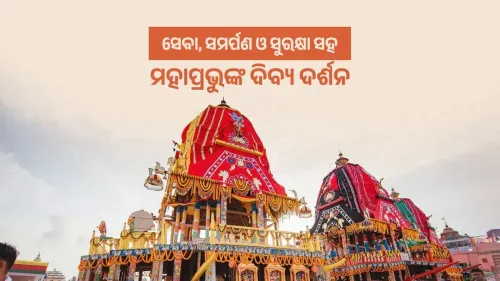
Odisha Chief Minister Mohan Charan Majhi on 23 July 2026 noted the gathering of lakhs of devotees at Shrikhetra, Puri, for Lord Jagannath's darshan, crediting systematic and disciplined state management for enabling pilgrims to receive divine blessings with ease.
Key Takeaways
Odisha CM Mohan Charan Majhi posted on 23 July 2026 about a large pilgrim congregation at the Jagannath Temple, Puri .
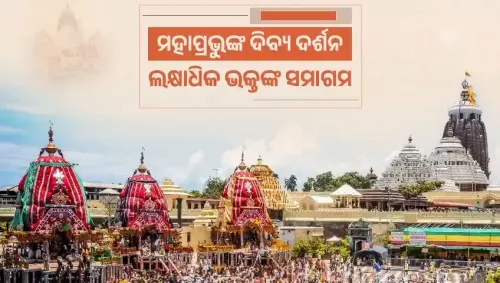
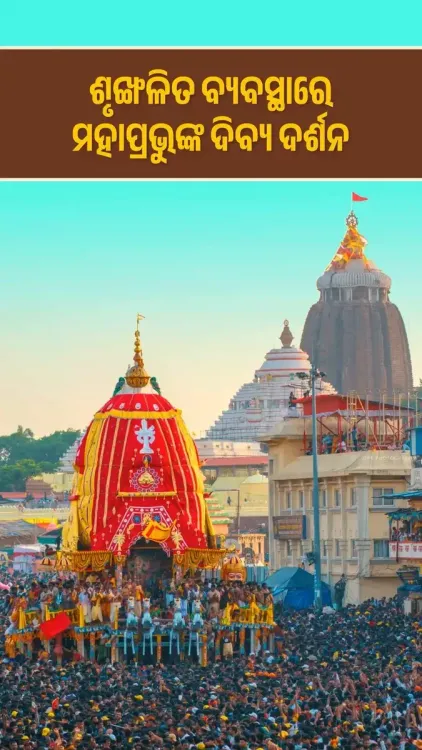
The post, written in Odia, describes the gathering of lakhs of devotees at Shrikhetra for divine darshan of Mahaprabhu (Lord Jagannath) .
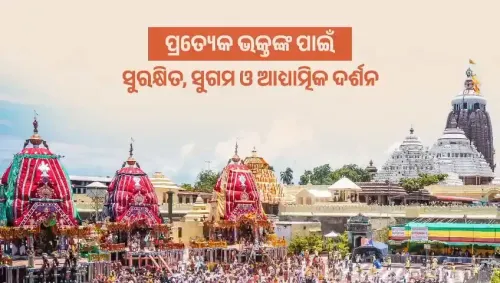
CM Majhi credited well-organised and disciplined management for enabling smooth darshan and a 'divine spiritual experience' for pilgrims.
The Shri Jagannath Temple Act of 1955 provides the legal framework under which the state oversees temple administration and crowd management.
Puri is one of Hinduism's four sacred dhams and a major religious tourism hub for Odisha , with the annual Rath Yatra being its largest event.
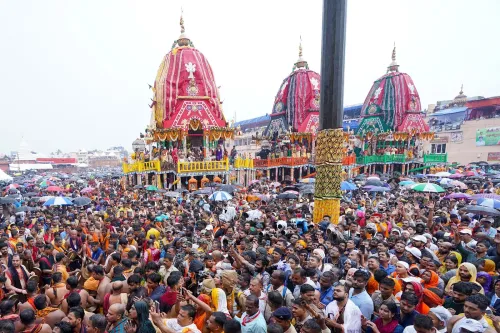
Odisha Chief Minister Mohan Charan Majhi on Thursday, 23 July 2026 highlighted the congregation of lakhs of devotees at Shrikhetra, Puri, for the divine darshan of Lord Jagannath, noting that systematic and disciplined management has enabled pilgrims to receive blessings with ease.
Posting in Odia on X, the Chief Minister wrote: 'ମହାପ୍ରଭୁଙ୍କ ଦିବ୍ୟ ଦର୍ଶନ ପାଇଁ ଶ୍ରୀକ୍ଷେତ୍ରରେ ଲକ୍ଷାଧିକ ଭକ୍ତଙ୍କ ସମାଗମ' ('Lakhs of devotees have gathered at Shrikhetra for the divine darshan of Mahaprabhu'). He added that through 'well-organised and disciplined management,' devotees are easily obtaining darshan and experiencing 'divine spiritual blessings.'
Context
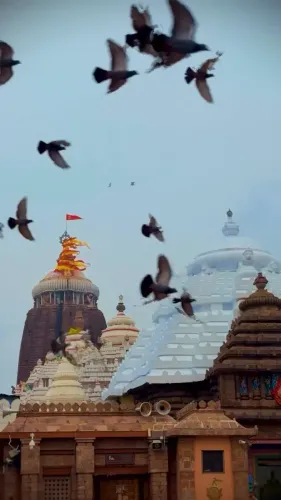
Shrikhetra — the sacred name for Puri in Odisha — is one of the four sacred dhams of Hinduism and home to the Jagannath Temple, which draws millions of pilgrims annually. The temple sees especially intense footfall during major religious occasions, when crowd management becomes a direct administrative responsibility of the state government. CM Majhi's post signals that state machinery is actively deployed to facilitate orderly darshan during the current surge.
Policy Backdrop
The legal and administrative framework governing the Jagannath Temple dates to the Shri Jagannath Temple Act of 1955, which established formal oversight of temple rituals, administration, and devotee management. Successive Odisha governments have built on this framework to coordinate logistics, security, and crowd control during peak pilgrim inflows. The current BJP-led administration under CM Majhi has continued this tradition, framing orderly temple management as both a civic and a spiritual obligation.
Stakeholders and Impact
The primary beneficiaries are the lakhs of devotees travelling to Puri for darshan, many of whom journey from across India and abroad. Smooth crowd management directly affects their safety, comfort, and the quality of their religious experience. The Jagannath Temple Administration, state police, and local civil authorities are the key institutional actors coordinating on the ground.
Religious tourism is also a significant economic driver for Puri and the broader Odisha economy. Efficient management of large pilgrim gatherings reinforces the state's reputation as a well-governed pilgrimage destination, with downstream benefits for hospitality, transport, and local livelihoods.
What's Next
The state government's focus on disciplined temple management is expected to continue through any remaining days of the current religious occasion. Observers will watch for official reports on devotee numbers, any infrastructure upgrades announced for Puri, and arrangements for the next annual Rath Yatra — the single largest event at the Jagannath Temple, which draws millions and demands the most intensive logistical coordination. CM Majhi's public communication on the matter suggests the administration is keen to project competence in handling one of India's most prominent pilgrimage sites.
Point of View
Using a high-visibility religious moment to project administrative competence ahead of future electoral cycles in a state where the Jagannath cult holds deep cultural and political weight. The BJP, which wrested Odisha from the BJD in 2024, has a clear interest in being seen as a responsible steward of the state's most sacred institution. By foregrounding 'disciplined management' rather than the religious occasion itself, Majhi frames the temple not just as a site of faith but as a test of governance — one his administration is signalling it is passing. This mirrors a broader national BJP pattern of associating the party with efficient Hindu pilgrimage infrastructure.
NationPress
23 Jul 2026
Frequently Asked Questions
Why are lakhs of devotees gathering at Puri Jagannath Temple in July 2026?
Odisha CM Mohan Charan Majhi's post indicates a large congregation of lakhs of devotees at Shrikhetra, Puri, for the divine darshan of Lord Jagannath, though the specific religious occasion driving the surge has not been named in the post.
Who manages the Jagannath Temple in Puri?
The Jagannath Temple in Puri is administered under the Shri Jagannath Temple Act of 1955, with the Odisha state government — currently led by CM Mohan Charan Majhi — overseeing logistics, security, and crowd management during major pilgrim gatherings.
What did Odisha CM Mohan Charan Majhi say about Puri temple darshan?
CM Majhi posted in Odia on X on 23 July 2026, stating that lakhs of devotees had gathered at Shrikhetra for divine darshan and that well-organised, disciplined management was helping pilgrims easily receive Lord Jagannath's blessings.
What is the Rath Yatra and how does it relate to Puri crowd management?
The Rath Yatra is the annual chariot festival at the Jagannath Temple in Puri, the single largest event at the site drawing millions of devotees, and it requires the most intensive crowd management and logistical coordination by the Odisha state government.