Sonowal: Modi Govt puts youth welfare first, warns wrongdoers
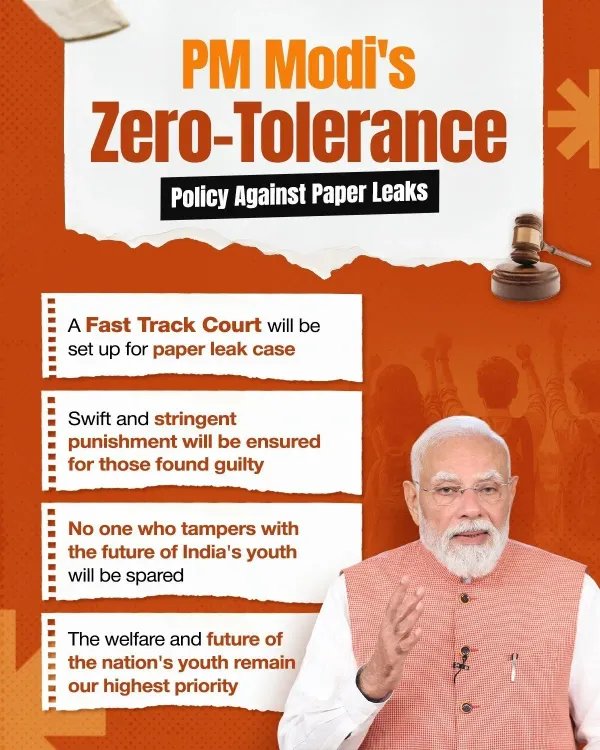
Synopsis
Union Minister Sarbananda Sonowal on 23 July 2026 amplified PM Modi's public assurance that youth welfare and student security are the Modi government's top priority, warning that anyone threatening students' futures will face strict consequences.
Key Takeaways
Union Minister Sarbananda Sonowal shared PM Narendra Modi 's assurance on 23 July 2026 that youth welfare is the government's first priority.
The post invoked the term 'Yuva Shakti' (Youth Power), a recurring phrase in the government's political messaging on India's demographic dividend.
The government warned that 'no one playing with the future of our students will be spared', signalling zero tolerance for malpractices targeting students.
The statement aligns with the National Youth Policy 2014 and the Skill India Mission 2015 , which established youth protection as a flagship national objective.
Follow-up action from the Ministry of Education and the Ministry of Home Affairs will be closely watched by students and policy observers.
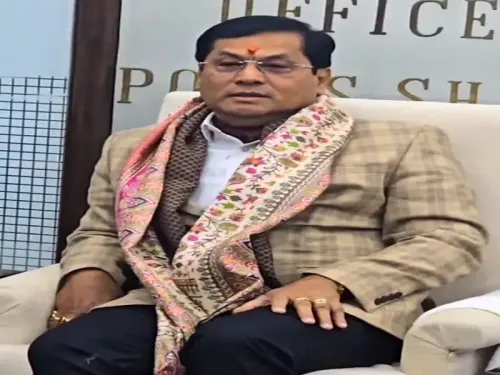
Union Minister of Ports, Shipping and Waterways Sarbananda Sonowal on Thursday, 23 July 2026, amplified Prime Minister Narendra Modi's assurance that the welfare and security of India's youth remain the top priority of the Modi government, warning that no one who plays with the future of students will be spared.
Context
Sonowal quoted the Prime Minister directly, writing: 'Hon'ble PM Shri @narendramodi ji assures India's Yuva Shakti — welfare and security of youth is the first priority of the Modi Govt. No one playing with the future of our students will be spared.' The phrase 'Yuva Shakti' — loosely translated as 'Youth Power' — is a recurring term in the ruling party's political vocabulary, framing India's young population as the country's foremost demographic asset.
The post, carrying one image, was shared from Sonowal's official handle and reflects a pattern of senior ministers across portfolios amplifying the Prime Minister's messaging on student welfare, irrespective of their own ministerial brief.
Policy Backdrop
The statement draws on a policy lineage stretching back to the government's early years. The National Youth Policy 2014 formally positioned youth empowerment, skill development, and protection from exploitation as national priorities. The following year, the Skill India Mission (2015) reinforced these objectives with a focus on employment readiness and shielding young people from malpractices in education and recruitment.
Since 2014, successive public communications from the government have stressed that India's demographic dividend — a population where a significant share is under 35 — must be protected from any actor, institution, or system that might compromise students' prospects. The stern warning in Sonowal's post — 'no one will be spared' — echoes language used in earlier government statements on examination irregularities, coaching-centre fraud, and recruitment malpractices.
Stakeholders and Impact
The primary audience for this messaging is India's student and youth community, a politically significant demographic that spans competitive examination aspirants, vocational trainees, and first-time voters. Concerns around examination integrity, paper leaks, and fraudulent recruitment have periodically surfaced as grievances among this group in recent years.
By invoking the Prime Minister's direct assurance, the government signals that accountability for wrongdoing against students will be pursued at the highest political level. Ministries most directly implicated in follow-through include the Ministry of Education and the Ministry of Home Affairs, whose enforcement machinery would be central to any punitive action.
What's Next
Observers will watch for concrete follow-up from the Ministry of Education and law-enforcement agencies, including any new directives, task forces, or legislative proposals aimed at safeguarding student interests. The political salience of youth welfare means this messaging is likely to be sustained across ministerial communications in the weeks ahead.
If the government translates this assurance into specific policy action — whether on examination security, anti-fraud mechanisms in recruitment, or expansion of skill programmes — it would mark a substantive step beyond rhetorical commitment and signal the administration's intent to close the gap between promise and delivery for India's Yuva Shakti.
Point of View
A constituency that has grown increasingly vocal about examination integrity and recruitment fairness. The sharp warning — 'no one will be spared' — raises the political stakes by implying executive accountability, but its credibility will hinge on whether enforcement action follows. The statement fits a broader arc in which the government seeks to position itself as the guardian of India's demographic dividend ahead of electoral cycles.
NationPress
23 Jul 2026
Frequently Asked Questions
What did PM Modi say about youth welfare in July 2026?
PM Modi assured India's youth that their welfare and security are the first priority of his government and that no one who plays with students' futures will be spared, as amplified by Union Minister Sarbananda Sonowal on 23 July 2026.
Why did Sarbananda Sonowal post about student welfare when he is the Ports Minister?
Senior ministers in the BJP government routinely amplify the Prime Minister's messaging on national issues beyond their own portfolios; Sonowal's post on youth welfare follows this established pattern of unified cross-ministerial communication.
What is Yuva Shakti in the context of Indian politics?
'Yuva Shakti' means 'Youth Power' and is a term used by the Modi government to describe India's young population as the country's primary demographic asset whose welfare and protection must be safeguarded.
What policies back the government's commitment to youth welfare?
The National Youth Policy 2014 and the Skill India Mission launched in 2015 are the two flagship frameworks that formally established youth empowerment, employment readiness, and protection from exploitation as national priorities.
What action can students expect after this government assurance on youth welfare?
Observers are watching for follow-up directives or enforcement measures from the Ministry of Education and Ministry of Home Affairs, particularly on examination security and action against fraudulent recruitment or coaching practices.