CM Majhi meets 23 Special Development Council chiefs in Odisha
Synopsis
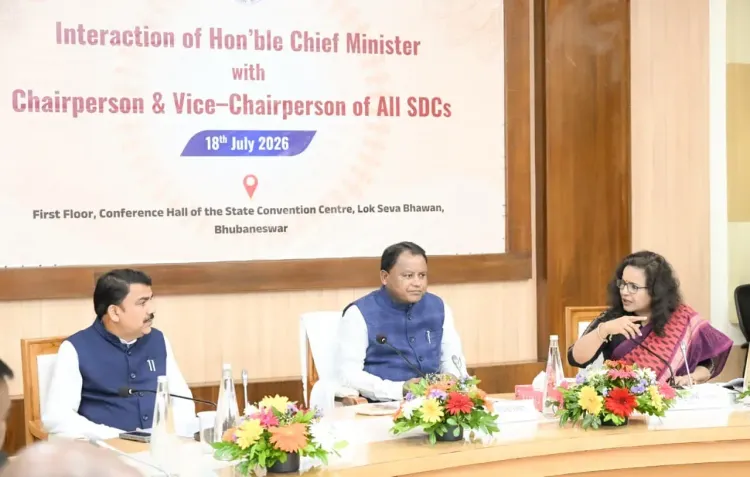
Chief Minister Mohan Charan Majhi met the newly appointed chairpersons and vice-chairpersons of 23 Special Development Councils across Odisha on 18 July 2026, calling on them to embody the Antyodaya principle and work for tribal communities at the grassroots level.
Key Takeaways
CM Mohan Charan Majhi chaired a discussion with newly appointed heads of 23 Special Development Councils on 18 July 2026 .
The councils represent tribal-majority districts across Odisha and are statutory bodies under the Fifth Schedule of the Constitution.
The Chief Minister invoked the Antyodaya principle, urging council leaders to reach the 'last row' of society.
Odisha has operated tribal development institutions since the 1970s through Integrated Tribal Development Agencies (ITDAs) , with SDCs adding a district-level planning layer.
The reconstituted councils are expected to formulate area-specific plans; budget allocations in the next state cycle will be closely watched.
Chief Minister Mohan Charan Majhi of Odisha held a discussion with the newly appointed chairpersons and vice-chairpersons of the state's Special Development Councils (SDCs) on Saturday, 18 July 2026, according to a post by the Chief Minister's Office of Odisha on X. The meeting brought together heads of 23 Special Development Councils drawn from tribal-majority districts across the state.
Context
The Chief Minister's Office shared that CM Majhi urged the newly constituted council leadership to reach the last person in the queue — invoking the principle of Antyodaya (meaning 'rise of the last person'). He advised them: 'Reach the last row and work for the people,' framing tribal development as integral to the government's broader welfare mission.
The meeting covered development priorities for Scheduled Tribe communities across various districts of Odisha, with the Chief Minister emphasising that the current government has taken special steps for tribal advancement alongside the uplift of all sections of society.
Policy Backdrop
Special Development Councils are statutory bodies constituted in Odisha's tribal-majority districts to formulate and oversee area-specific development plans for Scheduled Tribe communities. They operate within the constitutional framework of the Fifth Schedule, which mandates special governance provisions for Scheduled Areas.
Odisha has maintained a layered architecture of tribal development institutions since the 1970s, when Integrated Tribal Development Agencies (ITDAs) were established to channel central and state funds into these regions. The SDCs add a district-level planning layer focused on community-specific needs and last-mile delivery.
CM Majhi, who has led the BJP government in Odisha since June 2024, has placed tribal welfare at the centre of his administration's stated agenda — a significant political signal given that Odisha has one of the largest Scheduled Tribe populations in India.
Stakeholders and Impact
The 23 newly appointed chairpersons and vice-chairpersons represent tribal-majority districts spread across the state. Their councils are expected to identify local development gaps and recommend targeted interventions for communities that have historically faced barriers to accessing government services.
The primary beneficiaries are Scheduled Tribe communities and the rural poor in Odisha's Scheduled Areas — populations the Chief Minister described as those 'in the last row,' echoing the Antyodaya philosophy originally associated with Pandit Deendayal Upadhyaya and later institutionalised through schemes such as the Antyodaya Anna Yojana.
What's Next
The reconstitution of all 23 Special Development Councils sets the stage for these bodies to begin formulating area-specific development plans. Observers will watch whether the upcoming state budget cycle allocates fresh funds aligned with the councils' priorities.
The rollout of projects approved by the reconstituted councils, and the pace at which those projects reach beneficiaries on the ground, will be the key measure of whether the Antyodaya intent translates into tangible outcomes for Odisha's tribal communities.
Frequently Asked Questions
What are Special Development Councils in Odisha?
Special Development Councils (SDCs) are statutory bodies constituted in Odisha's tribal-majority districts to plan and oversee area-specific development programmes for Scheduled Tribe communities under the Fifth Schedule of the Constitution.
How many Special Development Councils does Odisha have?
Odisha has 23 Special Development Councils spread across various districts with significant Scheduled Tribe populations.
What did CM Mohan Majhi say at the SDC meeting on 18 July 2026?
CM Majhi urged the newly appointed chairpersons and vice-chairpersons to reach the 'last row' of society and work for the people, invoking the principle of Antyodaya — serving the most marginalised first.
What is the Antyodaya principle mentioned by CM Majhi?
Antyodaya means 'rise of the last person' and refers to the philosophy of prioritising the welfare of the poorest and most marginalised citizens. It is associated with thinker Pandit Deendayal Upadhyaya and has been institutionalised in several central government welfare schemes.
What is the history of tribal development institutions in Odisha?
Odisha has operated Integrated Tribal Development Agencies (ITDAs) since the 1970s to channel funds into Scheduled Areas. Special Development Councils form a complementary district-level layer focused on community-specific planning and last-mile service delivery.