CM Majhi Meets New Tribal Council Chiefs, Pushes Field Outreach
Synopsis
Odisha CM Mohan Charan Majhi on 18 July 2026 reviewed tribal welfare schemes with newly appointed Special Development Council heads at Bhubaneswar, directing grassroots visits and field-level implementation of flagship programmes under PM Modi's 'Vikas bhi, Virasat bhi' framework.
Key Takeaways
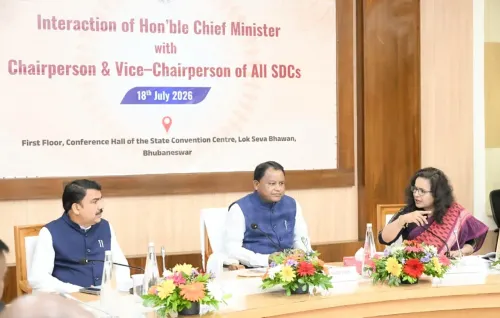
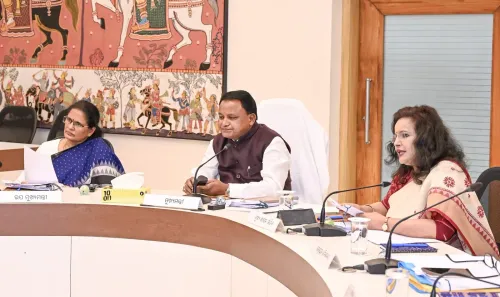
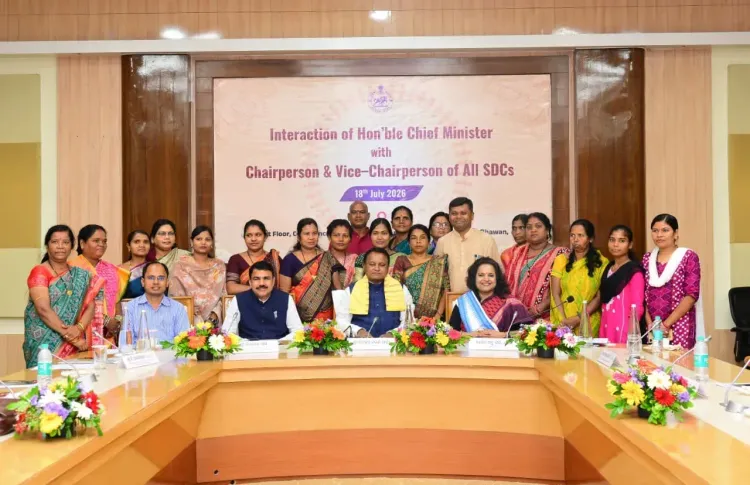
CM Mohan Charan Majhi held a review meeting with newly appointed Special Development Council chairpersons and vice-chairpersons on 18 July 2026 at Lok Seva Bhavan Convention Centre, Bhubaneswar .
The meeting reviewed ground-level delivery of the Shaheed Madho Singh Haat Kharch Yojana and the Mukhyamantri Janajati Jibika Mission , among other tribal welfare programmes.
PM Modi 's 'Vikas bhi, Virasat bhi' principle — linking development with cultural heritage — was cited as the guiding framework for Odisha's tribal policy.
New SDC appointees were directed to conduct regular grassroots-level field visits and coordinate with district administrations to resolve local problems.
The government reaffirmed its commitment to both the holistic development and cultural preservation of Odisha's tribal communities, who form over one-fifth of the state's population.
All outcomes were tied to Odisha's 2036 Vision for accelerated state development.
Odisha Chief Minister Mohan Charan Majhi on Saturday, 18 July 2026, chaired a high-level review meeting with the newly appointed chairpersons and vice-chairpersons of the state's Special Development Councils (SDCs) at the Lok Seva Bhavan Convention Centre, Bhubaneswar. The session focused on accelerating tribal welfare scheme delivery and ensuring cultural preservation across Odisha's Scheduled Areas.
Context
Addressing the newly inducted council leadership, CM Majhi underscored that Odisha's tribal brothers and sisters — 'janajati bhai-bhauṇi' [tribal brothers and sisters] — represent a significant and honourable share of the state's population whose art, language, and culture bring pride to the entire nation. He reaffirmed the government's complete commitment to both their holistic development and the protection of their distinct cultural heritage.
The Chief Minister invoked Prime Minister Narendra Modi's guiding principle of 'Vikas bhi, Virasat bhi' ['Development as well as Heritage'], framing it as the philosophical anchor for all tribal-welfare interventions in the state.
Policy Backdrop
The review meeting examined the ground-level implementation of several flagship programmes. These include the Shaheed Madho Singh Haat Kharch Yojana — which supports tribal communities with market-access and weekly-market expenses — and the Mukhyamantri Janajati Jibika Mission, a state livelihood mission targeting economic empowerment of tribal households.
Technical education reservations for tribal students and the full suite of central and state tribal welfare schemes were also on the agenda, with the meeting conducting a comprehensive review of how each programme can be made more effective at the field level. The 'Vikas bhi, Virasat bhi' framework, articulated by PM Modi from 2023 onward in national addresses, has provided the broader policy lineage within which Odisha's BJP government has been aligning its tribal outreach since June 2024.
Stakeholders and Impact
Odisha's Scheduled Tribe population accounts for over one-fifth of the state's total population and is concentrated in the state's Scheduled Areas, where last-mile service delivery has historically been a challenge. The Special Development Councils are the state's dedicated institutional mechanism for focused development in these regions, making the calibre and field commitment of their leadership a direct determinant of welfare outcomes.
CM Majhi told the new appointees that governance is not a means of exercising power but a sacred responsibility — rooted in the values of Antyodaya [service to the last person in the queue] — to serve the poorest at the very end of the line. He directed them to adopt a 'Yes, We Can' attitude, prioritising action over words and conducting regular grassroots-level visits to tribal areas.
Council members were also advised to patiently listen to local and regional problems of the people, and then resolve them through proper coordination with district administrations and departmental officials — creating a structured feedback loop between community grievances and administrative response.
What's Next
The Chief Minister tied the meeting's outcomes to Odisha's 2036 Vision, expressing confidence that through collective cooperation and sincere effort, the state's development trajectory can be elevated to a new height and the vision achieved successfully. Field visits by the newly appointed SDC leadership and their coordination reports with district administrations will be the first measurable indicators of whether the directives translate into on-ground change.
Any state budget allocations or policy reviews specifically linked to the 2036 Vision will be closely watched as the government seeks to demonstrate that its tribal welfare commitments move from meeting rooms to village-level impact.
Point of View
Using the SDC framework as a last-mile monitoring layer for tribal welfare. By anchoring state policy explicitly to PM Modi's 'Vikas bhi, Virasat bhi' doctrine, CM Majhi is reinforcing ideological alignment with the Centre while simultaneously building a distinct state-level delivery record. The 'Yes, We Can' directive and the emphasis on field visits over paperwork reflect the party's broader stress on grassroots visibility ahead of future electoral cycles. The linkage to the 2036 Vision also suggests the government is beginning to build a long-term narrative around tribal development that extends well beyond the current term.
NationPress
19 Jul 2026
Frequently Asked Questions
What is the Special Development Council in Odisha?
The Special Development Council (SDC) is an Odisha state body set up to deliver focused development and welfare programmes in tribal-dominated regions and Scheduled Areas of the state.
What is the Shaheed Madho Singh Haat Kharch Yojana?
The Shaheed Madho Singh Haat Kharch Yojana is an Odisha tribal welfare scheme that provides financial support to tribal communities for market-access and weekly-market (haat) related expenses.
What is the Mukhyamantri Janajati Jibika Mission?
The Mukhyamantri Janajati Jibika Mission is a state-run livelihood mission in Odisha aimed at the economic empowerment of tribal households through targeted interventions.
What does 'Vikas bhi, Virasat bhi' mean?
'Vikas bhi, Virasat bhi' translates to 'Development as well as Heritage' — a framework articulated by PM Narendra Modi from 2023 onward that links economic upliftment of tribal communities with the preservation of their distinct cultural identity.
What is Odisha's 2036 Vision?
Odisha's 2036 Vision is a long-term development goal set by the state government to elevate Odisha's overall development trajectory, with tribal welfare and inclusive growth as key pillars.