CM Majhi Opens 14th Maritime Security Meet in Odisha
Synopsis
Odisha Chief Minister Mohan Charan Majhi on 24 June 2026 inaugurated the 14th Multi Agency Maritime Security Group (Policy) meeting in Bhubaneswar — the first such national conclave held outside New Delhi — invoking Odisha's ancient maritime heritage and pledging support for SAGAR, Act East Policy, BIMSTEC, AI-driven coastal security, and NABHMITRA transponders for fishermen.
Key Takeaways
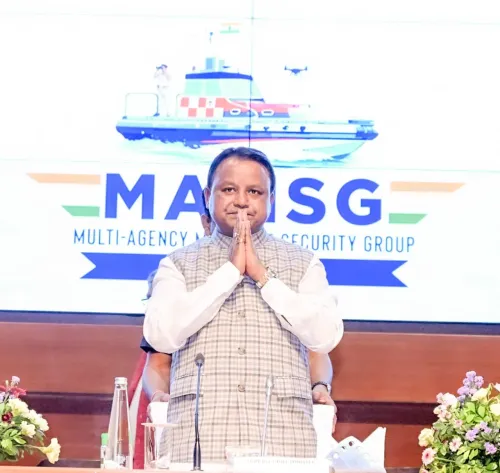
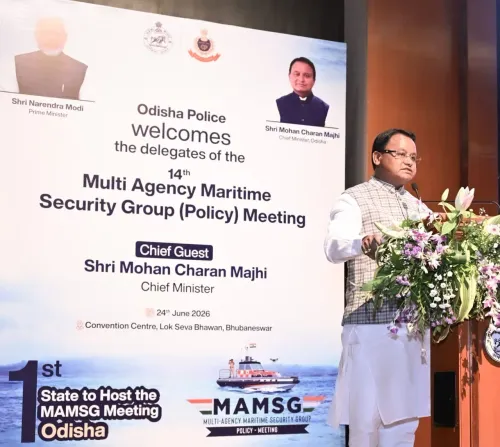
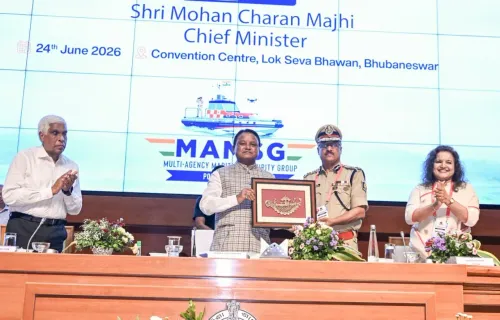
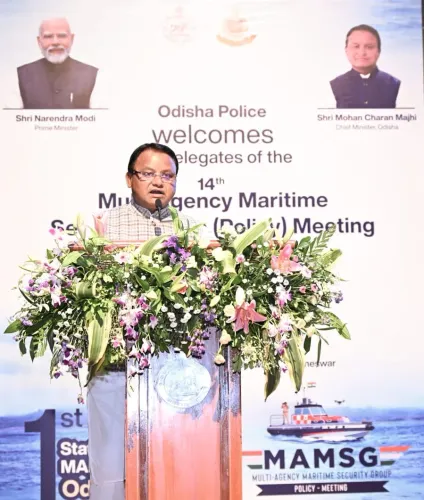
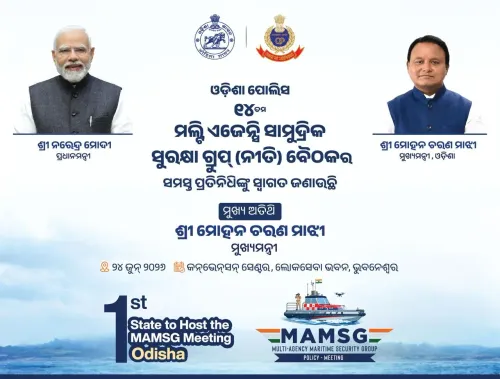
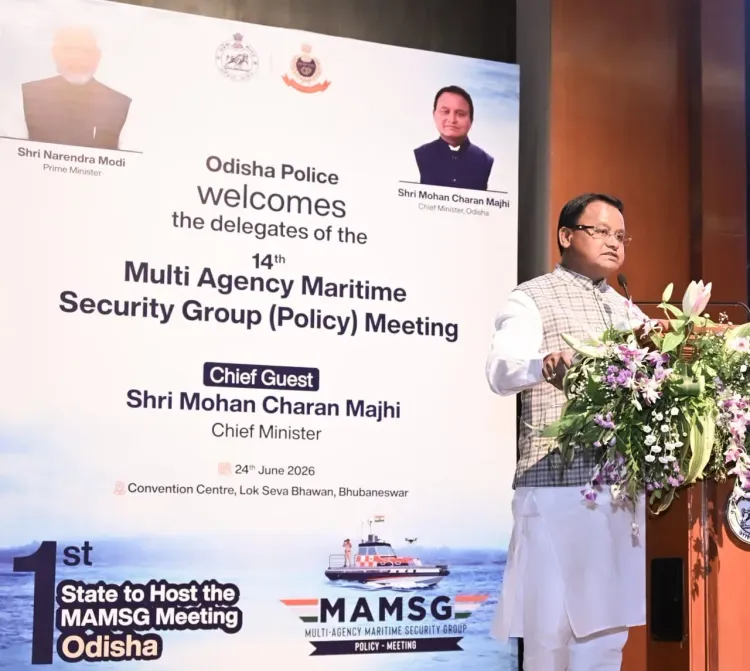
CM Mohan Charan Majhi inaugurated the 14th Multi Agency Maritime Security Group (Policy) meeting at Lok Seva Bhavan, Bhubaneswar on 24 June 2026 .
This is the first time the high-level national maritime security meeting has been held outside New Delhi , reflecting PM Modi's Cooperative Federalism approach.
Majhi expressed full support for SAGAR, Act East Policy, and BIMSTEC as pillars of India's maritime engagement framework.
The CM committed to deploying NABHMITRA transponders on fishing vessels and advancing the Coastal Vibrant Village Programme to protect coastal livelihoods.
Majhi called for integrating AI, unmanned systems, cyber security, and disaster management into India's maritime security architecture.
The post invoked Bali Yatra and ancient Kalinga seafaring history to frame Odisha's civilisational stake in Indo-Pacific maritime affairs.
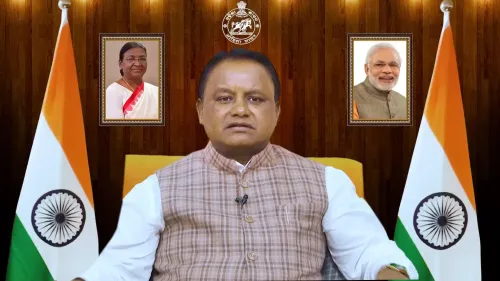
Odisha Chief Minister Mohan Charan Majhi on Wednesday, 24 June 2026 inaugurated the 14th Multi Agency Maritime Security Group (Policy) meeting at Lok Seva Bhavan, Bhubaneswar — marking the first time this high-level national conclave has been held outside New Delhi. Invoking Odisha's ancient seafaring heritage and the Bay of Bengal's civilisational significance, Majhi underscored the state's central role in India's evolving maritime security architecture.
Context
In his post, CM Majhi recalled that Odisha's ancestors named the ocean 'Mahodadhi' (the great water body), and that for thousands of years this sea enriched Odia civilisation, sustained coastal livelihoods, and carried the Sadhabas — ancient Kalinga merchant-sailors — to the shores of Southeast Asia, forging cultural and commercial bridges. He noted that Bali Yatra, celebrated annually, remains a living symbol of that historic bond. The meeting was held in that spirit, connecting ancient maritime identity with contemporary security imperatives.
Bali Yatra is an annual festival observed in Odisha — most prominently along the banks of the Mahanadi in Cuttack — commemorating the voyage of Kalinga traders to Bali, Java, Sumatra, and other parts of Southeast Asia. It is one of Asia's largest open-air fairs and a cultural touchstone for Odia identity.
Policy Backdrop
CM Majhi stated that hosting the meeting in Odisha for the first time reflects Prime Minister Narendra Modi's commitment to Cooperative Federalism — a framework that distributes governance responsibilities meaningfully between the Centre and states. He expressed full support for three key national policy pillars: the SAGAR (Security and Growth for All in the Region) doctrine articulated by PM Modi in 2015, the Act East Policy (upgraded in 2014 to deepen Indo-Pacific engagement), and BIMSTEC, the Bay of Bengal regional cooperation forum founded in 1997.
Majhi also highlighted that maritime security in the 21st-century Indo-Pacific extends well beyond conventional law-and-order to encompass critical infrastructure protection, cyber security, disaster management, and environmental protection. He called for deploying Artificial Intelligence (AI) and unmanned systems as part of a modernised coastal security apparatus.
Stakeholders and Impact
A key focus of the CM's address was the welfare of coastal and fishing communities. He committed to rolling out NABHMITRA transponders on fishing vessels — a device-based system that enhances distress communication and tracking for fishermen at sea — alongside the Coastal Vibrant Village Programme, which aims to develop infrastructure and livelihoods in coastal settlements. Together, these initiatives are intended to protect Odisha's blue economy and the livelihoods of lakhs of coastal residents.
Odisha's 480-kilometre coastline — one of the longest among Indian states — and its dense fishing communities make it a critical node in any national coastal security framework. The state's ports and offshore assets also form part of the broader critical maritime infrastructure that the meeting sought to address.
What's Next
The conclave is expected to produce follow-up decisions on state-level implementation of national maritime security directives, with Odisha positioned as a model for coastal states under the Cooperative Federalism framework. Observers will watch for the pace of NABHMITRA transponder deployment on fishing boats and the progress of the Coastal Vibrant Village Programme in Odisha's coastal districts. As India consolidates its standing as a major maritime power in the Indo-Pacific, the integration of state governments into national security planning — exemplified by this Bhubaneswar meeting — signals a structural shift in how coastal security is governed across the country.
Point of View
The BJP government in Odisha is leveraging a national security platform to assert the state's strategic relevance in the Indo-Pacific — a calculated alignment with PM Modi's Cooperative Federalism and SAGAR narratives ahead of continued federal consolidation. CM Majhi's invocation of ancient Kalinga maritime identity is a well-worn but politically effective move that roots contemporary security policy in civilisational pride, broadening its popular appeal beyond technocratic circles. The emphasis on NABHMITRA transponders and the Coastal Vibrant Village Programme signals an attempt to translate high-level security discourse into tangible welfare outcomes for fishing communities — a constituency that carries significant electoral weight in Odisha's coastal belt. The decentralisation of this conclave to a state capital could set a precedent for rotating future editions, deepening Centre-state coordination on maritime governance.
NationPress
24 Jun 2026
Frequently Asked Questions
What is the Multi Agency Maritime Security Group meeting?
The Multi Agency Maritime Security Group (MAMSG) is a high-level national policy body that coordinates maritime security across multiple central and state agencies in India. Its 14th Policy meeting was held in Bhubaneswar on 24 June 2026, the first time outside New Delhi.
What is NABHMITRA and how does it help fishermen?
NABHMITRA is a transponder-based system installed on fishing vessels that enables distress communication and real-time tracking, improving the safety of fishermen operating in deep or distant waters. CM Majhi committed to expanding its deployment on Odisha's fishing boats.
What is Bali Yatra and why did CM Majhi mention it?
Bali Yatra is an annual Odisha festival commemorating the ancient Kalinga maritime trade voyages to Bali, Java, and Southeast Asia. CM Majhi referenced it to highlight Odisha's deep historical and cultural connection to the sea, framing the maritime security meeting within that civilisational context.
What is India's SAGAR policy?
SAGAR stands for 'Security and Growth for All in the Region,' a maritime doctrine articulated by Prime Minister Narendra Modi in 2015. It frames India's approach to maritime security, economic cooperation, and regional stability in the Indian Ocean and Indo-Pacific.
Why was the maritime security meeting held in Odisha instead of New Delhi?
CM Majhi stated that hosting the national meeting in Odisha for the first time reflects PM Modi's commitment to Cooperative Federalism, which aims to distribute governance responsibilities meaningfully between the central government and state governments.