CM Majhi pledges free KG-to-PG education for Odisha students
Synopsis
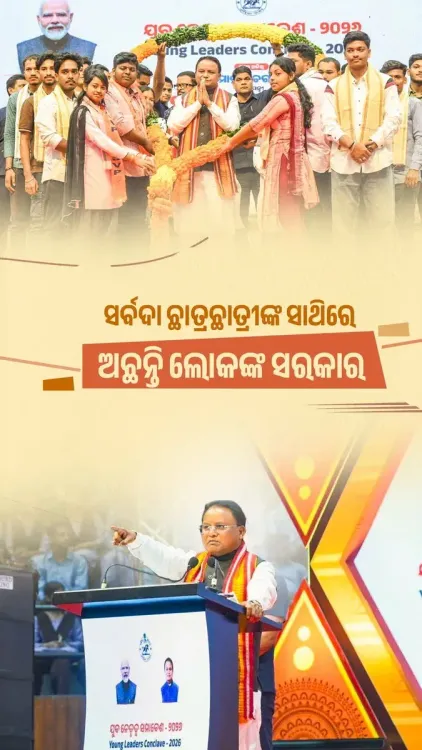
Odisha Chief Minister Mohan Charan Majhi addressed student union leaders on 19 October 2026, pledging free education from KG to PG and calling student leaders the architects of Odisha's future, citing PM Modi's guidance on youth empowerment.
Key Takeaways
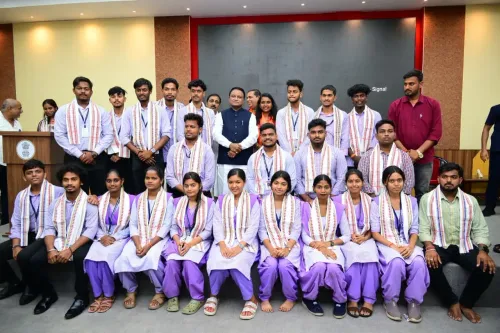
Odisha CM Mohan Charan Majhi addressed student union representatives on 19 October 2026 , framing them as builders of the state's future.
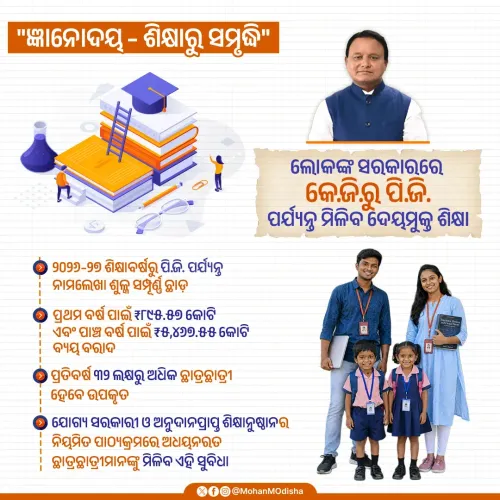
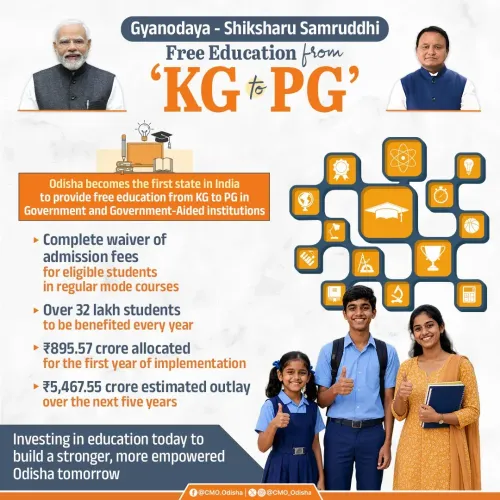
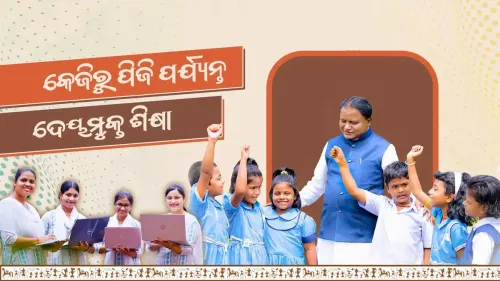
He committed to free education from kindergarten through postgraduate level as the government's flagship student welfare pledge.
The scheme is explicitly aimed at ensuring financial constraints never block a student's education in Odisha.
Majhi cited Prime Minister Narendra Modi's guidance as the policy direction underpinning the initiative.
The commitment aligns Odisha's state policy with the National Education Policy 2020 framework on expanding educational access.
Specific budget figures, eligibility criteria, and rollout timelines for the KG-to-PG scheme are yet to be officially notified.
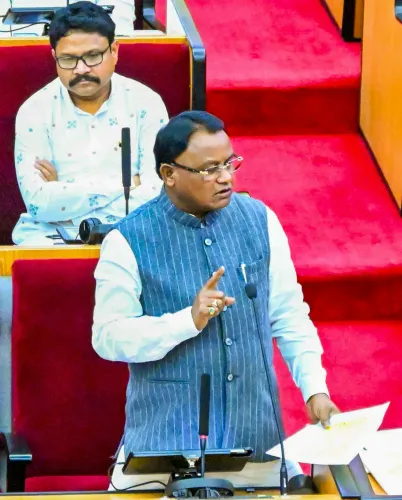
Every student in Odisha, regardless of their family's income, should be able to chase their ambitions without financial fear — that is the promise Odisha Chief Minister Mohan Charan Majhi put on record on Monday, 19 October 2026, addressing student union representatives and framing them as the state's future architects.
Writing in both Odia and English, Majhi told student leaders that their role in student unions extends far beyond resolving campus grievances. 'ମା', ମାଟି ଓ ଓଡ଼ିଶାର ବିକାଶ ଯାତ୍ରା' — 'the development journey of mother, soil, and Odisha' — is what he called them to serve. The ambition is explicit: student governance as a rehearsal for state-building.
The KG-to-PG promise and what it signals
At the centre of Majhi's message is a sweeping commitment to free education from kindergarten through postgraduate level — a policy he cited as the flagship proof that his government will not let economic hardship block any student's path. The pledge directly targets Odisha's economically weaker families, for whom the cost of higher education has historically been the sharpest barrier.
Majhi anchored the initiative in the policy direction of Prime Minister Narendra Modi, casting the scheme as Odisha's on-ground translation of a national vision for youth empowerment. The framing is deliberate: state action presented as part of a coherent central-state education arc, rather than a standalone announcement.
BJP's education messaging and the NEP backdrop
Majhi's government took office in June 2024 after the BJP's assembly election victory ended a two-decade run by the Biju Janata Dal. Since then, alignment with central priorities — particularly under the National Education Policy 2020 framework, which emphasises expanding access from foundational to higher education — has been a consistent thread in the administration's public positioning.
The pattern is visible across BJP-governed states: newly elected administrations signal their youth-and-human-capital credentials by highlighting financial access to education. Majhi's post fits squarely into that playbook, but the KG-to-PG formulation is notably broad in its stated ambition. The specifics — budget allocation, rollout timelines, eligibility criteria — are yet to be formally notified by the Odisha higher education department, and those details will be the real test of the commitment's scale.
What is clear today is the political and moral framing: student union leaders, Majhi said, are not just solving hostel or canteen complaints. They are, in his words, carrying 'an important opportunity to advance Odisha's development journey.' That is a high bar — and one the government has now set publicly.
Point of View
Which raises the stakes considerably: delivery gaps will be scrutinised. By invoking PM Modi's guidance, Majhi reinforces the BJP's standard narrative of central-state policy coherence, a move that simultaneously strengthens his government's credibility with the Centre and signals to voters that Odisha's development is on a national arc. The real policy test arrives when the higher education department publishes funding and operational details.
NationPress
19 Oct 2026
Frequently Asked Questions
What is the KG to PG free education scheme in Odisha?
The Odisha government under Chief Minister Mohan Charan Majhi has pledged to provide free education from kindergarten (KG) through postgraduate (PG) level, with the stated aim of ensuring no student is denied education due to financial constraints. Specific operational details and budget figures are yet to be officially notified.
Who is Mohan Charan Majhi?
Mohan Charan Majhi is the Chief Minister of Odisha and a BJP leader who took office in June 2024 after the BJP won the Odisha state assembly elections, ending decades of Biju Janata Dal rule.
What did CM Majhi say about student unions in Odisha?
Majhi said that student union leaders are not just solving campus-level problems but are contributors to Odisha's broader development journey, calling them 'architects of Odisha's future.'
How does Odisha's free education plan relate to the National Education Policy 2020?
The NEP 2020 provides the national framework for expanding access to school and higher education in India, and Majhi's government has framed its KG-to-PG free education commitment as aligned with this central policy direction under PM Modi's guidance.
When will Odisha's free KG to PG education scheme be rolled out?
As of October 2026, the Odisha government has publicly committed to free education from KG to PG, but specific rollout timelines, eligibility details, and budget allocations are yet to be formally announced by the higher education department.