Giriraj Singh: India-New Zealand FTA Takes Effect Tomorrow
Synopsis
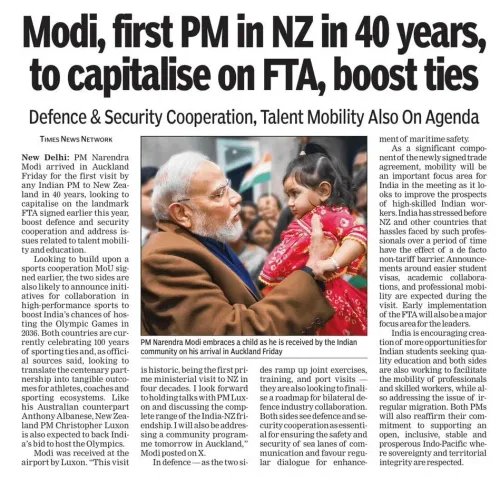
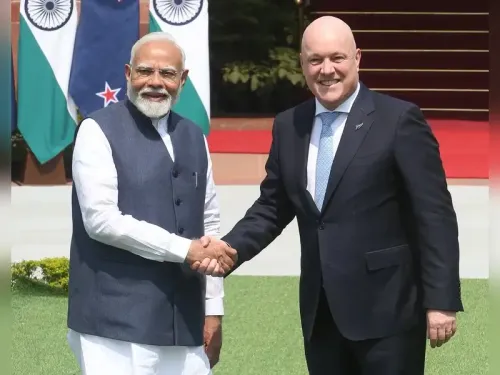
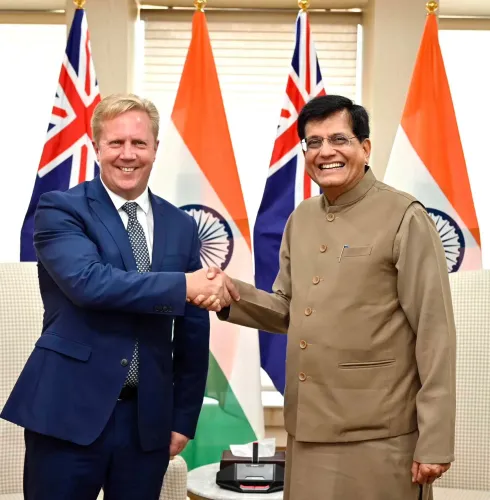
Union Textiles Minister Giriraj Singh announced that the India-New Zealand FTA comes into force on 20 October 2026, framing it as a Dussehra milestone under PM Modi's leadership that will open opportunities for Indian farmers, traders, professionals and youth.
Key Takeaways
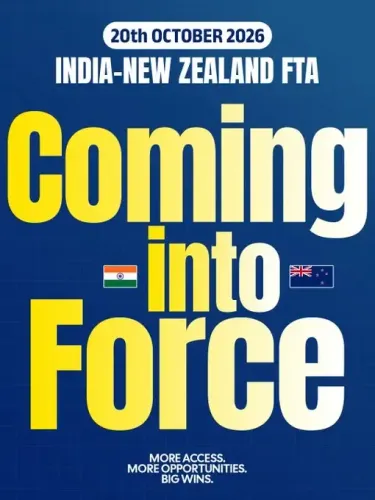
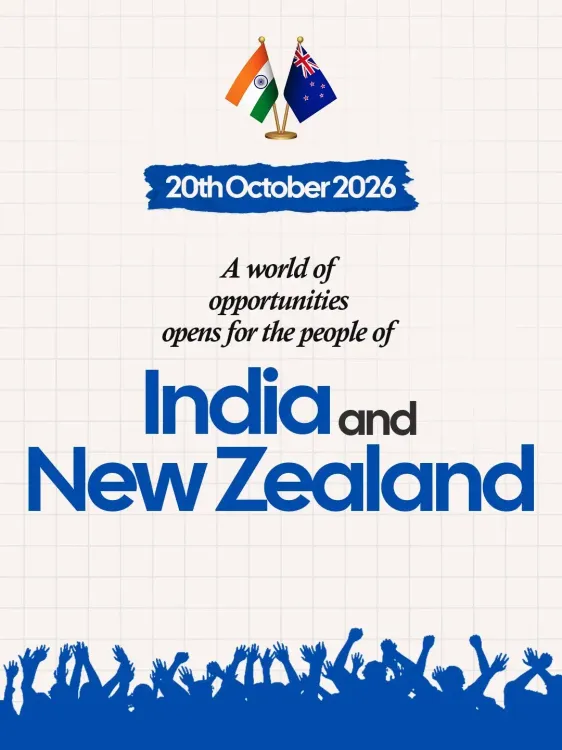
The India-New Zealand Free Trade Agreement is set to take effect on 20 October 2026 , the day after Dussehra.
Union Textiles Minister Giriraj Singh credited the deal to the guidance of Prime Minister Narendra Modi .
Singh highlighted benefits for farmers, traders, professionals and youth as the primary stakeholder groups.
The deal continues India's bilateral FTA drive that began in 2022 with the India-UAE and India-Australia trade agreements.
New Zealand's strong agricultural and services sectors make it a significant Indo-Pacific trade partner for India.
Sector-specific tariff schedules and early export data will be key indicators of the agreement's real-world impact.
A landmark trade deal arrives just in time for Dussehra. Union Textiles Minister Giriraj Singh announced on Monday, 19 October 2026 that the India-New Zealand Free Trade Agreement is set to come into force on 20 October 2026 — framing it as a special additional reason to celebrate the festival.
Posting in Hindi, Singh wrote: 'इस दशहरे पर उत्सव की एक और खास वजह है' ('This Dussehra brings one more special reason to celebrate') — framing the FTA's commencement not merely as a policy event but as a national milestone. He credited the agreement to the guidance of Prime Minister Narendra Modi, saying it 'will open doors of new opportunities for our farmers, traders, professionals and youth.'
India's FTA Drive Reaches the Indo-Pacific
The India-New Zealand agreement is the latest link in a chain of bilateral trade deals India has forged since 2022. The government first signed the India-UAE Comprehensive Economic Partnership Agreement that year, followed swiftly by the India-Australia Economic Cooperation and Trade Agreement — two deals that signalled a decisive shift away from slow-moving multilateral negotiations toward faster, targeted bilateral deals. New Zealand is the next step in that Indo-Pacific economic push.
New Zealand brings a formidable agricultural and services export base. For India, the interests run in the other direction: market access for textiles, pharmaceuticals, IT services, and skilled professionals. Singh's own ministry — textiles — stands among the direct beneficiaries, which makes his enthusiasm more than ceremonial.
Farmers, Exporters, and the Youth Dividend
The minister's choice of words is deliberate. By naming farmers, traders, professionals and youth in a single breath, Singh maps the deal's anticipated reach across India's economic landscape — from rural agricultural producers seeking New Zealand shelf space, to young professionals eyeing expanded mobility provisions.
Sector-specific tariff schedules and rules-of-origin provisions — the fine print that determines who actually benefits — will become the next focus once the agreement is formally gazetted. Early export data in the months ahead will be the real test of whether the doors Singh describes as opening will also see traffic walk through them.
India now has a cluster of active FTAs stretching from the Gulf to the Pacific. Whether they collectively move the needle on India's export-to-GDP ratio will be the longer story this Dussehra deal helps write.
Point of View
The BJP is consciously weaving trade diplomacy into a cultural moment — a recurring communication tactic designed to build popular ownership of economic policy. For the textiles sector in particular, which Giriraj Singh oversees, access to a high-income market like New Zealand could support India's broader goal of raising its share of global textile exports. The proof will lie in implementation details — tariff phase-out timelines, rules of origin, and professional mobility provisions — that are yet to enter public debate.
NationPress
19 Oct 2026
Frequently Asked Questions
When does the India-New Zealand FTA come into effect?
The India-New Zealand Free Trade Agreement is set to come into force on 20 October 2026 , as announced by Union Textiles Minister Giriraj Singh on 19 October 2026.
What does the India-New Zealand FTA mean for Indian farmers?
The agreement is expected to open new market access opportunities for Indian agricultural producers in New Zealand, potentially lowering tariff barriers on select farm goods and expanding export avenues.
How does the India-New Zealand FTA fit India's broader trade strategy?
It is part of a series of bilateral FTAs India has pursued since 2022, including deals with the UAE and Australia, aimed at diversifying trade partners across the Indo-Pacific and promoting exports in textiles, services and agriculture.
What sectors will benefit most from the India-New Zealand FTA?
Farmers, exporters, professionals and youth are the stakeholder groups highlighted by the minister. Textiles, IT services, pharmaceuticals and skilled professional mobility are among the areas expected to see new opportunities.
Who negotiated the India-New Zealand Free Trade Agreement?
The agreement was concluded under the leadership of Prime Minister Narendra Modi , according to Union Textiles Minister Giriraj Singh's announcement.