CM Majhi Signs Odisha–Tottori Friendship Pact with Japan
Synopsis
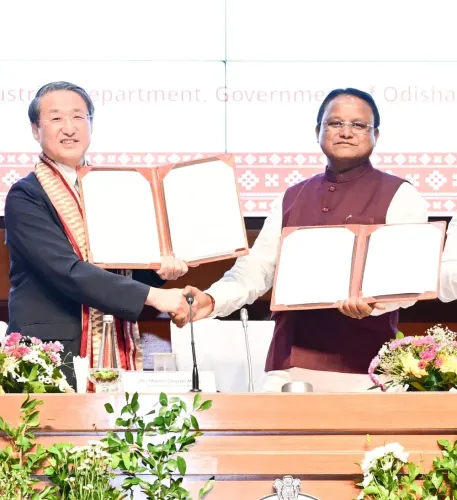
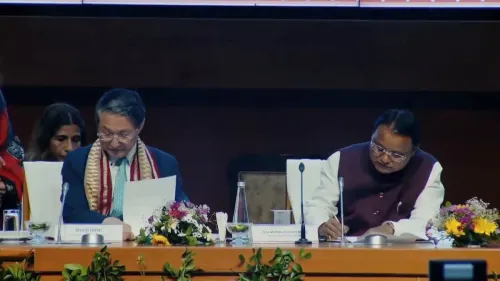
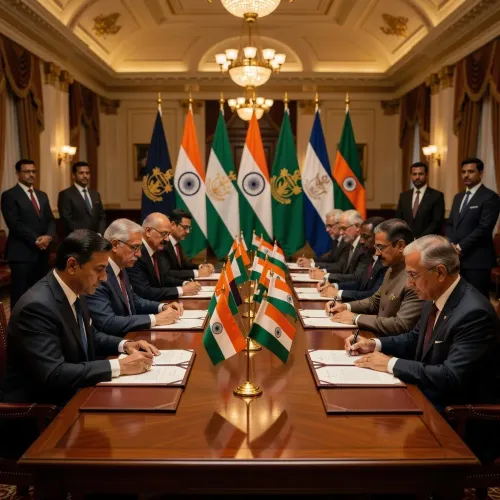
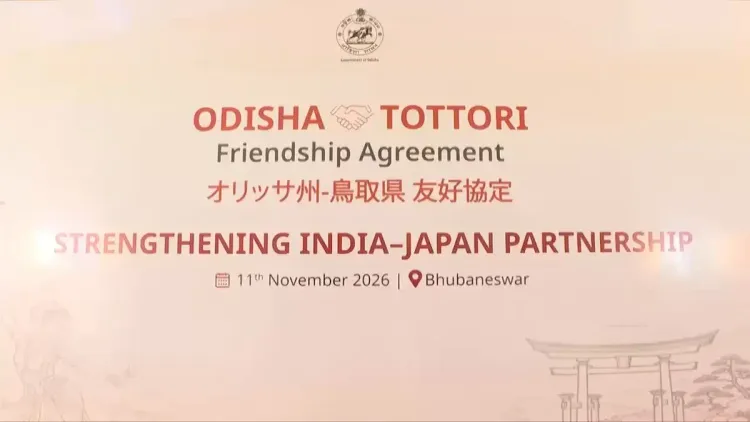
Odisha CM Mohan Charan Majhi and Tottori Governor Shinji Hirai signed the Odisha–Tottori Friendship Agreement on 11 November 2026, alongside two MoUs linking Startup Odisha and the World Skill Center to Tottori Prefecture and Nihon Edutech for startup cooperation and Japanese employment pathways.
Key Takeaways
Odisha–Tottori Friendship Agreement was signed on 11 November 2026 between CM Mohan Charan Majhi and Tottori Governor Shinji Hirai .
First MoU links Startup Odisha with Tottori Prefecture for MSME and investor collaboration.
Second MoU is a trilateral deal involving World Skill Center Odisha , Tottori Prefecture, and Nihon Edutech to place Odisha's youth in jobs in Japan.
The agreement covers industry, investment, technology, culture, tourism, and knowledge exchange.
Odisha's outreach builds on the broader India–Japan Strategic and Global Partnership and the state's Make in Odisha conclave legacy since 2016 .
Sub-national India–Japan agreements of this kind are rare in their specificity, turning a symbolic partnership into a live employment and investment pipeline.
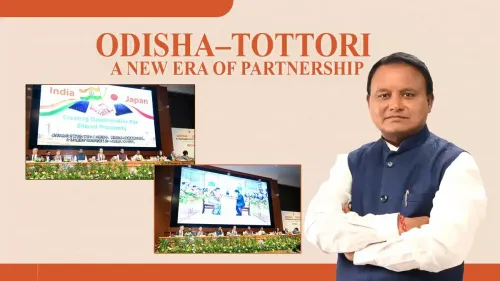
Odisha just punched its diplomatic passport — and the destination is Japan. Chief Minister Mohan Charan Majhi and Tottori Prefecture Governor Shinji Hirai formalised the historic Odisha–Tottori Friendship Agreement on Wednesday, 11 November 2026, anchoring a new bilateral relationship that spans startups, skill development, tourism, and cultural exchange.
What the Friendship Agreement actually commits to
The agreement is not a symbolic handshake. Two binding MoUs were signed alongside it, giving the partnership immediate institutional teeth. The first links Startup Odisha — the state's flagship incubation and funding initiative — directly with Tottori Prefecture, opening a channel for business linkages, investor introductions, and MSME collaboration between the two economies. The second is a trilateral arrangement involving the World Skill Center, Odisha, Tottori Prefecture, and Japanese education firm Nihon Edutech, designed to route Odisha's trained youth into employment opportunities inside Japan.
That second MoU is arguably the sharper of the two. It converts an aspirational friendship into a concrete labour-market pipeline — a pathway that dozens of Indian states have chased but few have formalised at the prefecture level.
Odisha's quiet paradiplomacy playbook
This agreement did not emerge from nowhere. Odisha's Industrial Policy Resolution 2015 explicitly targeted Japanese investment, and successive Make in Odisha conclaves from 2016 onward courted Japanese manufacturers and technology partners. What is new is the sub-national specificity: rather than operating only through the Delhi–Tokyo strategic axis, the state is now building a direct Bhubaneswar–Tottori corridor.
Tottori is an instructive choice of partner. A predominantly rural western Japanese prefecture with deep interests in agriculture, niche tourism, and selective international economic ties, it is not a corporate powerhouse — but that is precisely the point. The match prioritises MSME and vocational fit over mega-investment optics, reflecting a more grounded, employment-first logic.
Startup Odisha and World Skill Center: the two engines
Startup Odisha was conceived to give early-stage ventures access to funding, policy waivers, and incubation support. Plugging it into a Japanese prefecture network adds a rare international dimension for founders who would otherwise look only westward. The World Skill Center in Bhubaneswar, meanwhile, was built precisely to close the gap between state-level vocational training and industry-grade demand — the Nihon Edutech tie-up now extends that ambition across a sea.
India-Japan sub-national partnerships — and why this one matters
India's broader push for eastern-state industrialisation aligns neatly with Japan's well-documented need for diversified skilled-labour pipelines as its own workforce ages. The India–Japan Strategic and Global Partnership, upgraded in 2006 and reinforced through annual prime-ministerial summits, explicitly encouraged such sub-national engagements — but most have remained in the realm of intent. Odisha's move from intent to signed MoUs is the kind of concrete follow-through the broader bilateral relationship has long called for. The @PMOIndia tag on the state's post signals that New Delhi is being kept in the loop.
Odisha now has a live experiment to run: can a state-level friendship agreement, backed by two operational MoUs, actually move the needle on startup funding, MSME exports, and youth employment abroad? The rollout timelines for both MoUs, the first concrete investment commitments, and reciprocal visits by Tottori officials will be the real test.
The ink is dry. The clock on delivery has started.
Point of View
Where states bypass the traditional federal diplomatic machinery to build direct economic channels abroad. For CM Majhi, whose BJP government took office in June 2024 on a development mandate, formalising a Japanese prefecture tie-up — complete with signed MoUs rather than just declarations — provides tangible proof of international credibility ahead of future investor summits. The focus on MSMEs and skilled-youth employment, rather than headline mega-projects, also reflects a maturing understanding that Japanese investment in India flows most reliably through mid-size, sector-specific partnerships. If the rollout holds, this model could become a template for other eastern Indian states seeking to diversify beyond traditional FDI corridors.
NationPress
11 Nov 2026
Frequently Asked Questions
What is the Odisha–Tottori Friendship Agreement?
It is a bilateral cooperation agreement signed between the Government of Odisha and Tottori Prefecture, Japan, formalising ties in industry, investment, technology, culture, tourism and knowledge exchange. The agreement was signed on 11 November 2026 by CM Mohan Charan Majhi and Tottori Governor Shinji Hirai.
What MoUs were signed alongside the Odisha–Tottori Friendship Agreement?
Two MoUs were signed: one between Startup Odisha and Tottori Prefecture for startup and MSME collaboration, and a second trilateral MoU between World Skill Center Odisha, Tottori Prefecture, and Nihon Edutech for skill development and employment opportunities for Odisha youth in Japan.
How will the Odisha–Japan deal benefit students and young workers in Odisha?
Through the World Skill Center–Nihon Edutech MoU, trained youth from Odisha will gain access to certified skill pathways aligned with Japanese industry standards, creating direct international employment opportunities in Japan.
What is Startup Odisha and what does its Japan tie-up mean?
Startup Odisha is a state government initiative providing funding, incubation support, and policy incentives to early-stage ventures. Its MoU with Tottori Prefecture opens business linkages and investor connections between Odishan startups and MSMEs and their Japanese counterparts.
Why did Odisha choose Tottori Prefecture as its Japan partner?
Tottori is a western Japanese prefecture with interests in agriculture, tourism, and selective international economic cooperation. The pairing prioritises MSME linkages and vocational training over large-scale infrastructure, matching Odisha's employment-first international engagement strategy.