CM Majhi Slams Congress Over Vande Mataram Stanza Limit
Synopsis
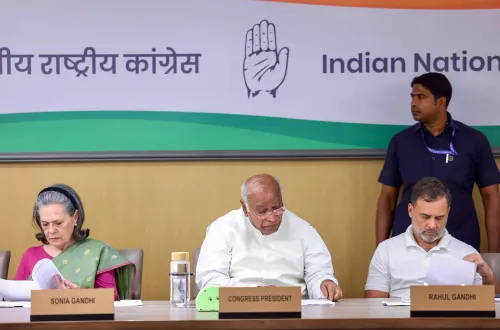
Odisha CM Mohan Charan Majhi accused Congress of treating Vande Mataram as political property after its Working Committee limited the song to two stanzas, reigniting a decades-old dispute over the national song rooted in a 1937 Congress resolution.
Key Takeaways
Odisha CM Mohan Charan Majhi publicly condemned the Congress Working Committee's decision to limit Vande Mataram to two stanzas on 20 August 2026 .
Majhi called the move 'vote-bank calculations' and said Vande Mataram is 'not Congress' political property to edit, dilute or bargain with.' The Congress position traces to a 1937 Haripura session resolution that limited the song to its first two stanzas to accommodate diverse community sentiments.
The dispute is part of a broader BJP-Congress contestation over ownership of national symbols and freedom-struggle heritage, intensified since 2014 .
No response from Congress had been issued publicly at the time of the post.
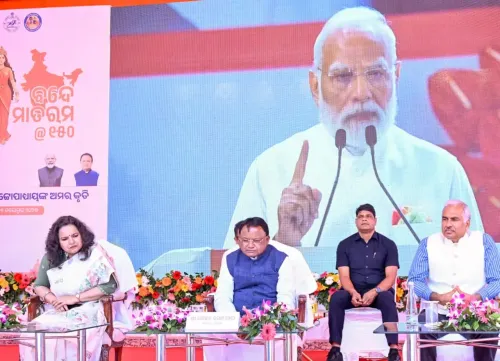
A song that once moved millions to defy colonial rule is now at the centre of a sharp political clash. Odisha Chief Minister Mohan Charan Majhi fired a pointed broadside at the Indian National Congress on Thursday, 20 August 2026, accusing the party of treating Vande Mataram as 'political property' after its Working Committee decided to limit the singing of the national song to only two stanzas.
Majhi did not mince words. 'Vande Mataram is not a political bargaining chip,' he wrote. 'It is the soul of Bharat's freedom struggle.' He went further, charging that 'a song that inspired generations of freedom fighters cannot be reduced to vote-bank calculations or political convenience.'
A 1937 Decision That Still Divides
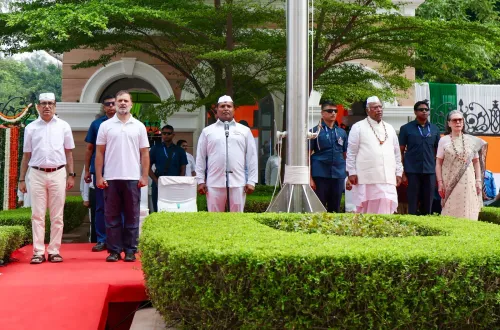
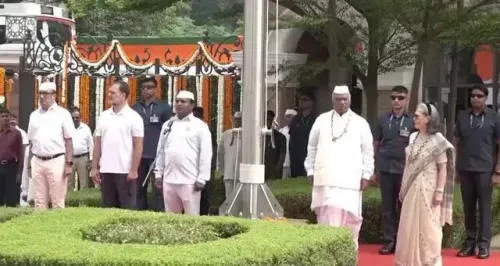
The Congress Working Committee's position on Vande Mataram is not new. At its 1937 Haripura session, the party resolved to sing only the first two stanzas of the song — a decision taken to accommodate diverse community sentiments at a time when the independence movement was building the broadest possible coalition. That context has long since become contested ground.
For the BJP, the 1937 resolution has served as a recurring exhibit in the argument that Congress historically subordinated cultural symbols to electoral arithmetic. For Congress, the decision reflected inclusive nation-building. The two readings have never converged — and Majhi's post makes clear the dispute is very much alive in 2026.
Nationalist Symbol, Partisan Battlefield
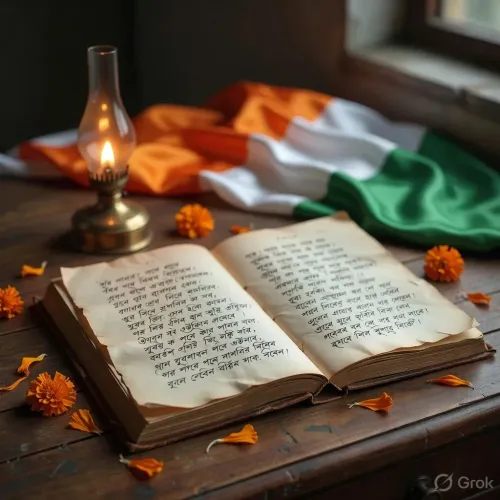
Vande Mataram — composed by Bankim Chandra Chattopadhyay in the 19th century and adopted as a rallying cry of the independence movement — occupies a singular place in India's cultural memory. Its first two stanzas were designated the national song after independence. The remaining stanzas, which carry explicit religious imagery, have historically been the fault line.
Majhi's intervention fits a well-worn but still potent pattern: since 2014, BJP leaders at the national and state level have repeatedly used cultural symbols — the national anthem, the national song, historical figures of the freedom struggle — to draw contrasts with Congress and reinforce a nationalist identity. Each such moment generates its own media cycle and, the party calculates, its own electoral dividend.
'The nation remembers. The nation has learnt. And the nation will not allow Congress to repeat the same politics again,' Majhi concluded — a closing line aimed as much at voters as at the opposition.
What Comes Next
With other state BJP units likely to amplify the statement and a parliamentary session on the horizon, the row over Vande Mataram could surface in legislative debate on national symbols and heritage policy. Congress has not yet responded publicly to Majhi's post. That silence — or whatever breaks it — will set the next beat of this story.
Point of View
However contextually defensible, has become a liability Congress struggles to explain in a changed political climate. By framing the issue as 'vote-bank politics,' Majhi is pitching to a broad, non-partisan sentiment that national symbols should be above negotiation — a framing that tends to win the optics battle regardless of the historical nuance. Watch for this to migrate from social media to the parliamentary floor, where it carries higher institutional stakes.
NationPress
20 Aug 2026
Frequently Asked Questions
Why did Congress limit Vande Mataram to two stanzas?
At its 1937 Haripura session , the Congress Working Committee resolved to sing only the first two stanzas of Vande Mataram to accommodate diverse community sentiments during the independence movement. The later stanzas contain explicit religious imagery that some communities found exclusionary.
What did Odisha CM Mohan Majhi say about Vande Mataram?
On 20 August 2026 , Majhi said Vande Mataram is 'the soul of Bharat's freedom struggle' and accused Congress of reducing it to 'vote-bank calculations,' asserting it is 'not Congress' political property to edit, dilute or bargain with.'
Is Vande Mataram India's national anthem?
No. Vande Mataram is India's national song , distinct from the national anthem 'Jana Gana Mana.' Its first two stanzas hold official status, composed originally by Bankim Chandra Chattopadhyay in the 19th century.
What is the BJP's position on Vande Mataram?
BJP leaders have consistently argued that Vande Mataram should be sung in full and have accused Congress of historically diluting national symbols for electoral reasons. This has been a recurring theme in BJP's cultural-nationalist messaging since 2014 .
Who is Mohan Charan Majhi?
Mohan Charan Majhi is the Chief Minister of Odisha and a BJP leader who assumed office in 2024 . He has been vocal on issues of national identity and cultural heritage.