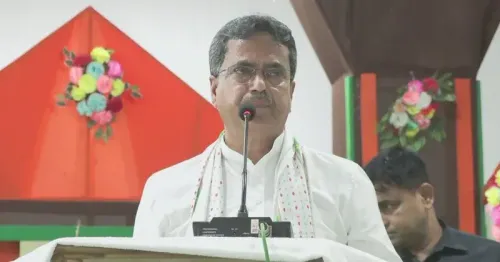
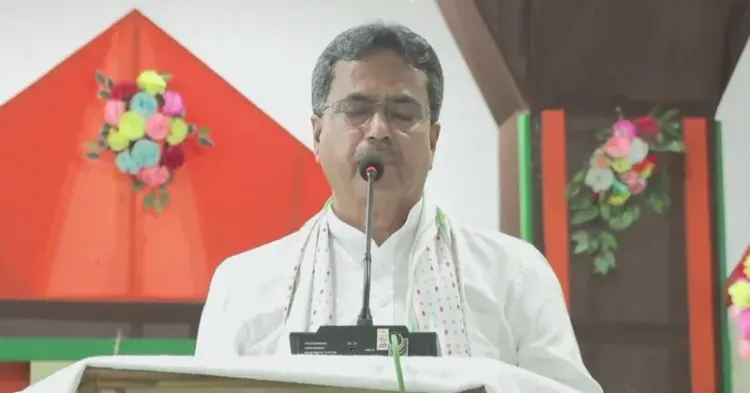
CM Manik Saha at Partition Remembrance Day 2026, MBB College
Synopsis
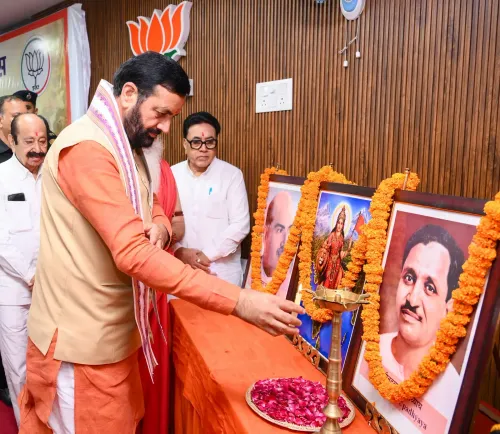
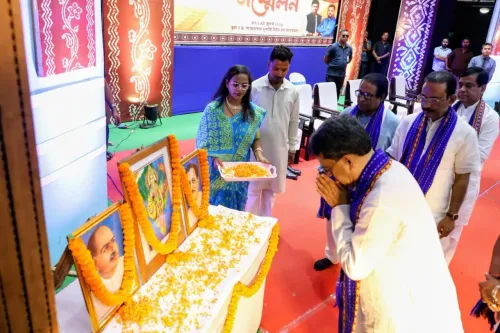
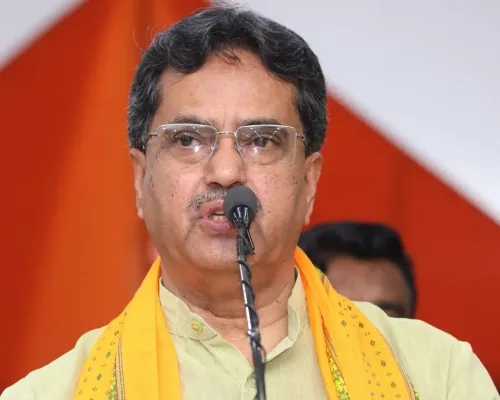
Tripura Chief Minister Dr. Manik Saha attended the Partition Horrors Remembrance Day 2026 observance at Maharaja Bir Bikram College in Agartala on 14 August, joining a national annual commemoration of the 1947 partition's human cost — a history Tripura bears with particular weight.
Key Takeaways
Manik Saha attended the Partition Horrors Remembrance Day event at Maharaja Bir Bikram College, Agartala on 14 August 2026 .
The Government of India declared 14 August as Partition Horrors Remembrance Day in 2021 to honour victims of the 1947 partition.
Tripura has a distinct historical connection to partition, having absorbed large refugee populations from what became East Pakistan and later Bangladesh.
The annual observance is held across Indian states, with local events rooted in community memory and educational institutions.
MBB College is a prominent government college in Agartala regularly used for significant civic and public functions.
Seventy-nine years after one of history's most violent mass displacements, Tripura Chief Minister Dr. Manik Saha joined the nation in solemn remembrance — attending the Partition Horrors Remembrance Day observance at Maharaja Bir Bikram College, Agartala, on 14 August 2026.
A day before Independence, a wound that never fully healed
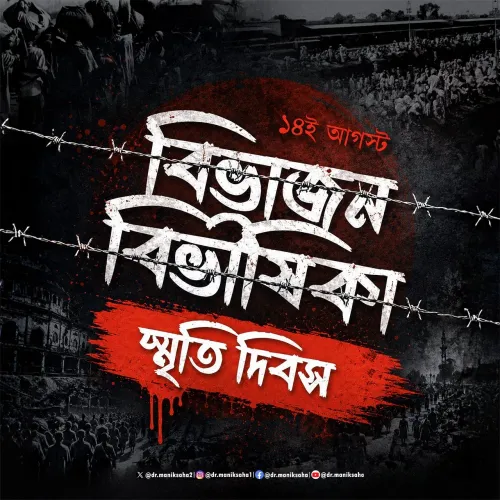
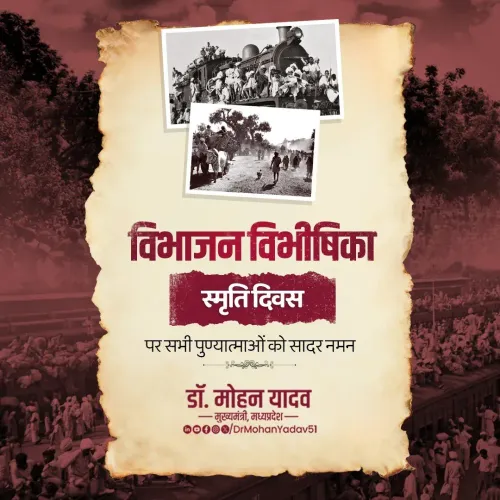
14 August carries a double weight in India's calendar. The eve of Independence is also the date the Government of India chose, in 2021, to mark as Partition Horrors Remembrance Day — a formal national observance honouring the millions who suffered displacement, violence, and loss when British India was divided into India and Pakistan in 1947. The choice of date is deliberate: joy and grief, separated by a single midnight.
Why Tripura holds this memory close
Tripura is not a bystander in this history. The state absorbed enormous waves of refugees from what became East Pakistan — and later Bangladesh — making partition's human cost viscerally local, not merely textbook. For families in Agartala and across the state, the observance is less a government programme and more a living act of witness.
Maharaja Bir Bikram College, a prominent government institution in the heart of Agartala, has long served as a civic gathering point for public and educational functions. Its selection as the venue underscores the intent to root the commemoration in community and learning, not just ceremony.
A national pattern, a state's particular grief
Across India, state governments hold events on this date each year — speeches, exhibitions, testimonies from survivors and their descendants. Tripura's observance fits that national pattern, but the state's demographic history gives it a sharper edge. The partition did not end for Tripura in 1947; its aftershocks — displacement, resettlement, cultural rupture — stretched across decades.
Dr. Saha's presence at the MBB College event signals the state government's continued commitment to keeping that memory institutionalised, passed to younger generations who did not live it but inherit its consequences.
Remembrance is not nostalgia. It is the insistence that what happened to real people, in real places, is never allowed to blur into abstraction.
Point of View
A state whose demographic identity was shaped by partition-era displacement, state-level observances carry policy weight beyond symbolism: they reinforce a collective memory that informs the state's approach to refugee history and cross-border identity. Dr. Saha's participation continues a pattern of BJP-governed states actively anchoring this observance in local civic life. The long-term question is whether these annual events deepen into substantive archival and testimonial programmes, or remain largely ceremonial.
NationPress
14 Aug 2026
Frequently Asked Questions
What is Partition Horrors Remembrance Day?
Partition Horrors Remembrance Day is observed annually on 14 August to honour the millions who suffered displacement and violence during the 1947 partition of British India into India and Pakistan. The Government of India formally declared this observance in 2021.
Why is 14 August chosen for Partition Horrors Remembrance Day?
14 August is the eve of India's Independence Day and also the date Pakistan marks its independence. Choosing this date acknowledges that the joy of independence and the trauma of partition are inseparable in history.
What is Maharaja Bir Bikram College?
Maharaja Bir Bikram College, commonly known as MBB College, is a prominent government college in Agartala, the capital of Tripura. It is frequently used as a venue for major public, educational, and civic functions in the state.
Why does Tripura have a special connection to the partition of India?
Tripura absorbed large waves of refugees from what became East Pakistan after the 1947 partition and again after the 1971 Bangladesh Liberation War. This history makes the partition's human cost deeply personal for many Tripura families.
What did CM Manik Saha do on 14 August 2026?
Tripura Chief Minister Dr. Manik Saha attended the Partition Horrors Remembrance Day 2026 observance held at Maharaja Bir Bikram College in Agartala, joining the national annual commemoration of the 1947 partition.