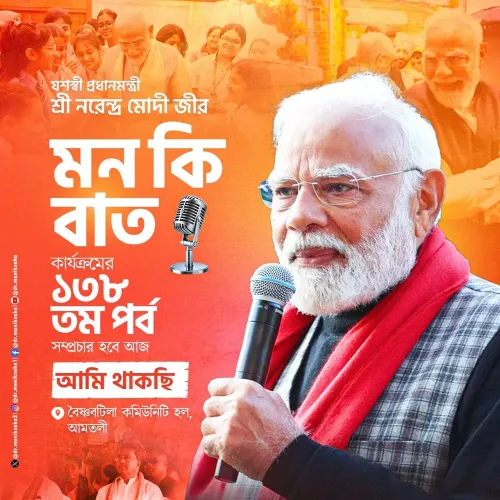
CM Manik Saha joins Mann Ki Baat Episode 138 in Amtali
Synopsis
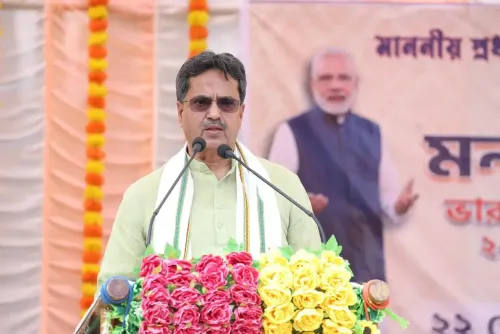
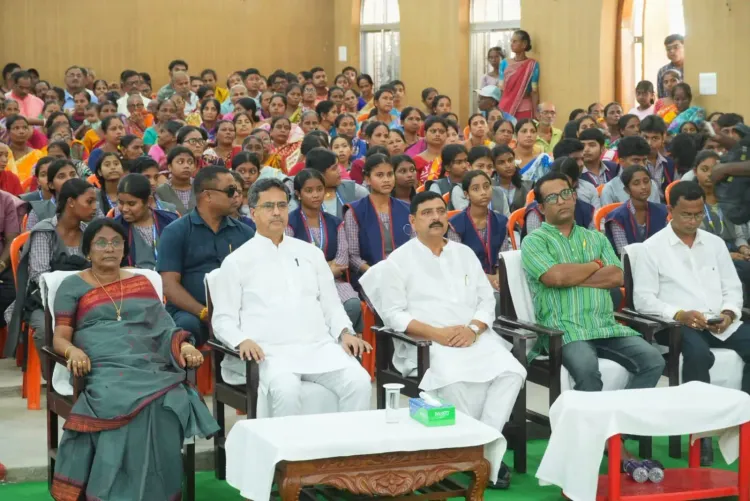
Tripura Chief Minister Dr. Manik Saha joined residents at Amtali's Baishnabtila Community Hall on 27 September 2026 to listen to the 138th episode of PM Modi's Mann Ki Baat, which covered the Surgical Strike anniversary, the census, Gujarat temples, de-addiction, sports and agriculture.
Key Takeaways
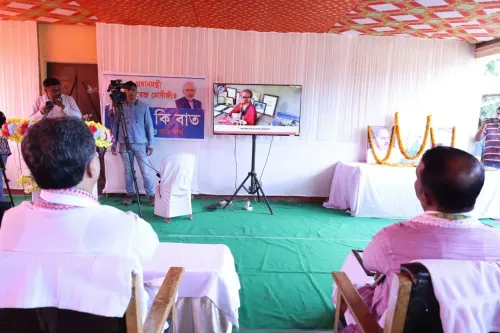
Manik Saha attended a community listening session for Mann Ki Baat Episode 138 at Baishnabtila Community Hall, Amtali, Tripura on 27 September 2026 .
PM Modi's 138th episode marked the tenth anniversary of the 2016 Surgical Strike across the Line of Control following the Uri attack.
The episode also addressed the upcoming national census , heritage at Gujarat's Somnath and Sun Temples , nature conservation, anti-addiction campaigns, sports and agriculture.
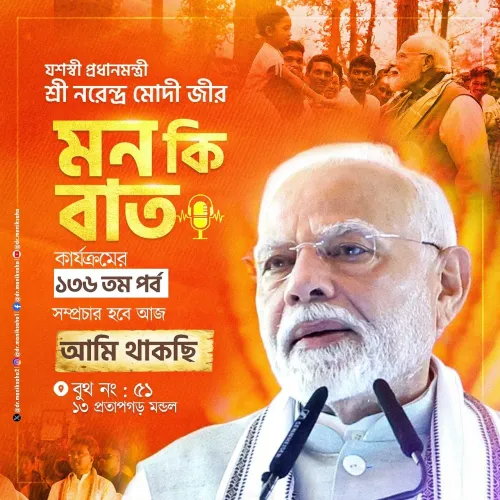
Mann Ki Baat has been broadcast monthly since October 2014 as a direct citizen-communication platform by PM Modi.
BJP state leaders routinely organise public listening events to extend the programme's reach at the grassroots, with Tripura being a key state for the party since its 2018 electoral breakthrough.
A community hall in Amtali's Baishnabtila became a small window into national politics on Sunday, 27 September 2026, as Tripura Chief Minister Dr. Manik Saha sat alongside local residents to listen to the 138th episode of Prime Minister Narendra Modi's Mann Ki Baat — a monthly radio address that has served as the BJP government's most direct conversational link with ordinary citizens since October 2014.
Sharing his experience on X in Bengali, Dr. Saha described Mann Ki Baat as 'দেশবাসীর ভাবনা, উপলব্ধি ও ইতিবাচক উদ্যোগের এক অনন্য মুক্তমঞ্চ' — 'a unique open platform for the thoughts, realisations and positive initiatives of the people of the country.' His post highlighted that today's episode covered the tenth anniversary of the Surgical Strike, the upcoming national census, Gujarat's Somnath Temple and Sun Temple, nature conservation, anti-addiction campaigns, sports and agriculture.
Surgical Strike at ten: Modi anchors the anniversary on air
The Surgical Strike anniversary was the headline moment of the episode. In September 2016, Indian Army special forces crossed the Line of Control in a retaliatory operation following the Uri attack — one of the most consequential and publicly discussed military actions of the Modi era. A decade on, Prime Minister Modi choosing Mann Ki Baat as the venue to mark the milestone signals the government's continued effort to keep the operation in active public memory, not just defence circles. The anniversary carries obvious political weight for the BJP, but it also speaks to a genuine shift in how India narrates military events to its own citizens.
Census, temples, and the breadth of the 138th episode
Beyond defence, today's episode ranged wide. Modi addressed the long-anticipated national census — a data-gathering exercise that was delayed for years and whose completion has broad implications for welfare scheme targeting and delimitation. He also spoke about Gujarat's Somnath Temple, one of the twelve Jyotirlingas and a site of deep cultural resonance that the central government has invested in restoring, alongside other heritage projects.
The inclusion of anti-addiction campaigns and sports in the same broadcast is typical of Mann Ki Baat's deliberate format: weave national security pride together with grassroots social messaging so that no single constituency feels left out. Agriculture featured too — a perennial priority in a country where farming households still form a decisive electoral and economic bloc.
Baishnabtila community hall and the BJP's ground strategy
The venue matters as much as the message. State-level BJP leaders across India routinely organise public listening sessions for Mann Ki Baat, converting what is technically a radio broadcast into a community event with cameras, local officials, and visible participation. Dr. Saha's presence in Amtali — a town in Tripura — is part of that coordinated outreach architecture. It lets a national programme land with a local face, reinforcing party organisation at the grassroots precisely in a state where the BJP has worked hard to consolidate its presence since wresting power in 2018.
Mann Ki Baat has now run for over twelve years and more than 130 episodes without missing a month — a consistency that itself becomes a message: the government is always at the table, always talking. Whether listeners agree with every word, the ritual of the broadcast has become part of India's political furniture. What follows in Tripura — any state-level follow-up on de-addiction drives or sports promotion flagged in today's episode — will tell us how much of national messaging converts into local action.
Point of View
With state-level attendance events converting a national broadcast into measurable party visibility. Dr. Saha's presence in Amtali is a textbook example of how the BJP synchronises central messaging with state organisational activity. The choice to highlight the Surgical Strike's tenth anniversary on this platform — rather than a formal press event — reflects a deliberate effort to keep defence nationalism embedded in everyday civic conversation. For Tripura, where BJP consolidation is still relatively recent, these community sessions serve a dual purpose: national alignment and local party reinforcement.
NationPress
27 Sept 2026
Frequently Asked Questions
What was discussed in Mann Ki Baat Episode 138?
The 138th episode of Mann Ki Baat, broadcast on 27 September 2026, covered the tenth anniversary of the Surgical Strike, the upcoming national census, Gujarat's Somnath and Sun Temples, nature conservation, anti-addiction campaigns, sports and agriculture.
Where did CM Manik Saha listen to Mann Ki Baat today?
Tripura Chief Minister Dr. Manik Saha listened to Mann Ki Baat Episode 138 alongside local residents at Baishnabtila Community Hall in Amtali, Tripura, on 27 September 2026.
When did the Surgical Strike take place and why is the anniversary significant?
The Surgical Strike was conducted by Indian Army special forces in September 2016 across the Line of Control in response to the Uri attack. Its tenth anniversary in 2026 was highlighted by PM Modi during Mann Ki Baat as a milestone in India's military history.
How long has Mann Ki Baat been running?
Mann Ki Baat was launched by Prime Minister Narendra Modi in October 2014 and has been broadcast monthly without interruption, reaching its 138th episode in September 2026 — spanning over twelve years.
Why do BJP leaders organise community listening events for Mann Ki Baat?
BJP state leaders organise public listening sessions to amplify Mann Ki Baat's reach at the grassroots, create visible community engagement around PM Modi's address, and align local party presence with national messaging — a practise consistent with the party's outreach strategy across India.