Jal Shakti Minister Paatil hails youth anti-drug message from Mann Ki Baat
Synopsis
Union Jal Shakti Minister C. R. Paatil praised India's youth on 27 September 2026 for carrying a drug-free message from every part of the country, amplifying the anti-drug theme from PM Modi's Mann Ki Baat radio programme.
Key Takeaways
Paatil , Union Jal Shakti Minister and senior BJP leader, posted on 27 September 2026 saluting youth for spreading a drug de-addiction message nationwide.
The post carried the official #ManKiBaat hashtag, linking it directly to Prime Minister Narendra Modi 's monthly radio address.
Mann Ki Baat , running since 2014 , has repeatedly featured drug awareness and youth-led social campaigns as recurring themes.
Cabinet ministers routinely amplify Mann Ki Baat messages on social media to extend the broadcast's reach to digital audiences.
National anti-drug awareness drives are supported by the Ministry of Social Justice and Empowerment through dedicated de-addiction schemes.
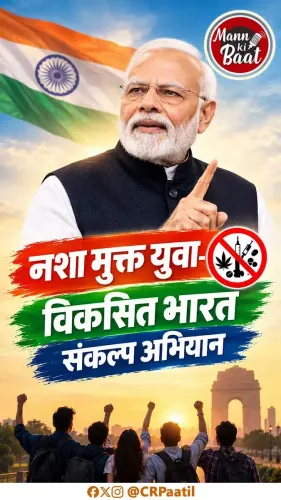
From every corner of India, young voices are saying no to drugs — and Union Jal Shakti Minister C. R. Paatil wants the country to hear them. On Sunday, 27 September 2026, Paatil took to X to amplify a message that Prime Minister Narendra Modi's monthly radio address, Mann Ki Baat, had placed at the centre of national conversation: India's youth are leading the charge on drug de-addiction.
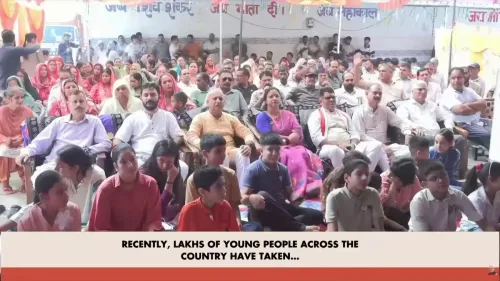
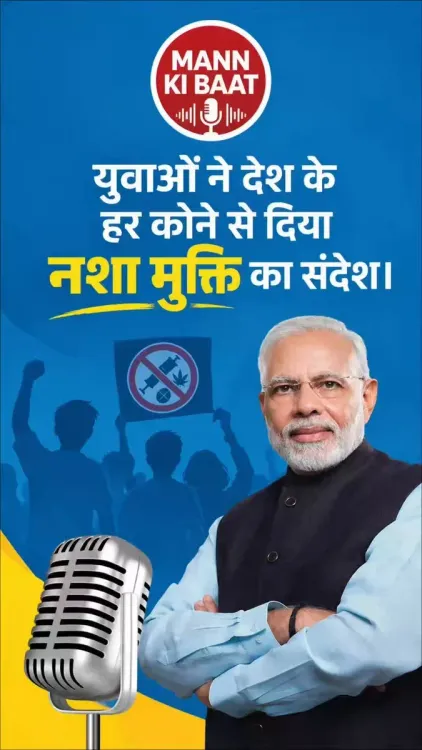
Paatil's post, in Hindi, reads: 'Yuvaon ne desh ke har kone se diya nasha mukti ka sandesh' — 'The youth have delivered the message of drug-free living from every corner of the country.' The post accompanied a video and was tagged with the official #ManKiBaat hashtag, signalling his deliberate alignment with the Prime Minister's platform.
What Mann Ki Baat has said about drugs
Mann Ki Baat, which Prime Minister Narendra Modi launched in 2014, has periodically spotlighted drug de-addiction and youth-driven social campaigns across its episodes. The programme's reach — broadcast on All India Radio and widely shared on digital platforms — makes it one of the most effective vehicles for amplifying welfare messaging to a mass audience. Substance abuse awareness has been a recurring theme, woven into the show's broader appeal to civic responsibility among young Indians.
Cabinet ministers as amplifiers of the PM's message
Paatil's post is part of a well-established pattern: Cabinet ministers routinely use social media to extend the reach of Mann Ki Baat themes beyond the Prime Minister's own broadcast. By doing so, the ruling party's messaging cascades from one high-profile radio address into a coordinated digital echo — reaching audiences who may have missed the original episode. For Paatil, a senior BJP leader and former Gujarat state president, this kind of amplification also reinforces the party's youth-welfare narrative ahead of future policy and electoral cycles.
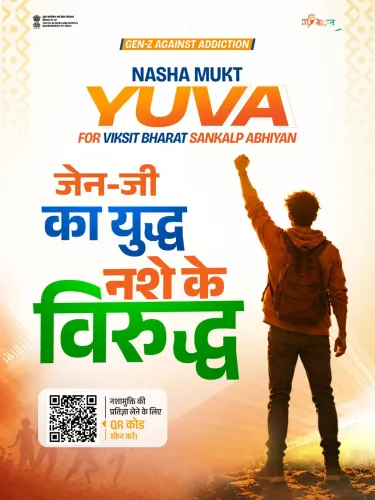
The broader national picture gives the message weight. Successive governments have run awareness drives against narcotics, and the Ministry of Social Justice and Empowerment oversees several de-addiction schemes that operate alongside state-level programmes. Youth participation — as messengers, volunteers, and community mobilisers — has become a cornerstone of how these campaigns are designed and communicated.
When a Cabinet minister declares that the youth have spoken 'from every corner of the country', it is a signal that the anti-drug drive is being treated not as a bureaucratic exercise but as a grassroots movement — one the government intends to keep momentum behind.
Point of View
And ministerial endorsements on social media reinforce that framing. Watch whether the Ministry of Social Justice follows with programme announcements, which would indicate that the rhetorical push is backed by fresh institutional action.
NationPress
27 Sept 2026
Frequently Asked Questions
What did C. R. Paatil post about Mann Ki Baat and drugs?
On 27 September 2026, Paatil posted on X saying that India's youth had delivered a message of drug-free living from every corner of the country, using the #ManKiBaat hashtag to link the message to PM Modi's radio programme.
What is Mann Ki Baat and how does it relate to drug awareness?
Mann Ki Baat is Prime Minister Narendra Modi's monthly radio address, running since 2014. It has periodically featured drug de-addiction and youth-led social campaigns as part of its broader civic-awareness agenda.
Who is C. R. Paatil?
C. R. Paatil is the Union Minister of Jal Shakti in the Modi government, a senior BJP leader, and the former president of the BJP's Gujarat state unit.
Why do Cabinet ministers post about Mann Ki Baat themes?
Ministers routinely amplify Mann Ki Baat themes on social media to extend the Prime Minister's message beyond the radio broadcast, reaching younger and digitally connected audiences and reinforcing the ruling party's welfare narrative.
Which government body oversees drug de-addiction schemes in India?
The Ministry of Social Justice and Empowerment is the primary central government body overseeing de-addiction and drug awareness programmes, which run alongside state-level initiatives.