Jal Shakti Minister Paatil marks September as anti-malnutrition month
Synopsis
Union Jal Shakti Minister C. R. Paatil marked September as India's month-long battle against malnutrition on X, echoing PM Modi's Mann Ki Baat and the annual Rashtriya Poshan Maah drive under POSHAN Abhiyaan, now in its eighth year.
Key Takeaways
Paatil , Union Jal Shakti Minister, posted on 27 September 2026 declaring September dedicated to fighting malnutrition.
The post invoked #ManKiBaat , PM Modi's monthly radio address that regularly amplifies the nutrition campaign.
Rashtriya Poshan Maah has been observed every September since 2018 under the POSHAN Abhiyaan framework.
POSHAN 2.0 integrates child development, health, and water-sanitation streams into a converged nutrition strategy.
The Jal Shakti ministry's role underscores India's multi-sectoral approach — clean water access is a direct determinant of child nutrition outcomes.
Next NFHS or Poshan Tracker data releases will be the key measure of campaign impact.
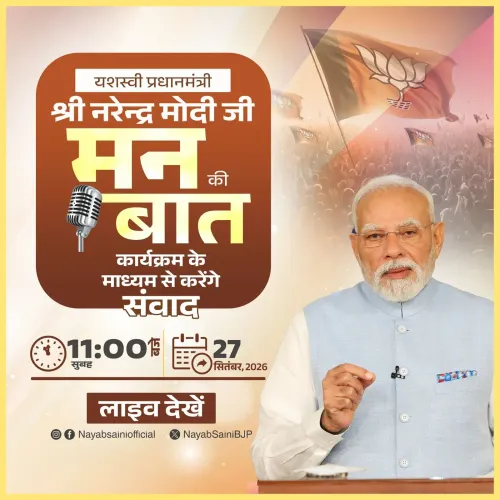
Every September, India wages a quiet but urgent war — one fought not on a battlefield but in anganwadis, villages, and homes across the country. Union Jal Shakti Minister C. R. Paatil reinforced that resolve on Sunday, 27 September 2026, posting a message on X declaring the month dedicated to the fight against malnutrition, invoking Prime Minister Narendra Modi's Mann Ki Baat programme as the rallying call.
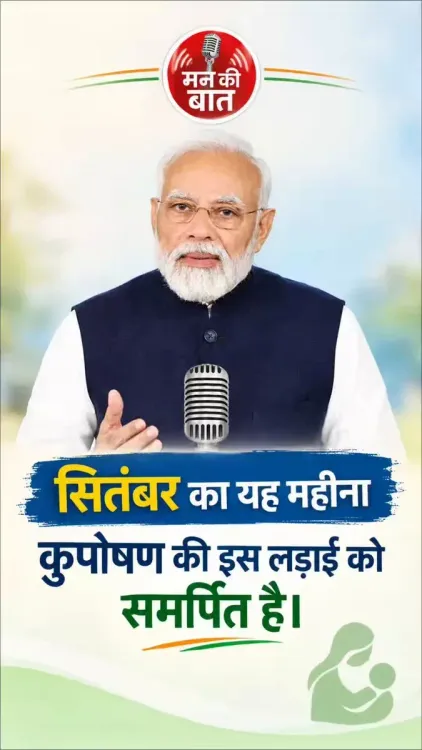
Paatil's post — 'सितंबर का यह महीना कुपोषण की लड़ाई को समर्पित है' ('This month of September is dedicated to the battle against malnutrition') — tagged #ManKiBaat, situating the message within the Prime Minister's monthly radio address, which has consistently spotlighted grassroots nutrition campaigns.
Rashtriya Poshan Maah: eight years of September mobilisation
The backdrop is Rashtriya Poshan Maah, observed every September since 2018 as the community-action centrepiece of POSHAN Abhiyaan — the Government of India's flagship nutrition programme targeting children under six, pregnant women, and lactating mothers. The month-long drive channels government machinery, civil society, and frontline health workers into a concentrated push against stunting, wasting, anaemia, and low birth weight.
POSHAN 2.0, the upgraded iteration of the original scheme, has since woven together the Integrated Child Development Services and other nutrition streams into a single converged framework. Water, sanitation, and hygiene — Paatil's own ministerial domain under Jal Shakti — are a recognised pillar of that framework, since clean water access directly shapes child nutrition outcomes.
Why a Jal Shakti minister amplifying nutrition messaging matters
India's multi-sectoral nutrition strategy has always been its distinguishing feature: no single ministry owns the problem. Health, Women and Child Development, and Jal Shakti all hold a piece of the puzzle. A senior minister whose portfolio spans drinking water and sanitation amplifying the Poshan Maah message is not incidental — it signals the cross-ministry coordination the programme's architects designed.
Mann Ki Baat has been a deliberate tool in that communication architecture. Since its launch, Prime Minister Modi has used the broadcast to highlight nutrition milestones, nudge community participation, and keep the campaign visible beyond government press releases. Tagging the programme explicitly places Paatil's post within a well-established, top-down awareness chain.
The next hard measure of whether this advocacy translates into outcomes will come from the next round of NFHS or Poshan Tracker data releases — the numbers that will either validate or challenge years of September mobilisation.
Point of View
Anchored to Mann Ki Baat's mass reach. The deliberate cross-ministry signalling — a Jal Shakti minister speaking to nutrition — reflects the architecture of POSHAN 2.0, which explicitly links water, sanitation, and hygiene to nutritional outcomes. After eight consecutive Poshan Maahs, the challenge shifts from awareness to accountability: the next NFHS or Poshan Tracker data cycle will determine whether the mobilisation rhetoric is matching measurable ground-level change. For the BJP, keeping nutrition visible in the public discourse ahead of any budget cycle also serves a political purpose — demonstrating welfare delivery at scale.
NationPress
27 Sept 2026
Frequently Asked Questions
What is Rashtriya Poshan Maah?
Rashtriya Poshan Maah is a month-long national nutrition campaign observed every September since 2018 under the POSHAN Abhiyaan framework, mobilising communities, anganwadi workers, and government departments to fight malnutrition among children, pregnant women, and lactating mothers.
What is POSHAN Abhiyaan?
POSHAN Abhiyaan is the Government of India's flagship nutrition programme launched in 2018 to reduce stunting, wasting, anaemia, and low birth weight. Its upgraded version, POSHAN 2.0, integrates child development, health, and water-sanitation services.
Why did Jal Shakti Minister C. R. Paatil post about malnutrition?
The Jal Shakti ministry's mandate over drinking water and sanitation directly connects to nutrition outcomes. India's multi-sectoral nutrition strategy involves health, women and child development, and water ministries working together, making Paatil's advocacy consistent with the programme's design.
What is Mann Ki Baat and its link to nutrition campaigns?
Mann Ki Baat is Prime Minister Narendra Modi's monthly radio address. It has regularly highlighted the Poshan Maah campaign and nutrition milestones, serving as a mass-communication tool to sustain public awareness of schemes like POSHAN 2.0.
How is India's progress on malnutrition measured?
India tracks nutrition outcomes primarily through the National Family Health Survey (NFHS) and the real-time Poshan Tracker dashboard, which monitors anganwadi-level interventions. The next data release from these sources will indicate whether annual Poshan Maah campaigns are translating into measurable improvements.