Jal Shakti Minister Paatil backs PM Modi's 100-week anti-drug drive
Synopsis
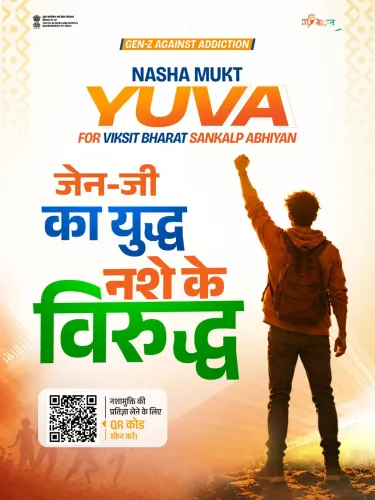
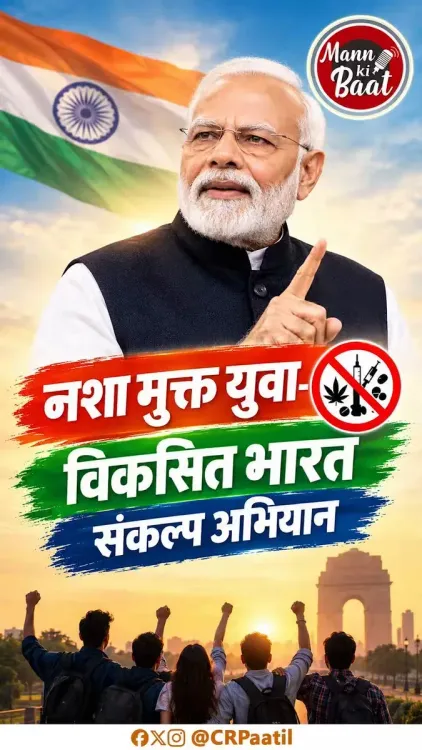
Union Jal Shakti Minister C. R. Paatil amplified PM Modi's video backing the Nasha Mukt Yuva Abhiyan, a 100-week anti-drug campaign in which millions of Indian youth have pledged to stay drug-free and spread the de-addiction message.
Key Takeaways
Paatil , Union Minister of Jal Shakti, shared a PM Modi video on 27 September 2026 promoting the Nasha Mukt Yuva Abhiyan.
The campaign is designed to run for 100 weeks , making it a sustained national mobilisation rather than a one-off event.
Youth participants pledge both personal abstinence and peer-to-peer outreach, creating a grassroots ambassador model.
The drive builds on the Nasha Mukt Bharat Abhiyan launched in August 2020 by the Ministry of Social Justice and Empowerment.
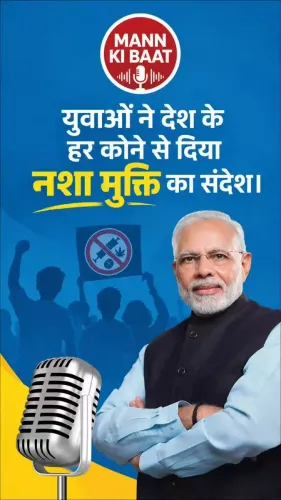
PM Modi highlighted nasha mukt ka sandesh — the de-addiction message itself — as the most important feature of the campaign.
The NDA government has consistently linked anti-drug drives to both social welfare and internal security concerns over narcotics trafficking.
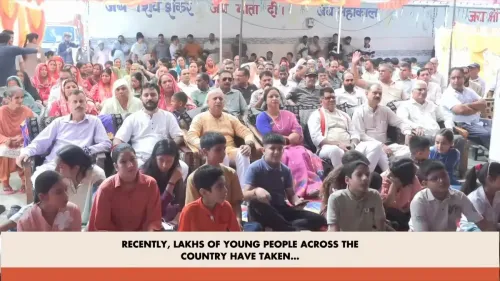
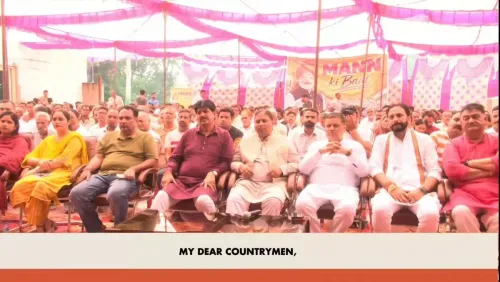
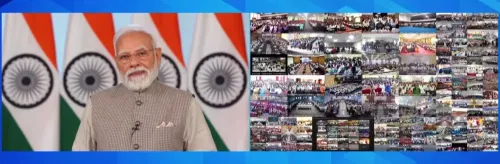
Millions of young Indians have taken a public pledge to stay drug-free — and to carry that message outward, person to person. Union Jal Shakti Minister C. R. Paatil amplified the campaign on Sunday, 27 September 2026, sharing a video address by Prime Minister Narendra Modi that spotlights the Nasha Mukt Yuva Abhiyan — a 100-week youth-focused anti-drug drive gathering momentum across the country.
What PM Modi said about the campaign
In the video, PM Modi underlined what he called the campaign's most distinctive quality: the de-addiction message itself. 'नशामुक्ति का संदेश' — the message of a drug-free life — is being carried not just top-down by the state, but by the youth themselves, who have pledged both to abstain and to spread the word. Paatil quoted the Prime Minister directly: 'नशे के विरुद्ध और drugs के खिलाफ एक बहुत महत्वपूर्ण संकल्प' — 'a very important resolution against addiction and drugs.'
The campaign's design is peer-driven: young people pledge abstinence and then become grassroots ambassadors, multiplying reach far beyond what any single government announcement could achieve. The 100-week duration signals this is not a one-day event but a sustained mobilisation.
Roots in Nasha Mukt Bharat Abhiyan
The Nasha Mukt Yuva Abhiyan builds on the Nasha Mukt Bharat Abhiyan, which the Ministry of Social Justice and Empowerment launched in August 2020 to reduce substance abuse nationwide. That earlier programme targeted high-burden districts with de-addiction camps, community outreach, and school-level awareness — laying the institutional groundwork that the current youth-pledge campaign now extends.
Successive NDA administrations have framed such drives around two converging concerns: social welfare for families ravaged by addiction, and internal-security pressures from narcotics trafficking. Cross-ministry coordination and state-level rollouts have been standard features of this policy lineage.
Why Paatil's amplification matters
Paatil's post is part of a broader pattern in which cabinet ministers — regardless of their direct portfolio — use their social-media reach to extend the Prime Minister's messaging on flagship welfare campaigns. As a senior BJP leader and former Gujarat BJP state president, Paatil commands a substantial following, and his share pushes the campaign's visibility beyond the core Jal Shakti or social-justice audience.
The real test of the Nasha Mukt Yuva Abhiyan will come in its milestone reviews — participation numbers, pledge counts, and eventual impact data — which are likely to surface in parliamentary questions on narcotics control over the campaign's 100-week run. For now, the pledge wave is rolling.
Point of View
Peer-amplified campaigns — a model that generates visible political momentum but whose long-term impact depends entirely on post-pledge follow-through. Cabinet ministers rallying around the campaign beyond their own portfolios reflects a disciplined messaging strategy that links welfare optics to the BJP's broader 'nation-building youth' narrative. The 100-week duration is politically shrewd: milestone reviews will keep the campaign in the news cycle well into the next electoral calendar. Analysts will watch whether participation data and narcotics-trafficking indicators eventually converge — or diverge — as the real measure of success.
NationPress
27 Sept 2026
Frequently Asked Questions
What is the Nasha Mukt Yuva Abhiyan?
The Nasha Mukt Yuva Abhiyan is a central government anti-drug campaign in which millions of Indian youth pledge to abstain from drugs and spread the de-addiction message to others. It is set to run for 100 weeks.
What did PM Modi say about the Nasha Mukt Yuva Abhiyan?
PM Modi praised the campaign's core design — the de-addiction message being carried by young people themselves — calling it the most important and distinctive feature of the drive.
What is the difference between Nasha Mukt Bharat Abhiyan and Nasha Mukt Yuva Abhiyan?
The Nasha Mukt Bharat Abhiyan was launched in August 2020 by the Ministry of Social Justice and Empowerment and focused on high-burden districts with de-addiction camps and outreach. The Nasha Mukt Yuva Abhiyan is a newer youth-pledge-led campaign that builds on that foundation.
Why did C. R. Paatil post about the anti-drug campaign?
As a senior BJP leader and cabinet minister, C. R. Paatil shared PM Modi's video as part of the broader ministerial effort to amplify the Nasha Mukt Yuva Abhiyan beyond its core audience.
How long will the Nasha Mukt Yuva Abhiyan run?
According to PM Modi's address shared by C. R. Paatil, the Nasha Mukt Yuva Abhiyan will run for 100 weeks.