CM Mann caps Punjab private school fee hikes at 5%
Synopsis
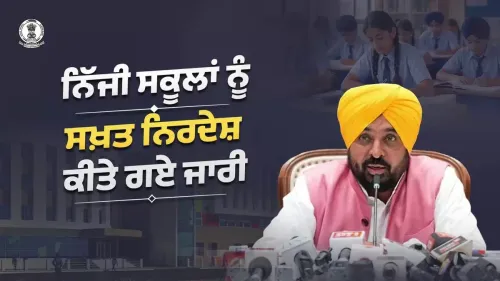
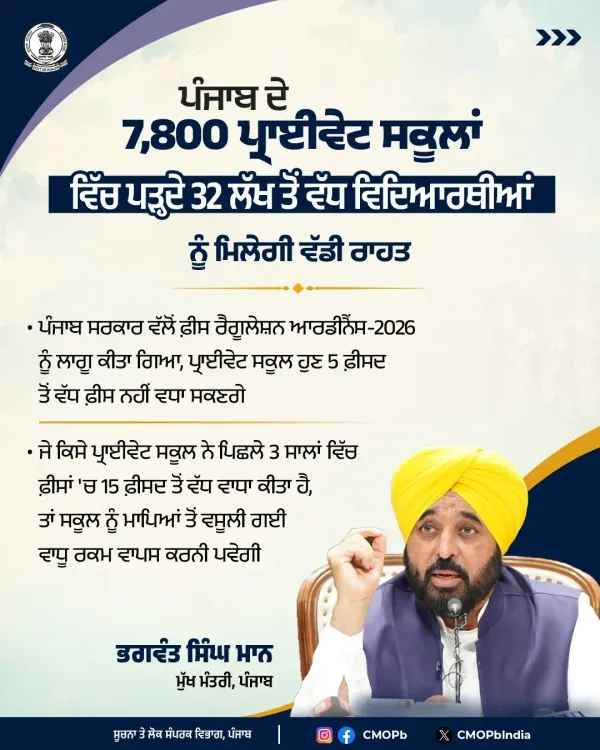
The Punjab government under CM Bhagwant Singh Mann has promulgated an ordinance capping annual private school fee hikes at 5%, mandating refunds where fees rose over 15% in three years, and treating all charges as tuition fees — bringing relief to over 32 lakh students.
Key Takeaways
The Punjab Regulation of Fees of Unaided Educational Institutions (Amendment) Ordinance, 2026 was promulgated on 14 July 2026 .
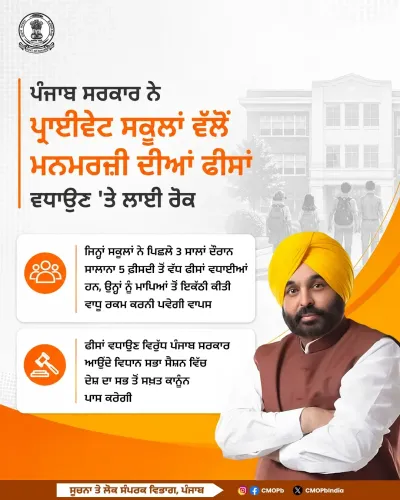
Annual fee hikes at all unaided private schools in Punjab are now capped at 5 per cent .
Schools that raised fees by more than 15 per cent over the last three years must issue mandatory refunds to parents.
Transport, building, and other ancillary charges will now be counted as part of tuition fees under the new definition.
Penalties for non-compliance include derecognition of the institution.
Over 32 lakh students and their families are expected to benefit from the ordinance.
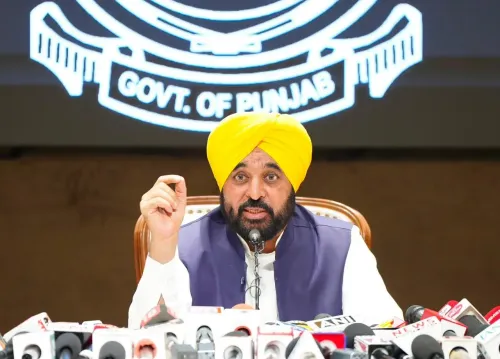
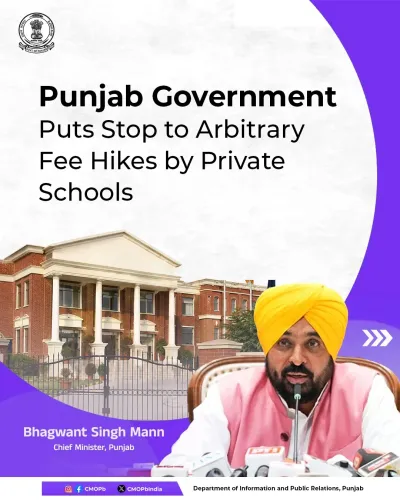
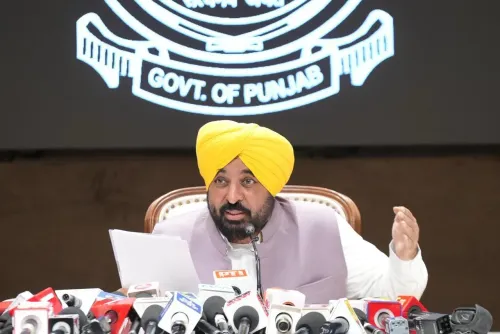
The Chief Minister's Office of Punjab announced on Tuesday, 14 July 2026 that the state government, led by Chief Minister Bhagwant Singh Mann, has promulgated the Punjab Regulation of Fees of Unaided Educational Institutions (Amendment) Ordinance, 2026, bringing private school fees under a strict regulatory framework and delivering relief to over 32 lakh students and their families across the state.
Context
The ordinance, announced via the official CMO Punjab account, caps annual fee hikes at 5 per cent for all unaided private schools in Punjab. It also mandates refunds in cases where fee increases have exceeded 15 per cent over the previous three years — a provision directly targeting schools that have compounded steep hikes over successive academic sessions.
Critically, the ordinance redefines the scope of regulated fees: charges for transport, building funds, and other ancillary heads will now be treated as part of tuition fees, closing a long-exploited loophole through which schools levied heavy add-on charges outside the purview of earlier regulations. Violations, including repeat non-compliance, can attract derecognition of the institution.
Policy Backdrop
Punjab's move follows a broader national pattern: several Indian states enacted fee-regulation legislation for unaided private schools through the 2010s in response to mounting middle-class grievances over unchecked annual hikes. The Aam Aadmi Party (AAP) government that came to power in March 2022 under Chief Minister Mann had already flagged private school affordability as a priority alongside its flagship government-school upgrade drive.
The use of an ordinance — an executive instrument — allows the government to give the law immediate effect without waiting for the next assembly session. Under constitutional provisions, the ordinance must be placed before the Punjab Vidhan Sabha within six weeks of it reassembling, making a formal legislative bill the expected next step before the 2026-27 academic year is fully under way.
Stakeholders and Impact
The primary beneficiaries are the families of more than 32 lakh students enrolled in unaided private schools across Punjab — a constituency that has long complained of arbitrary annual fee revisions with little recourse. For school managements, the ordinance introduces mandatory fee-structure disclosures and subjects all charges to a single regulatory ceiling.
Private school associations are expected to scrutinise the refund mechanism most closely: the requirement to return excess fees collected over the past three years represents a direct financial liability for institutions that hiked fees aggressively. The derecognition penalty, if enforced, would be among the stiffest consequences available to state regulators in India's school-fee governance landscape.
What's Next
Attention will now turn to the subordinate rules to be framed under the ordinance, which will determine how the 5 per cent cap is calculated, how refund claims are filed and adjudicated, and which authority will hear appeals. Legal challenges from school management bodies before the Punjab and Haryana High Court are a possibility, as has been seen in other states following similar legislation. The government will need to convert the ordinance into a full act within the constitutional deadline to give the reforms lasting statutory force.
Point of View
Targeting the large and vocal constituency of private-school parents squeezed by rising education costs. By using an executive ordinance rather than waiting for a legislative session, the Mann government has ensured immediate enforceability and maximum media impact at the start of a new academic year. The inclusion of ancillary charges within the fee cap is the most substantive policy innovation — it addresses a structural gap that rendered earlier state-level fee regulations largely ineffective. Whether the administration has the regulatory bandwidth to enforce refund mandates and process derecognition proceedings at scale will determine if the reform delivers durable relief or remains largely symbolic.
NationPress
14 Jul 2026
Frequently Asked Questions
What does the Punjab school fee ordinance 2026 say?
The Punjab Regulation of Fees of Unaided Educational Institutions (Amendment) Ordinance, 2026 caps annual fee hikes at 5%, mandates refunds where fees rose more than 15% over three years, includes transport and building charges within the definition of tuition fees, and prescribes derecognition for violations.
How many students benefit from Punjab's private school fee cap?
The Punjab government states that over 32 lakh students and their families across the state will benefit from the new fee regulation ordinance.
Will private schools in Punjab have to refund excess fees?
Yes. Under the ordinance, schools that have increased fees by more than 15% over the past three years are required to issue mandatory refunds to affected students and parents.
What happens if a private school violates the Punjab fee ordinance?
The ordinance prescribes stringent penalties for non-compliance, including derecognition of the institution — one of the strictest consequences available under Indian state-level school-fee regulation.
Is the Punjab fee ordinance a permanent law?
An ordinance is an executive measure with immediate effect, but it must be placed before the Punjab Vidhan Sabha within six weeks of the assembly reassembling. The government is expected to introduce a full legislative bill to replace it before the constitutional deadline.