CM Mann Launches 'Pindan Da Hal' Plan to Fight Punjab Drug Menace
Synopsis
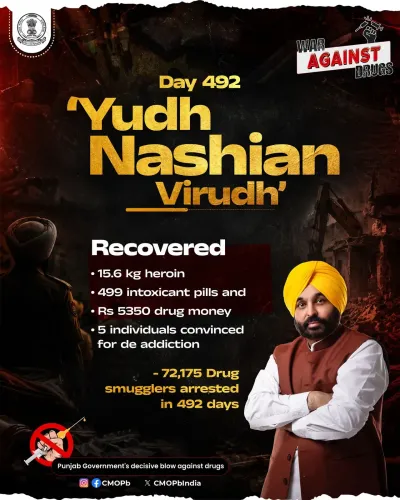
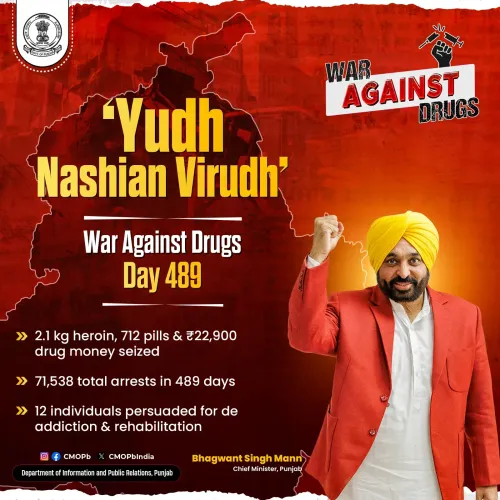
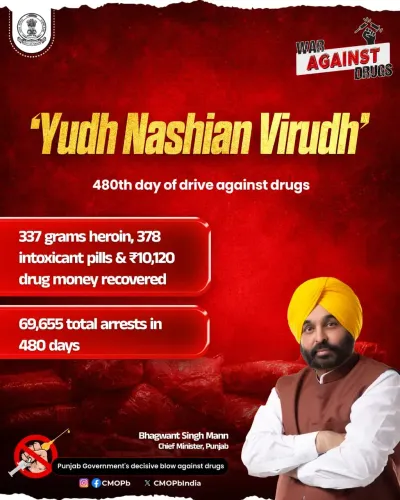
Chief Minister Bhagwant Mann has launched the Pindan Da Hal Action Plan under Punjab's Yudh Nashian Virudh campaign, targeting drug peddlers at the village level and aiming to rehabilitate drug-dependent youth across the state.
Key Takeaways
Chief Minister Bhagwant Singh Mann has implemented the Pindan Da Hal Action Plan as a village-level extension of the Yudh Nashian Virudh anti-drug campaign.
The plan has a dual mandate: eliminating drug peddlers from Punjab and rehabilitating youth trapped in drug abuse.
The initiative deepens the AAP government's zero-tolerance drug policy, first announced after the March 2022 election victory.
The plan emphasises grassroots coordination between police, health workers, and local village bodies — a structural shift from earlier enforcement-only drives.
Punjab's rural youth are the primary target group, given the state's documented history of high opioid and synthetic drug use spanning more than fifteen years.
District-level metrics — including FIR data and rehabilitation admissions — will be key indicators of the plan's on-ground effectiveness.
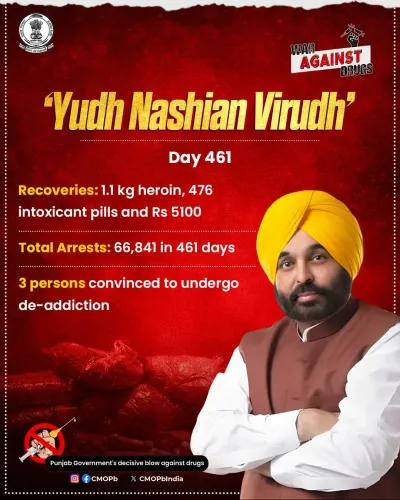
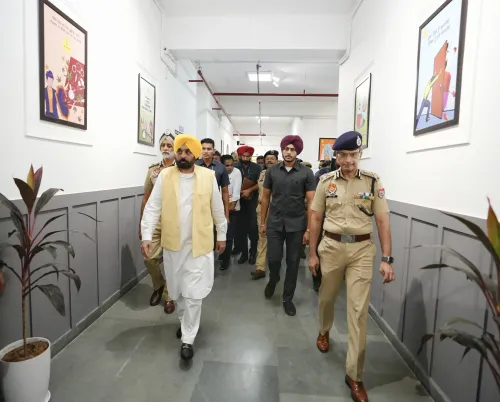
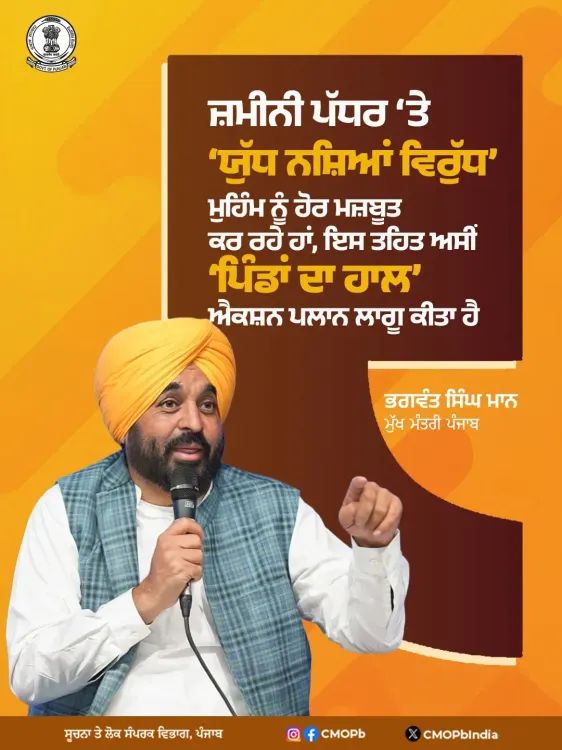
The Chief Minister's Office of Punjab announced on Monday, 13 July 2026 that Chief Minister Bhagwant Singh Mann has implemented the Pindan Da Hal Action Plan — a village-level initiative under the state's flagship Yudh Nashian Virudh (War Against Drugs) campaign — aimed at eliminating drug peddlers and rehabilitating drug-dependent youth across Punjab.
Context
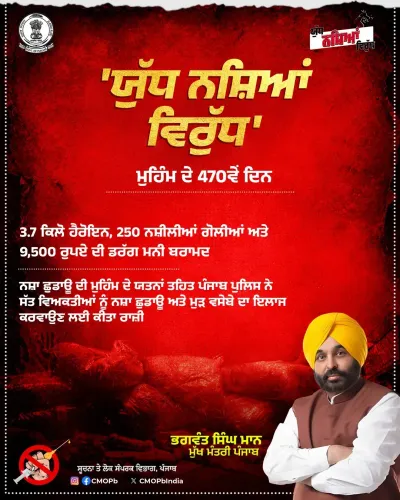
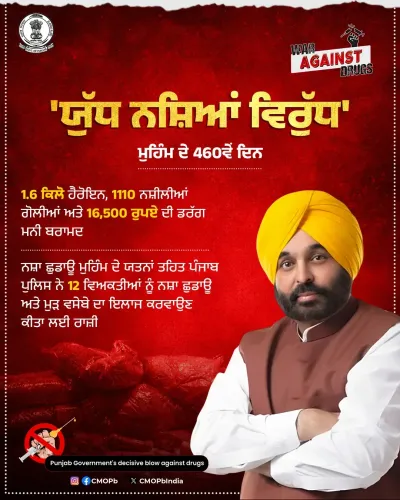
The CMO Punjab post, published in both Punjabi and English, states that the plan is being rolled out 'ਜ਼ਮੀਨੀ ਪੱਧਰ 'ਤੇ' (at the grassroots level) as part of the government's commitment to deepen its anti-narcotics drive. According to the announcement, the plan is 'designed not only to eliminate drug peddlers from the state but also to protect and empower the youth by steering them away from the menace of drug abuse.'
The Yudh Nashian Virudh campaign has been the cornerstone of the Aam Aadmi Party government's social-governance agenda since Mann took office in March 2022. The Pindan Da Hal Action Plan represents its latest operational layer, taking the campaign directly to the village level.
Policy Backdrop
Punjab has grappled with high rates of opioid and synthetic drug use for more than fifteen years, a crisis repeatedly flagged in central and state government reports. Previous administrations relied primarily on police-led crackdowns and de-addiction camps, with limited sustained impact on ground realities.
After winning the 2022 assembly elections, the AAP government under Bhagwant Mann announced a zero-tolerance policy against drugs. The present approach stresses coordinated action between police, health workers, and local bodies at the pind (village) level — a structural shift from earlier centralised enforcement drives.
Stakeholders and Impact
Punjab's rural youth are the primary target beneficiaries of the Pindan Da Hal Action Plan. The plan is framed around a dual mandate: prosecutorial action against drug networks and rehabilitative support for individuals caught in addiction.
Village-level coordination is central to the design, with local bodies expected to play a role alongside law-enforcement and health machinery. The initiative directly concerns communities in Punjab's rural belt, where drug dependency has had documented social and economic consequences for families over multiple generations.
What's Next
The effectiveness of the Pindan Da Hal Action Plan will be measured through district-level rollout metrics, including shifts in drug-related FIRs and rehabilitation admissions over the coming quarters. The government has not yet disclosed a specific timeline for statewide coverage or quantitative targets tied to the plan.
Sustained village-level implementation — bridging the gap between policy announcements and on-ground outcomes — remains the central challenge for an administration that has staked considerable political capital on delivering a drug-free Punjab.
Point of View
The AAP government is reinforcing one of its most electorally salient commitments ahead of future political cycles. The dual framing — punitive against peddlers, rehabilitative for users — reflects a more nuanced public-health approach than the purely enforcement-driven models of the past. Whether the plan translates into measurable outcomes will depend on district administration capacity and inter-departmental coordination, both historically weak links in Punjab's governance chain.
NationPress
13 Jul 2026
Frequently Asked Questions
What is the Pindan Da Hal Action Plan in Punjab?
The Pindan Da Hal Action Plan is a village-level anti-drug initiative launched by Chief Minister Bhagwant Singh Mann under Punjab's Yudh Nashian Virudh campaign. It aims to eliminate drug peddlers from villages and rehabilitate youth affected by drug abuse.
What is the Yudh Nashian Virudh campaign?
Yudh Nashian Virudh , meaning 'War Against Drugs,' is a statewide anti-narcotics campaign launched by the Punjab government after the AAP's election victory in March 2022 . It forms the core of Chief Minister Bhagwant Mann's drug-eradication agenda.
How bad is the drug problem in Punjab?
Punjab has recorded high rates of opioid and synthetic drug use for more than fifteen years, consistently flagged in central and state government reports. The crisis has had significant social and economic consequences for rural families across the state.
What makes Pindan Da Hal different from earlier anti-drug drives in Punjab?
Unlike earlier police-led crackdowns, the Pindan Da Hal Action Plan emphasises grassroots coordination between police, health workers, and local village bodies. It also combines enforcement against peddlers with a rehabilitative approach for drug-dependent youth.
Who will benefit from the Pindan Da Hal Action Plan?
The primary beneficiaries are Punjab's rural youth and village communities, particularly those affected by drug dependency. The plan also aims to make villages safer by removing drug peddler networks operating at the local level.