CM Mann's Meri Rasoi Yojana Reaches 21.29 Lakh Punjab Families
Synopsis
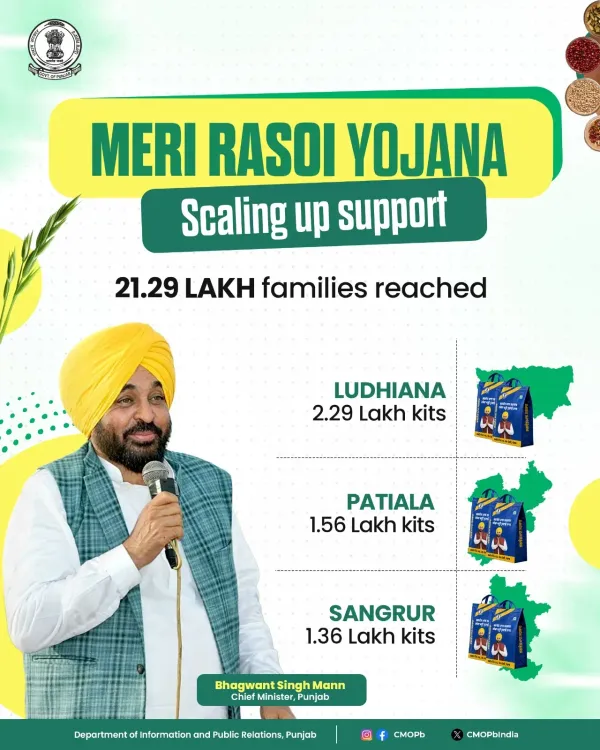
Punjab's Meri Rasoi Yojana, led by Chief Minister Bhagwant Mann, has distributed free ration kits to 21.29 lakh families, layering state nutrition support on top of central NFSA wheat entitlements to tackle hunger and dietary gaps across the state.
Key Takeaways
Meri Rasoi Yojana has reached 21.29 lakh beneficiary families in Punjab as of 7 July 2026 .
The scheme distributes free ration kits on top of existing NFSA wheat allocations , addressing both hunger and nutritional diversity.
The programme is a flagship initiative of Chief Minister Bhagwant Mann 's Aam Aadmi Party government, which took office in March 2022 .
The layered approach — state kits over central grain — reflects a broader model adopted by Indian states to close nutrition gaps that NFSA alone does not cover.
Future budget allocations and independent outcome evaluations will determine the scheme's scalability and fiscal sustainability.
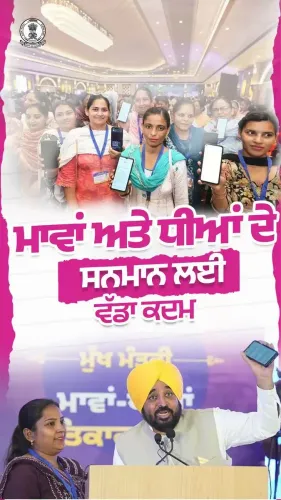
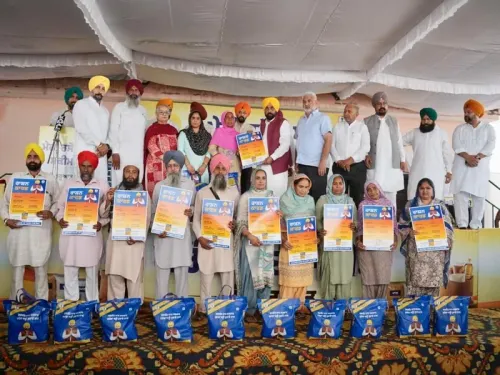
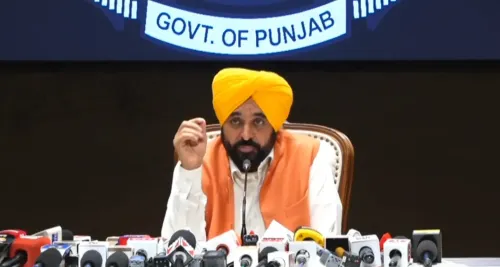
The Chief Minister's Office of Punjab announced on Tuesday, 7 July 2026 that the state government's flagship ration kit distribution programme, Meri Rasoi Yojana, has reached 21.29 lakh beneficiary families since its launch. The scheme, spearheaded by Chief Minister Bhagwant Mann, is designed to complement existing central food security entitlements and address both hunger and nutritional gaps among eligible households across Punjab.
Context
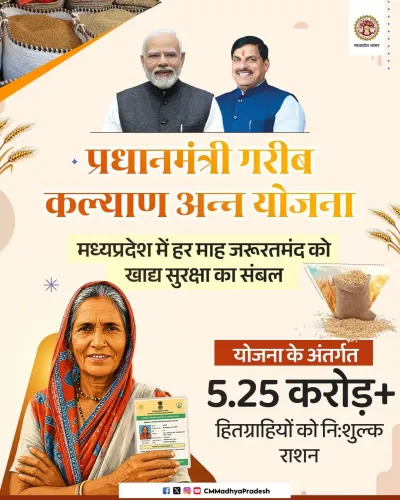
The CMO Punjab stated that Meri Rasoi Yojana 'stands testimony to the Punjab Government's commitment to ensuring that no eligible family is left without food security.' The scheme distributes free ration kits on top of the wheat already provided under the National Food Security Act (NFSA), effectively layering state-funded nutrition support over the central government's subsidised grain entitlement. The combined approach is intended to tackle not just caloric insufficiency but also dietary diversity among low-income households.
Policy Backdrop
The National Food Security Act, 2013 guarantees subsidised wheat and rice to priority households covering roughly two-thirds of India's population. When the Aam Aadmi Party government assumed office in Punjab in March 2022, it announced expanded welfare measures, including direct food assistance schemes, to address gaps the central framework does not fully cover. Meri Rasoi Yojana sits within this broader policy intent — using state resources to supplement NFSA allocations with additional nutrition components that go beyond staple grains.
Indian states with agricultural surpluses, including Punjab, have increasingly adopted this layered model. Governments in such states have recognised that grain surpluses do not automatically translate into improved nutrition outcomes, particularly for women-headed households, daily-wage workers, and groups identified through socio-economic surveys as nutritionally vulnerable.
Stakeholders and Impact
The 21.29 lakh families covered under the scheme represent a significant share of Punjab's low-income population. By supplementing NFSA wheat distributions with ration kits, the programme aims to diversify the food basket available to beneficiaries, moving beyond caloric provision toward broader nutritional adequacy. Eligible families, particularly those dependent on daily wages or informal employment, stand to benefit most from the additional kit components.
The scheme's design also reflects a recognition that malnutrition metrics can remain elevated even in agriculturally productive states. Punjab, despite being India's 'granary,' has pockets of nutritional vulnerability that grain distribution alone does not address. State-level supplementation programmes are seen as a direct policy lever to close this gap without waiting for revisions to the central NFSA framework.
What's Next
The government has not announced a formal cap on the scheme's beneficiary count, suggesting the drive may continue to expand as more eligible families are identified and enrolled. Observers will watch Punjab's state budget allocations for 2027-28 to gauge the fiscal commitment behind sustaining and scaling the programme. Independent evaluations of nutritional outcomes and any overlap with central schemes will be key to assessing the scheme's long-term effectiveness and value for public expenditure.
As the Mann government approaches the mid-point of its term, the continued rollout of Meri Rasoi Yojana is likely to remain a visible marker of its welfare delivery record — with the beneficiary count serving as a primary metric of outreach ahead of future electoral cycles.
Point of View
The true test of Meri Rasoi Yojana will lie in independent nutritional outcome data — beneficiary headcounts alone do not confirm whether dietary diversity or health indicators have improved. The broader policy question is whether Punjab can sustain this expenditure as fiscal pressures on state finances intensify.
NationPress
7 Jul 2026
Frequently Asked Questions
What is Meri Rasoi Yojana in Punjab?
Meri Rasoi Yojana is a Punjab government flagship scheme that distributes free ration kits to eligible low-income families, supplementing the wheat they already receive under the central National Food Security Act to address both hunger and nutritional gaps.
How many families have benefited from Meri Rasoi Yojana?
As of 7 July 2026, the scheme has reached 21.29 lakh beneficiary families across Punjab, according to the Chief Minister's Office.
Who launched Meri Rasoi Yojana in Punjab?
The scheme was launched by the Aam Aadmi Party government led by Chief Minister Bhagwant Mann , who assumed office in Punjab in March 2022.
What is the difference between NFSA and Meri Rasoi Yojana?
The National Food Security Act is a central government law providing subsidised wheat and rice to priority households. Meri Rasoi Yojana is a state-level Punjab scheme that adds free ration kits on top of this NFSA wheat allocation to provide a more diverse nutritional basket.
Who is eligible for Meri Rasoi Yojana ration kits?
The scheme targets eligible low-income families in Punjab, with a focus on groups such as women-headed households and daily-wage workers identified through socio-economic surveys, though the government has not publicly detailed the full eligibility criteria.