CM Yadav marks 12 years of PMGKAY, highlights MP's 1.33 cr families
Synopsis
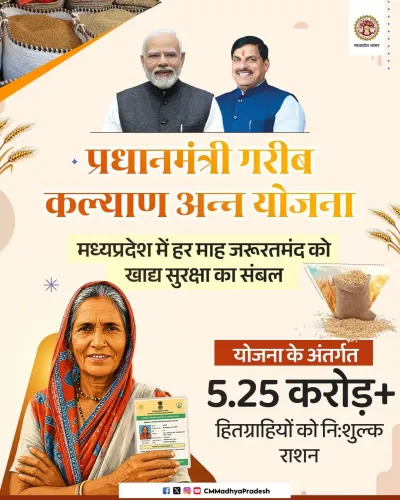
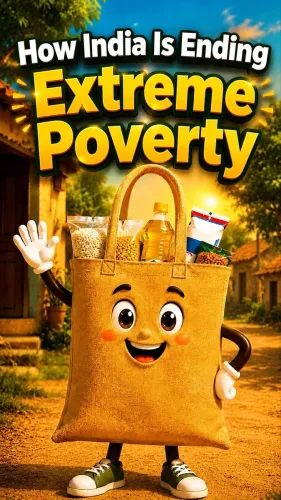
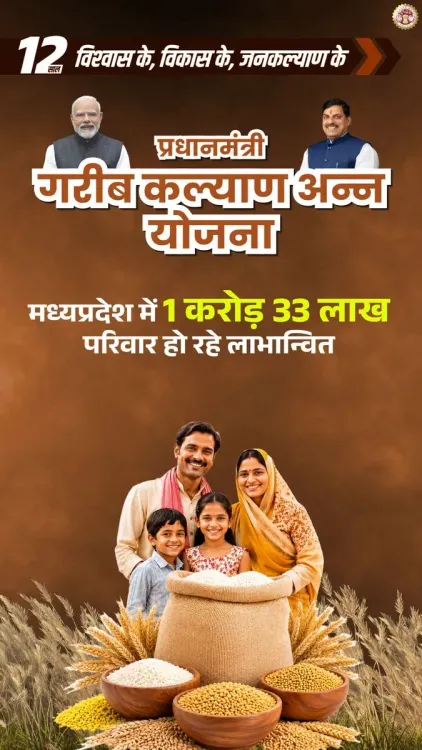
The Chief Minister's Office of Madhya Pradesh has highlighted that over 81 crore Indians receive free foodgrains under PMGKAY, with 1.33 crore families in Madhya Pradesh among the beneficiaries, marking 12 years of the Garib Kalyan programme.
Key Takeaways
The Chief Minister's Office of Madhya Pradesh shared data on PMGKAY on June 8, 2026 , marking 12 years of the Garib Kalyan programme.
More than 81 crore citizens across India receive free foodgrains under the scheme.
1 crore 33 lakh families in Madhya Pradesh are benefiting from PMGKAY.
PMGKAY was launched in March 2020 as COVID-19 pandemic relief and has since been made a permanent entitlement under the NFSA, 2013 framework.
The Ministry of Consumer Affairs, Food and Public Distribution oversees the scheme's national rollout through the Food Corporation of India.
Future scrutiny is expected on the scheme's fiscal cost and the accuracy of beneficiary targeting under NFSA rolls.
The Chief Minister's Office of Madhya Pradesh on Monday, June 8, 2026, highlighted the reach of the Pradhan Mantri Garib Kalyan Anna Yojana (PMGKAY), noting that more than 81 crore citizens across India are receiving free foodgrains under the scheme, while 1 crore 33 lakh families in Madhya Pradesh alone are among the beneficiaries.
Context
The post, shared under the hashtag #12YearsOfGaribKalyan, marks a milestone in the scheme's journey from a pandemic-relief measure to a permanent pillar of India's food security architecture. The Chief Minister's Office tagged CM Mohan Yadav, the Union food ministry, and the state food department, signalling coordinated messaging across central and state government handles.
The post states: 'देश में 81 करोड़ से ज्यादा नागरिकों को नि:शुल्क अनाज' — 'More than 81 crore citizens in the country are receiving free foodgrains' — and separately notes that 1.33 crore families in Madhya Pradesh are being benefited.
Policy Backdrop
PMGKAY was launched in March 2020 as emergency relief during the COVID-19 pandemic, providing an additional 5 kg of free foodgrains per month to beneficiaries covered under the National Food Security Act (NFSA), 2013. The NFSA itself entitles roughly 67 per cent of India's population to subsidised grains through the Public Distribution System.
The scheme was extended multiple times through 2021, 2022, and 2023 before cabinet decisions effectively merged it with regular NFSA entitlements, converting what began as a temporary measure into a sustained free-grain programme. The Ministry of Consumer Affairs, Food and Public Distribution oversees procurement and nationwide rollout through the Food Corporation of India.
Stakeholders and Impact
Madhya Pradesh, a large central Indian state with a predominantly rural population, has integrated the enhanced free-grain distribution into its state food department operations since 2020. The figure of 1 crore 33 lakh families cited in the post reflects the state's coverage under NFSA-linked programmes.
At the national level, the 81 crore-plus beneficiary figure represents one of the world's largest in-kind food transfer programmes. Low-income households and NFSA cardholders — particularly in states like Madhya Pradesh with large agrarian and tribal populations — are the primary recipients. The scheme has been a recurring feature of BJP-governed states' welfare communication, with state governments frequently highlighting local uptake of centrally funded entitlements.
What's Next
Attention will now turn to the Union Budget and any parliamentary review of PMGKAY's fiscal trajectory, as successive extensions have significantly expanded the food subsidy bill. Questions around targeting accuracy — whether all 81 crore beneficiaries are correctly identified under NFSA rolls — remain a subject of ongoing policy debate.
For Madhya Pradesh, the state food department's ability to maintain last-mile delivery infrastructure will be key to sustaining coverage for its 1.33 crore beneficiary families. CM Mohan Yadav's government is likely to continue positioning the state as a model of PMGKAY implementation as the scheme approaches what the post frames as its twelfth year.
Point of View
Designed to associate the BJP government — both at the Centre and in the state — with a welfare programme that has become central to its electoral messaging. By foregrounding the 1.33 crore families figure, the state government claims a share of credit for a centrally funded entitlement, a pattern common across BJP-ruled states. The framing also deflects from ongoing debates about the scheme's fiscal sustainability and whether its beneficiary rolls are accurately targeted. Longer term, the post signals that free food distribution is now a permanent fixture of Indian welfare policy, not a temporary relief measure.
NationPress
22 Oct 2026
Frequently Asked Questions
What is Pradhan Mantri Garib Kalyan Anna Yojana?
PMGKAY is a central government scheme that provides 5 kg of free foodgrains per month to beneficiaries covered under the National Food Security Act. It was launched in March 2020 as COVID-19 pandemic relief and was later made a permanent entitlement.
How many people benefit from PMGKAY in India?
According to the Chief Minister's Office of Madhya Pradesh , more than 81 crore citizens across the country receive free foodgrains under PMGKAY.
How many families in Madhya Pradesh get free ration under PMGKAY?
The CMO's post states that 1 crore 33 lakh families in Madhya Pradesh are currently benefiting from the scheme.
Is PMGKAY still active in 2026?
Based on the June 8, 2026 post by the Madhya Pradesh CMO, the scheme is active and continuing to cover beneficiaries. The government has extended and effectively made the scheme permanent following cabinet decisions in 2022-23.
Who oversees PMGKAY at the national level?
The Ministry of Consumer Affairs, Food and Public Distribution oversees PMGKAY at the national level, with procurement and distribution managed through the Food Corporation of India and state food departments.