CM Mohan Yadav: Double Engine Govt Unites States, Unlike Congress
Synopsis
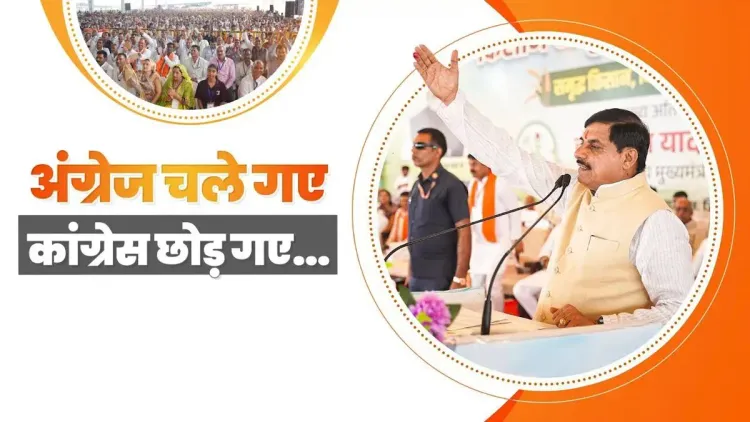
MP Chief Minister Dr. Mohan Yadav accused Congress of historically pitting states against each other and said PM Modi's double engine government has brought all states together in cooperative governance.
Key Takeaways
Mohan Yadav , Chief Minister of Madhya Pradesh , posted on X on 9 July 2026 criticising Congress's record on inter-state relations.
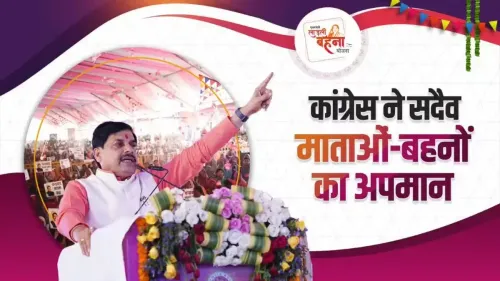
He said Congress 'always worked to pit one state against another,' while the BJP's double engine government fosters unity among states.
The 'double engine government' refers to the BJP holding power simultaneously at the Centre under PM Narendra Modi and in the concerned state.
NITI Aayog , established in 2015 , replaced the Planning Commission as part of a structural push toward cooperative federalism.
Key federal coordination bodies such as the GST Council and chief ministers' conferences are cited as evidence of improved Centre-state collaboration under the BJP.
The statement reflects standard BJP partisan messaging used across state and national election cycles.
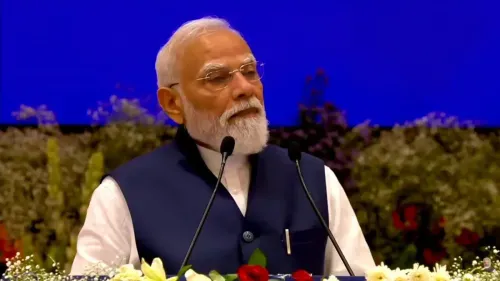
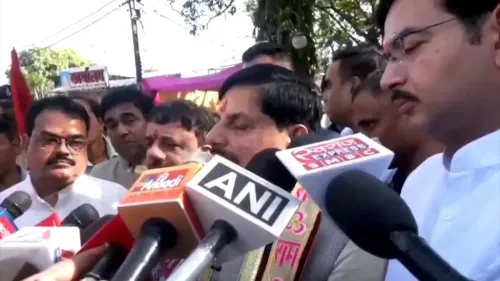
Madhya Pradesh Chief Minister Dr. Mohan Yadav on Thursday, 9 July 2026, took to X to assert that the BJP's 'double engine government' model has fostered genuine inter-state cooperation under Prime Minister Narendra Modi, contrasting it sharply with what he described as Congress's legacy of pitting states against one another.
Context
In his post, Dr. Yadav wrote in Hindi: 'कांग्रेस ने हमेशा ही एक राज्य को दूसरे राज्य से लड़ाने का कार्य किया' ('Congress always worked to pit one state against another'). He added that under the leadership of Prime Minister Narendra Modi, all states are now working together in the double engine government framework. The statement is a pointed critique of the Indian National Congress's record on centre-state relations and a reaffirmation of the BJP's cooperative federalism pitch.
Policy Backdrop
The BJP has used the 'double engine government' phrase since at least 2014 to describe the advantage of having the same party in power at both the Centre and in a state, arguing it removes friction in policy implementation and fund transfers. Institutionally, the shift from the Planning Commission to NITI Aayog in 2015 was presented by the Modi government as a structural move toward cooperative federalism, giving states a larger role in national planning through bodies such as the GST Council and periodic chief ministers' conferences. These forums are cited by BJP leaders as evidence of a more collaborative Centre-state architecture compared to earlier decades.
The Congress party, for its part, governed at the Centre for extended periods and argues that federal institutions under its watch were equally responsive to states. The BJP's framing of Congress-era federalism as adversarial is a recurring partisan argument that the opposition contests.
Stakeholders and Impact
The immediate audience for Dr. Yadav's post is Madhya Pradesh's political constituency, where the BJP has held power since December 2023 when he assumed office as Chief Minister. More broadly, the messaging targets voters and administrators across BJP-governed states who are invested in the narrative of seamless Centre-state coordination. Opposition-governed states, which operate outside the 'double engine' framework, are implicitly positioned as disadvantaged in this narrative — a framing those governments routinely reject. Civil society groups and policy analysts who track fiscal federalism and resource allocation between states remain watchful of whether the cooperative rhetoric translates into equitable fund disbursement.
What's Next
The next meetings of the GST Council and any scheduled chief ministers' conferences on infrastructure or resource allocation will be key tests of the cooperative federalism model that Dr. Yadav is championing. As the BJP continues to contest state elections across the country, the 'double engine government' argument is likely to remain a central plank of its campaign messaging. Whether the model delivers measurably better outcomes for Madhya Pradesh in areas such as infrastructure spending and scheme implementation will shape the credibility of this political narrative going forward.
Point of View
Which has been central to the party's governance pitch since 2014. By invoking Congress's alleged record of inter-state conflict, he sharpens the contrast ahead of what is likely a politically active period for the party. The 'double engine' framing is effective as retail politics but increasingly faces scrutiny from opposition-governed states that argue Centre-state resource flows do not always favour them equitably. The statement reinforces Yadav's alignment with the Modi-led national BJP line, signalling that Madhya Pradesh's leadership remains firmly within the party's centralised messaging architecture.
NationPress
9 Jul 2026
Frequently Asked Questions
What is the double engine government in India?
The 'double engine government' is a BJP term describing the political and administrative advantage of having the BJP in power both at the Centre and in a particular state simultaneously, enabling faster policy execution and fund transfers.
What did MP CM Mohan Yadav say about Congress and inter-state relations?
On 9 July 2026, CM Dr. Mohan Yadav said Congress always worked to pit one state against another, while under PM Narendra Modi's leadership all states are working together under the double engine government framework.
What is cooperative federalism in India?
Cooperative federalism refers to a governance model where the Centre and states work together as partners rather than in a hierarchical relationship. In India, NITI Aayog, established in 2015, and the GST Council are key institutions designed to promote this model.
When did Mohan Yadav become Chief Minister of Madhya Pradesh?
Dr. Mohan Yadav assumed office as Chief Minister of Madhya Pradesh in December 2023 after the BJP's victory in the state assembly elections.
How does the BJP contrast its federal model with the Congress era?
BJP leaders consistently argue that Congress-era governance was marked by adversarial Centre-state relations, while the BJP's model since 2014 uses bodies like the GST Council and chief ministers' conferences to foster collaboration among all states.