CM Mohan Yadav, Gadkari Flag Off MP's New Bus Services
Synopsis
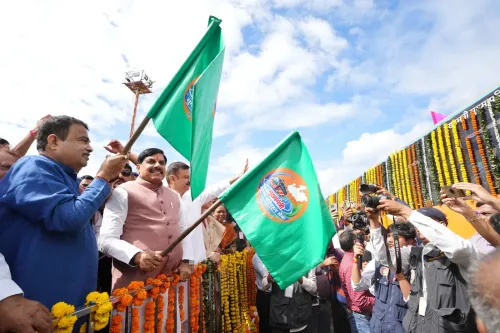
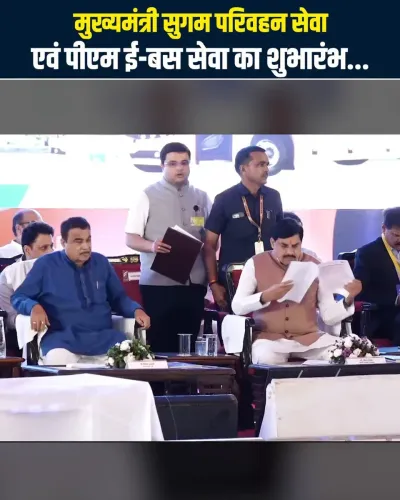
Chief Minister Dr. Mohan Yadav and Union Minister Nitin Gadkari flagged off buses under the Mukhyamantri Sugam Parivahan Seva and PM e-Bus Seva in Madhya Pradesh on September 25, 2026, promising modern, electric, and accessible public transport for state residents.
Key Takeaways
Two schemes launched simultaneously : the state-run Mukhyamantri Sugam Parivahan Seva and the centrally sponsored PM e-Bus Seva were flagged off together in Madhya Pradesh on September 25, 2026 .
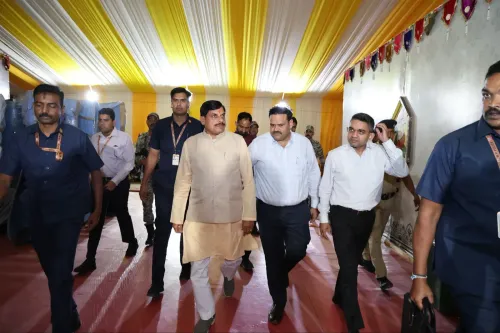
Mohan Yadav rode one of the new buses at the launch event, underlining the government's public commitment to the initiative.
Union Minister Nitin Gadkari co-presided, linking the state rollout to the national electric mobility agenda.
The PM e-Bus Seva scheme, approved in 2023 , targets deployment of 10,000 electric buses across Indian cities under central government funding.
Residents of Madhya Pradesh are promised smoother, safer, and more modern public bus connectivity as the fleet expands.
A phased rollout and integration with the existing state transport network will determine the real-world impact for daily commuters.
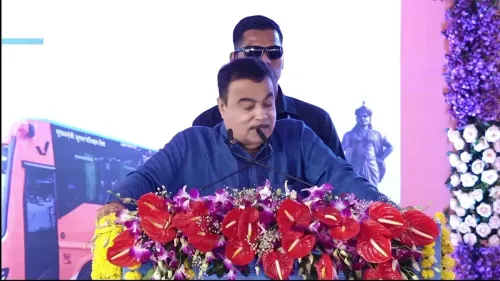
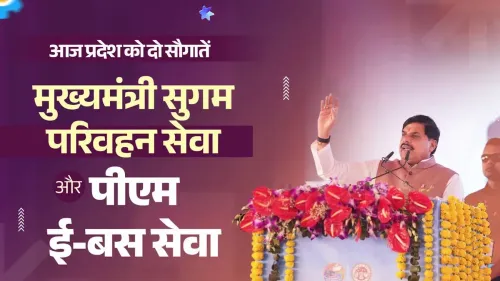
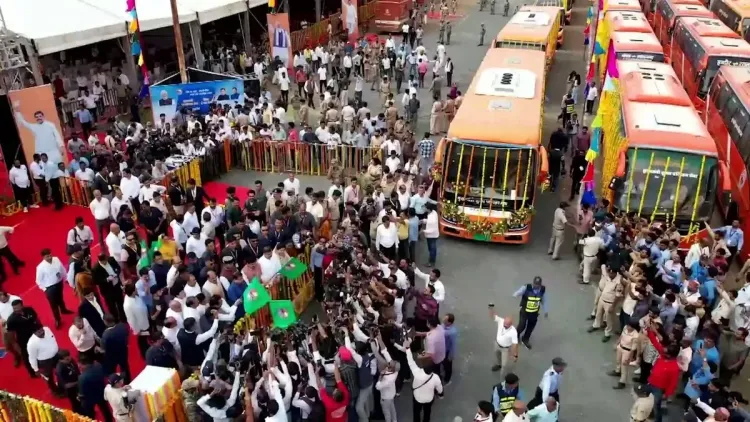
Two new public transport schemes rolled out of their depots in Madhya Pradesh on Friday, September 25, 2026, as Chief Minister Dr. Mohan Yadav and Union Minister for Road Transport and Highways Nitin Gadkari jointly flagged off buses under the Mukhyamantri Sugam Parivahan Seva and the PM e-Bus Seva — a rare moment of state-and-centre showmanship that the Chief Minister's Office of Madhya Pradesh marked by having Dr. Yadav board one of the buses himself.
What Launched — and What Each Scheme Does
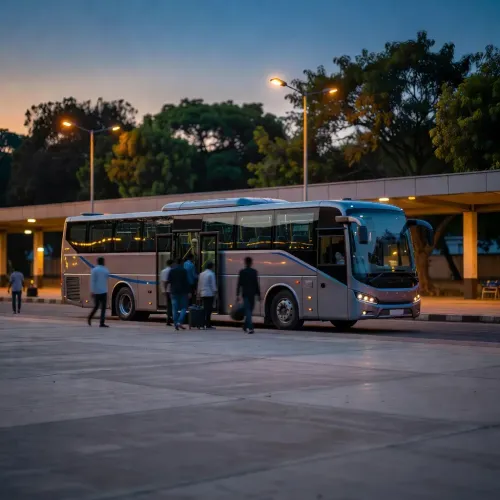
The Mukhyamantri Sugam Parivahan Seva is a state government initiative designed to make bus travel smoother, safer, and more accessible for residents across Madhya Pradesh. Running alongside it is the PM e-Bus Seva, a centrally sponsored scheme approved in 2023 under the Ministry of Housing and Urban Affairs to deploy 10,000 electric buses in cities nationwide — with Madhya Pradesh now joining the fleet. Together, the two services are aimed at delivering, in the CMO's words, 'sugam, surakshit, suvidhajanank evam aadhunik sadharanikaran' ('smooth, safe, convenient and modern public transport') to the state's residents.
The green flag was a symbolic but deliberate gesture. By riding a bus from the same launch event, Dr. Yadav put himself on the route — a visible signal that this is not a ribbon-cutting-and-move-on moment. Gadkari's presence tied the state rollout directly to the national electric mobility push he has championed for years.
The Bigger Shift: Electric Buses and Urban India's Commute
India's electric bus story has been building steadily. The PM e-Bus Seva scheme, backed by central funding, was conceived as a solution to two simultaneous problems: ageing, polluting state transport fleets and the absence of dependable urban connectivity in mid-sized cities. Madhya Pradesh, a large central Indian state whose urban centres — Bhopal, Indore, Jabalpur, Gwalior — carry millions of daily commuters, is exactly the kind of geography the scheme was designed for.
The coordination between Gadkari's ministry and Dr. Yadav's administration reflects a wider national pattern: central electric-mobility schemes functioning as a financial backbone, with states layering their own branded services on top to address local demand. The result, at best, is a seamless upgrade for the commuter; the test is always in the last-mile execution.
What Madhya Pradesh Residents Can Expect Next
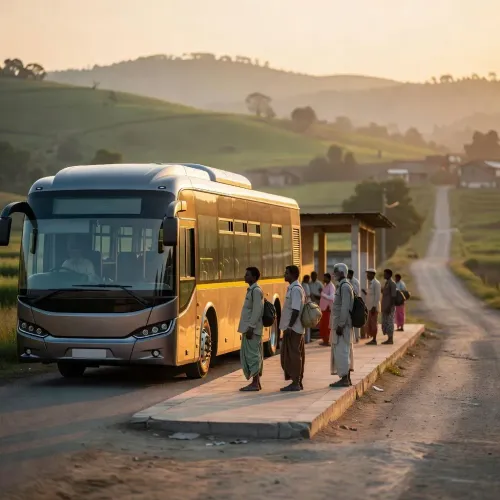
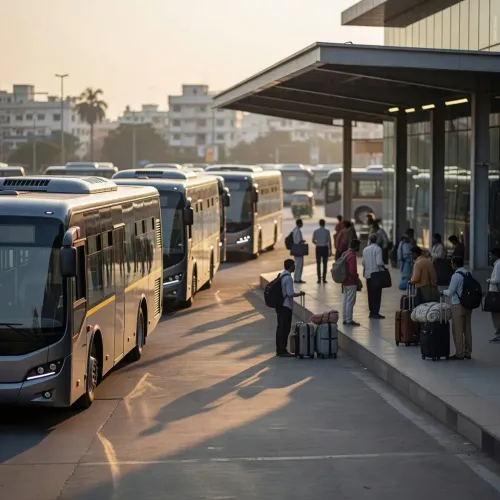
The immediate deliverable is a fleet of new buses on state routes. The phased rollout of additional electric buses and their integration into Madhya Pradesh's existing transport network will be the metric to watch. For the millions of daily bus commuters in the state, the proof will be in punctuality, ticketing, and whether the new air-conditioned, accessible coaches actually reach the routes that need them most.
A state with Dr. Yadav in the driver's seat — quite literally, for a stop — and the weight of a central scheme behind it has set a visible public commitment. The buses are moving. Now the clock starts.
Point of View
Who took charge in December 2023, deploying electric buses alongside a Union minister bolsters his infrastructure credentials ahead of any future electoral cycle. Gadkari's presence also signals that Madhya Pradesh is being positioned as a model for how state and central transport programmes can dovetail — a template other states in the PM e-Bus Seva pipeline will watch closely. The longer-term question is whether route coverage and operational quality match the launch-day fanfare.
NationPress
25 Sept 2026
Frequently Asked Questions
What is the Mukhyamantri Sugam Parivahan Seva in Madhya Pradesh?
The Mukhyamantri Sugam Parivahan Seva is a Madhya Pradesh state government scheme launched to provide residents with smooth, safe, and modern public bus transport across the state.
What is PM e-Bus Seva and how does it work?
PM e-Bus Seva is a central government scheme approved in 2023 to deploy 10,000 electric buses in Indian cities. It is backed by the Ministry of Housing and Urban Affairs and works in coordination with state transport departments.
Who flagged off the new buses in Madhya Pradesh on September 25, 2026?
Chief Minister Dr. Mohan Yadav and Union Minister for Road Transport and Highways Nitin Gadkari jointly flagged off the buses at the launch event on September 25, 2026.
Which cities in Madhya Pradesh will get the new electric buses?
The exact city-wise allocation was not specified in the launch announcement, but the phased rollout is expected to cover major urban centres in Madhya Pradesh as the fleet is integrated into the state transport network.
Did CM Mohan Yadav travel on one of the new buses?
Yes. Chief Minister Dr. Mohan Yadav rode one of the newly launched buses at the flag-off event, a gesture the Chief Minister's Office highlighted as part of the launch coverage.