Kishan Reddy Hails Make in India at 12: Key Numbers
Synopsis
Union Minister G. Kishan Reddy marked Make in India's 12th anniversary by citing manufacturing GVA of ₹47.47 lakh crore, 99.2% domestic mobile production, electronics output exceeding ₹13.1 lakh crore, and defence exports of ₹38,400+ crore to over 80 countries.
Key Takeaways
Kishan Reddy posted Make in India milestone data on 25 September 2026 , marking the scheme's 12th anniversary .
Manufacturing sector GVA is cited at ₹47.47 lakh crore , the headline economic measure of industrial output.
99.2% of mobile phones sold in India are now domestically manufactured, with exports up 165 times since the scheme's launch.
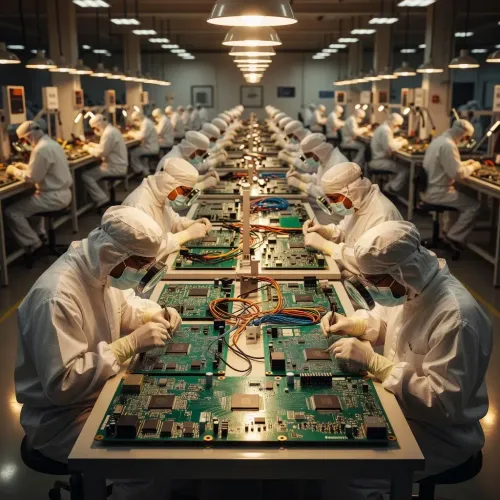
Electronics manufacturing value has crossed ₹13.1 lakh crore , underpinned by Production-Linked Incentive schemes.
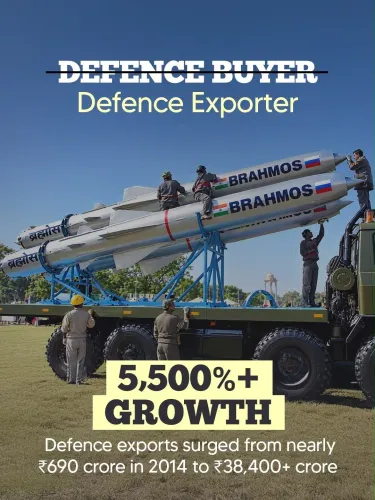
India now exports defence equipment to more than 80 countries , with defence exports exceeding ₹38,400 crore .
The post was written in Telugu and tagged directly at Prime Minister Narendra Modi , amplifying the message to a Telangana audience.
Twelve years after Prime Minister Narendra Modi launched Make in India in September 2014, the numbers being cited by his government paint a picture of a manufacturing economy in structural transformation — and Union Coal and Mines Minister G. Kishan Reddy laid them out in a pointed post on Friday, 25 September 2026, tagging the Prime Minister directly.
Posting in Telugu under the hashtag #12YearsOfMakeInIndia, Reddy highlighted four headline figures: manufacturing sector Gross Value Added reaching ₹47.47 lakh crore, mobiles manufactured domestically at 99.2% with export growth of 165 times, electronics manufacturing value crossing ₹13.1 lakh crore, and defence exports touching ₹38,400+ crore to more than 80 countries. Each figure, if accurate, represents a leap that would have seemed implausible at the scheme's launch.
From import dependency to 99.2% domestic mobile production
Perhaps the sharpest data point in Reddy's post is the mobile phone figure. When Make in India launched, India imported the overwhelming majority of its handsets. The claim of 99.2% domestic manufacturing — combined with a 165-fold rise in mobile exports — would represent one of the most dramatic reversals in any consumer-electronics sector globally. Production-Linked Incentive (PLI) schemes targeting electronics assembly, introduced in successive central budgets, are the structural vehicle behind this shift.
Electronics manufacturing more broadly is cited at ₹13.1 lakh crore in value — a sector that barely registered as a standalone manufacturing pillar in 2014. The broader Atmanirbhar Bharat framework, introduced after 2020, deepened the PLI push across semiconductors, components and finished goods, giving the ecosystem a second wind.
Defence exports to 80+ nations — a strategic signal
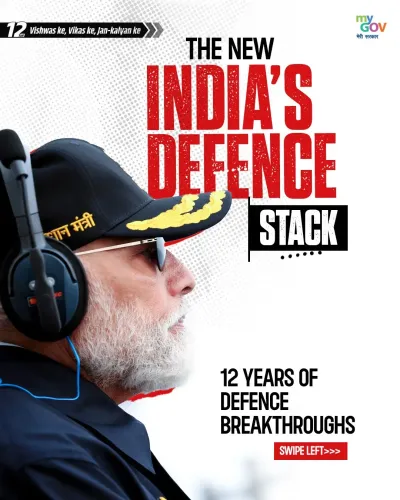
The defence export figure carries weight beyond commerce. A country that was once among the world's largest arms importers now claims to be exporting defence equipment to more than 80 nations, with exports exceeding ₹38,400 crore. This tracks with a deliberate government policy — articulated through successive defence acquisition procedures — to shift the ratio of domestic procurement and to build an export-facing ordnance and aerospace industry.
Reddy's post, framed as a reply to the Prime Minister, is timed to mark the scheme's twelfth anniversary and reinforces the BJP's consistent electoral and governance messaging: that the Make in India initiative has moved from aspiration to demonstrated output. Whether the specific figures cited are from the latest official Ministry of Statistics releases is a matter for formal verification, but the directional claims align with the government's publicly stated policy trajectory.
Why GVA at ₹47.47 lakh crore matters as a headline number
Manufacturing's contribution to Gross Value Added is the metric economists watch most closely to judge whether India is genuinely industrialising or simply assembling imported components at scale. The ₹47.47 lakh crore GVA figure, if it holds under scrutiny, would represent a significant absolute expansion of the sector's weight in the national economy. The next quarterly GVA release from the Ministry of Statistics and Programme Implementation will be the definitive test of where manufacturing stands in the current fiscal.
For Reddy — simultaneously the Union minister overseeing coal and mines, and the BJP's Telangana state president — posting these figures in Telugu is also a message directed at a home audience: that the national industrial project is delivering results that matter to every state, including those where the party is in opposition.
Twelve years in, Make in India's anniversary is no longer just a branding exercise. It is a policy report card — and the government is choosing its numbers carefully.
Point of View
Shareable numbers that are difficult to dismiss without engaging the data. The choice of Telugu as the language of the post, directed at the PM, signals a dual audience: national policy validation and Telangana-specific political signalling ahead of state-level contests. The figures on mobile manufacturing and defence exports are the most politically potent, because they represent sectors where India's shift from importer to producer is verifiable in trade data. The broader test is whether manufacturing's share of GDP — not just absolute GVA — has meaningfully risen, a question that anniversary messaging tends to sidestep.
NationPress
25 Sept 2026
Frequently Asked Questions
What is Make in India and when was it launched?
Make in India is a flagship central government programme launched by Prime Minister Narendra Modi in September 2014 to promote domestic manufacturing, attract foreign direct investment, and boost exports across key sectors.
What are the key Make in India achievements cited in 2026?
According to Union Minister G. Kishan Reddy's post marking the scheme's 12th anniversary, manufacturing GVA has reached ₹47.47 lakh crore, 99.2% of mobile phones are now made domestically with 165-fold export growth, electronics manufacturing exceeds ₹13.1 lakh crore, and defence exports have crossed ₹38,400 crore to 80+ countries.
What is India's current defence export value and how many countries does it reach?
India's defence exports are cited at over ₹38,400 crore and reportedly reach more than 80 countries, a significant shift for a nation that was historically one of the world's largest arms importers.
What role did Production-Linked Incentive schemes play in India's mobile manufacturing growth?
PLI schemes targeting electronics and mobile assembly, introduced in successive central budgets after 2020 under the Atmanirbhar Bharat framework, are the primary policy instrument credited with driving domestic mobile production to 99.2% and fuelling the multi-fold rise in exports.
Why did Kishan Reddy post about Make in India in Telugu?
Reddy is both Union Minister of Coal and Mines and BJP's Telangana state president; posting in Telugu while tagging the Prime Minister allows him to simultaneously amplify national policy achievements to his core Telangana voter base.