CM Mohan Yadav Hails Cabinet Nod to Green Energy Corridor Phase-III
Synopsis
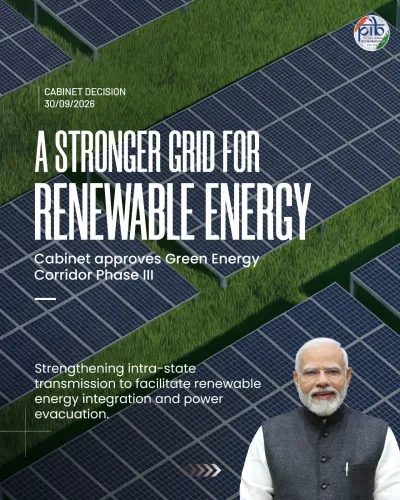
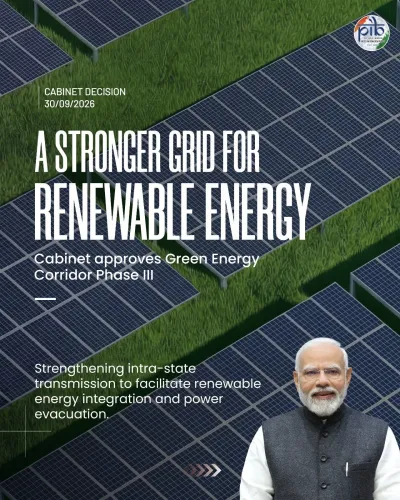
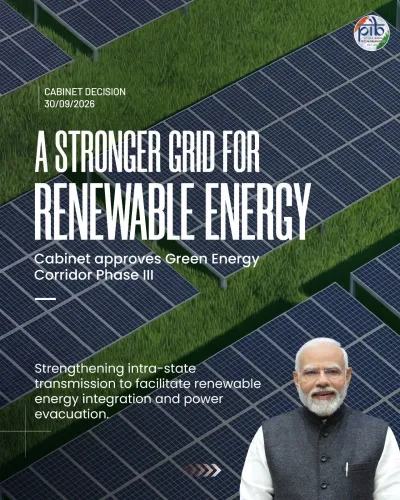
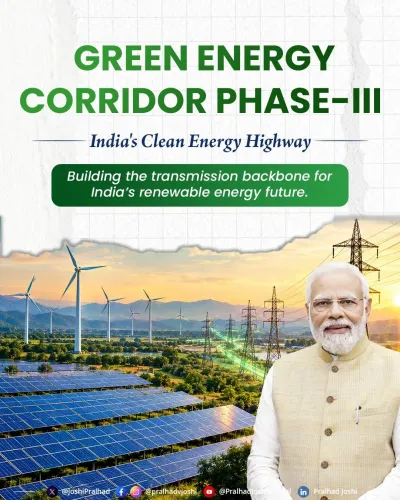
The Union Cabinet chaired by PM Modi approved Green Energy Corridor Phase-III to strengthen intra-state transmission for up to 135 GW of renewable energy and deploy a 50 GWh Battery Energy Storage System. MP CM Dr. Mohan Yadav hailed the move as key to India's energy security and Atmanirbhar Bharat goals.
Key Takeaways
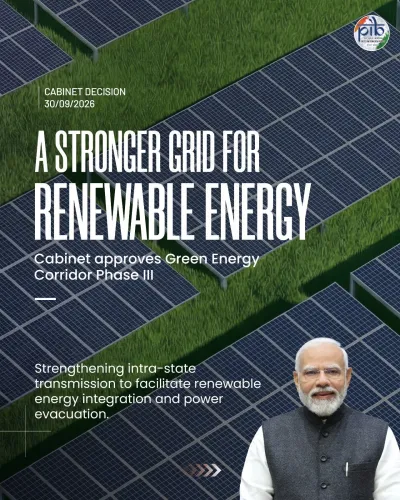
The Union Cabinet, chaired by PM Narendra Modi , approved the Green Energy Corridor Phase-III (GEC-III) scheme.
GEC-III will strengthen intra-state transmission systems to integrate up to 135 GW of renewable energy.
A 50 GWh Battery Energy Storage System (BESS) will be established to improve grid flexibility.
Green Energy Corridor Phases I and II were approved between 2015 and 2017 for earlier renewable transmission needs; Phase III adds storage at scale for the first time.
The scheme aligns with India's pledge of 500 GW non-fossil fuel capacity by 2030 , made at COP26.
Mohan Yadav welcomed the decision, citing benefits for energy security, clean energy expansion, and job creation.
India's grid is about to get a major green upgrade. The Union Cabinet, chaired by Prime Minister Narendra Modi, has approved the Green Energy Corridor Phase-III (GEC-III) scheme — a significant push to strengthen intra-state transmission infrastructure and integrate up to 135 gigawatts of renewable energy into the national grid. Madhya Pradesh Chief Minister Dr. Mohan Yadav welcomed the decision on Wednesday, 30 September 2026, calling it a critical step toward long-term energy security and a self-reliant India.
What GEC-III Actually Does — and Why 135 GW Matters
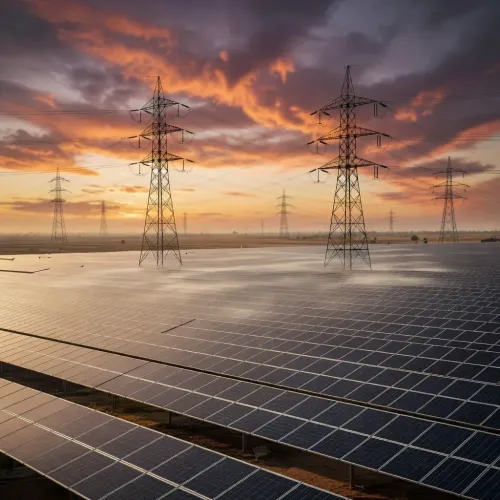
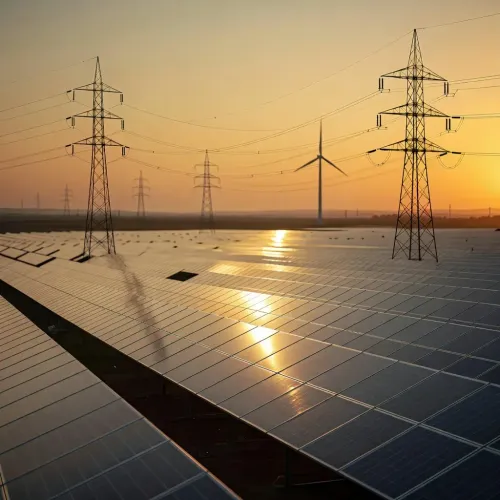
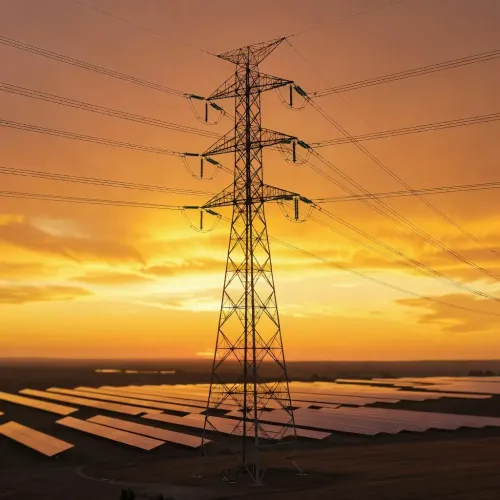
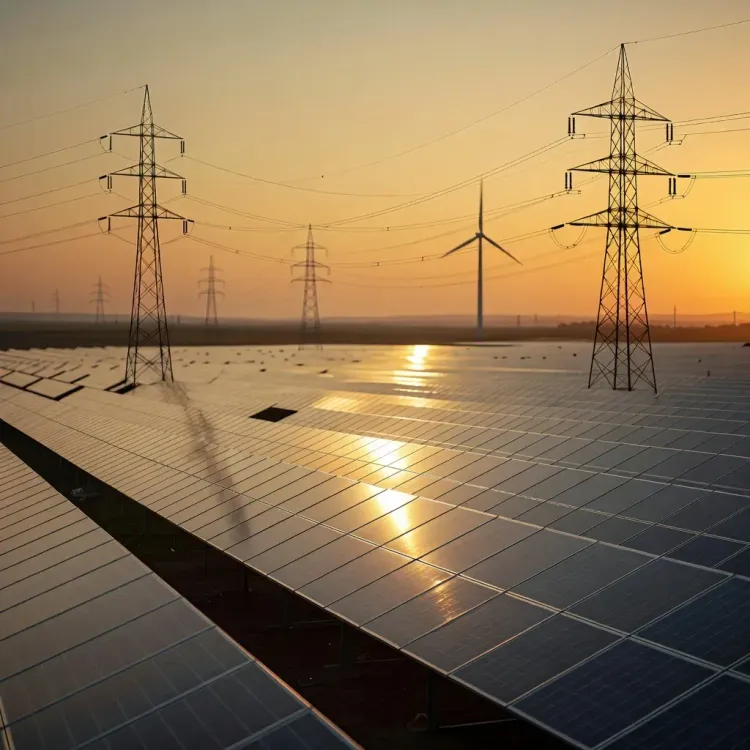
The scheme targets the single biggest bottleneck in India's renewable energy story: transmission. Solar panels and wind turbines generate power — but if the wires can't carry it, the electricity goes nowhere. GEC-III directly addresses this by reinforcing intra-state transmission systems so that power generated at renewable energy hubs can actually reach consumers and the wider grid.
The scale is deliberate. India had pledged at COP26 in 2021 to achieve 500 GW of non-fossil fuel capacity by 2030. With that deadline closing in fast, the approval of a corridor capable of evacuating 135 GW of renewable power signals that the government is moving from capacity announcements to the unglamorous, essential work of grid infrastructure.
The 50 GWh BESS Component — Grid Stability's New Backbone
Buried inside the approval is arguably the most forward-looking element: a 50 GWh Battery Energy Storage System (BESS). Storage is the missing piece that has long plagued renewable-heavy grids — the sun doesn't always shine when demand peaks, and the wind doesn't always blow on cue. A 50 GWh storage buffer changes that equation, giving grid operators the flexibility to absorb surplus generation and dispatch it when it's actually needed.
This is not India's first attempt at transmission-led renewable integration. Green Energy Corridor Phases I and II, approved between 2015 and 2017, laid inter-state and intra-state transmission lines for earlier waves of renewable capacity. Phase III represents a generational step-up — adding storage at scale for the first time, a move that reflects how much the grid's challenges have evolved as variable solar and wind dominate new capacity additions.
Dr. Mohan Yadav's Welcome — and What It Signals for MP
Posting in Hindi, CM Yadav praised the decision as a move that would promote 'deerghkalik urja suraksha' (long-term energy security), expand clean energy access, and create new employment opportunities. His gratitude to the Prime Minister framed the approval squarely within the Atmanirbhar Bharat mission — India's national self-reliance initiative.
The endorsement from a state chief minister is not incidental. Intra-state transmission is precisely where state utilities and renewable developers interact most directly. Madhya Pradesh, with its growing solar and wind potential, stands among the states that could draw significant benefit from strengthened evacuation infrastructure under GEC-III. State power utilities and private renewable energy developers will now watch closely for project sanctions, funding releases, and tendering timelines — particularly for the BESS installations.
India has spent years building renewable capacity. Now it is building the nervous system to carry that power where it needs to go — and store it for when the grid needs it most.
Point of View
Acknowledging that grid stability, not just installed capacity, determines whether the 2030 clean energy pledge is credible. For BJP-governed states like Madhya Pradesh, endorsing such central schemes also serves a dual purpose: aligning with national energy narratives while positioning the state as a beneficiary of federal infrastructure spending. The real test, as with earlier GEC phases, will be execution speed — specifically, how quickly state utilities and developers can mobilise under the new framework.
NationPress
30 Sept 2026
Frequently Asked Questions
What is Green Energy Corridor Phase-III (GEC-III)?
GEC-III is a central government scheme that strengthens intra-state power transmission infrastructure to enable the integration and evacuation of up to 135 GW of renewable energy, and includes a 50 GWh Battery Energy Storage System to improve grid flexibility.
What is a Battery Energy Storage System (BESS) and why does India need one?
A BESS stores surplus electricity — especially from variable sources like solar and wind — and releases it when demand is high. India needs it to stabilise a grid increasingly dependent on renewable energy, which does not generate power on a fixed schedule.
What were Green Energy Corridor Phases I and II?
Phases I and II were approved between 2015 and 2017 to build inter-state and intra-state transmission lines that could carry power from renewable energy hubs to load centres. Phase III builds on this with a larger scale and the addition of battery storage.
How does GEC-III relate to India's 2030 renewable energy target?
India pledged at COP26 in 2021 to achieve 500 GW of non-fossil fuel capacity by 2030. GEC-III addresses the transmission bottleneck that could prevent that capacity from being usefully delivered to the grid.
Why did Madhya Pradesh CM Mohan Yadav welcome the GEC-III approval?
CM Yadav cited the scheme's potential to advance long-term energy security, expand clean energy access, and generate new employment. As GEC-III strengthens intra-state transmission, states like Madhya Pradesh with growing solar and wind potential stand to benefit directly.