CM Mohan Yadav Hails Poverty, Naxal Wins on Janjatiya Gaurav Diwas
Synopsis
On Janjatiya Gaurav Diwas, MP CM Dr. Mohan Yadav quotes PM Modi citing two landmark achievements — poverty reduction for nearly 50 crore people and the rollback of Naxalite-Maoist terror — as deeply connected to the lives of India's tribal communities.
Key Takeaways
Janjatiya Gaurav Diwas is observed on 15 November every year to mark the birth anniversary of tribal icon Birsa Munda .
Mohan Yadav quoted PM Narendra Modi citing nearly 50 crore people escaping extreme poverty as a national milestone.
The post links the rollback of Naxalite-Maoist insurgency directly to improved conditions in tribal-dominated districts.
The observance was declared in 2021 to focus development attention on Scheduled Tribe communities and regions.
The dual government strategy pairs security operations in LWE districts with targeted welfare schemes including housing, electrification, and nutrition programmes.
The next NITI Aayog MPI update and MHA annual LWE report will provide independent data to assess these claims.
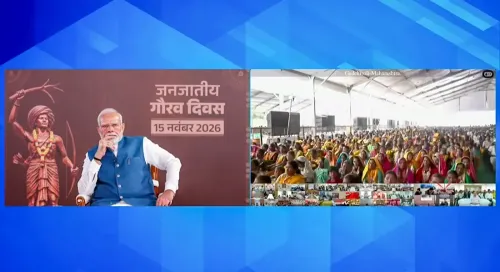
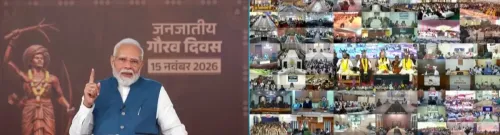
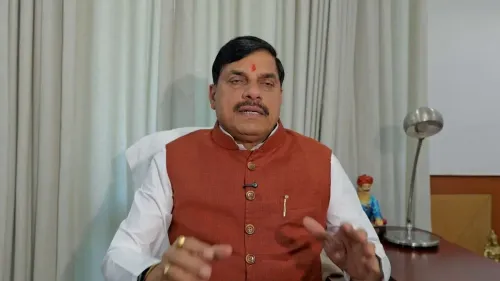
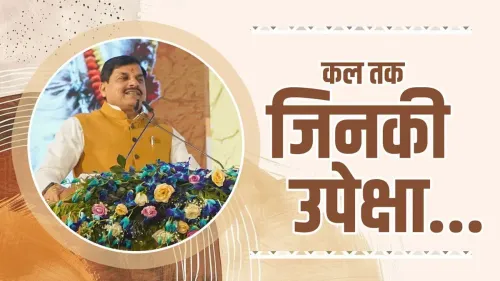
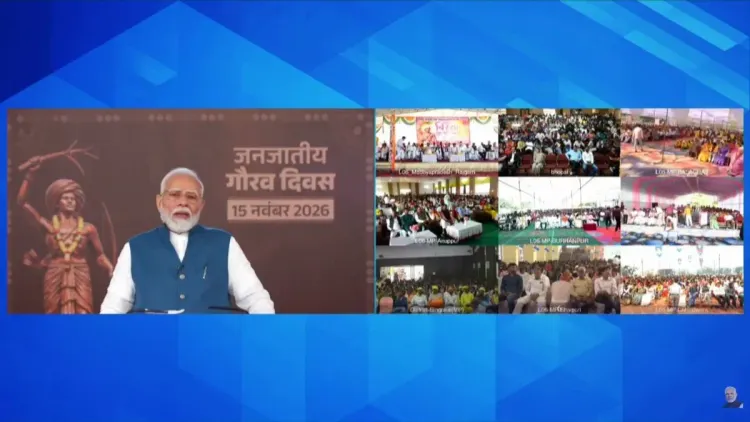
On Janjatiya Gaurav Diwas — the annual observance honouring tribal contributions on the birth anniversary of freedom fighter Birsa Munda — Madhya Pradesh Chief Minister Dr. Mohan Yadav invoked Prime Minister Narendra Modi's words to frame two milestones as inseparable from the story of India's tribal communities: the near-elimination of extreme poverty for nearly 50 crore citizens, and the decisive rollback of Naxalite-Maoist insurgency from the country's heartland.
Two Milestones, One Thread: Tribal India at the Centre
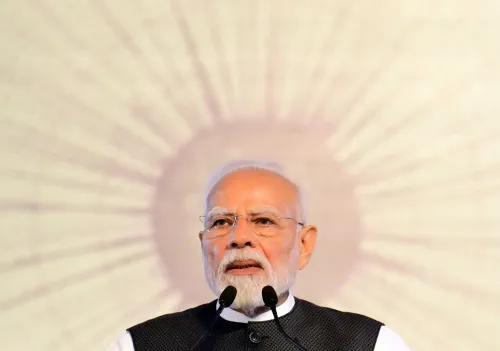
Quoting the Prime Minister directly, CM Yadav wrote: 'देश की दो बड़ी उपलब्धियों की चर्चा हर जगह हो रही है' — 'Two great national achievements are being talked about everywhere.' The post draws an explicit line between both outcomes and India's tribal populations, arguing that communities historically shut out of development corridors are now its primary beneficiaries. The framing is deliberate: Janjatiya Gaurav Diwas, declared in 2021, was itself designed to pivot national attention toward Scheduled Tribe regions, and today's messaging reinforces that arc.
The Naxalite-Maoist insurgency has shadowed the tribal belts of Madhya Pradesh, Chhattisgarh, and Jharkhand for decades, feeding on the same socio-economic grievances — landlessness, lack of healthcare, absent electricity — that poverty indices have long flagged. The dual strategy pursued by successive administrations pairs security operations with targeted welfare: housing, electrification, and nutrition programs pushed specifically into Left Wing Extremism (LWE)-affected districts.
The Poverty Argument and What the Numbers Represent
NITI Aayog's Multidimensional Poverty Index, tracked since 2021, has documented sharp reductions in poverty headcount across states, with tribal districts among the most significant movers. The figure of nearly 50 crore people escaping extreme poverty cited in the post reflects the scale of that shift the government attributes to flagship welfare schemes over the past decade. The post positions this not as a statistical footnote but as a civilisational correction — a promise kept to communities that waited generations.
Why November 15 Carries Extra Weight
Birsa Munda, born on 15 November 1875, led one of the most consequential tribal uprisings against colonial rule and forest exploitation. The choice to anchor national tribal-welfare messaging to his birth anniversary is both commemorative and strategic — it grounds contemporary policy outcomes in a longer struggle for rights and dignity. For BJP governments at the Centre and in states like Madhya Pradesh, Janjatiya Gaurav Diwas has become a key calendar moment to demonstrate delivery to a voter base that spans some of India's most remote constituencies.
CM Yadav's post closes with Modi's pledge: 'जो दशकों से विकास की सुविधाओं से वंचित रहे, उन्हें प्राथमिकता देनी है' — 'Those deprived of the fruits of development for decades must be given priority.' The kicker is the government's own scorecard: that priority, it now argues, has become reality on the ground.
The next acid test arrives with the forthcoming NITI Aayog MPI update and the Ministry of Home Affairs annual report on LWE-affected districts — numbers that will either validate the narrative or complicate it.
Point of View
The BJP is consolidating a political narrative that frames tribal welfare not as charity but as strategic state-building — a reframe with long electoral resonance in central Indian states. The move to quote the Prime Minister verbatim on a state CM's handle signals coordinated national messaging, reinforcing that tribal constituencies are a priority voting bloc ahead of future assembly cycles. However, independent verification of the '50 crore' poverty figure and the genuine geographic extent of Naxal retreat will determine whether the narrative survives scrutiny. The dual-metric framing — development plus security — is the government's clearest articulation yet of its 'sabka saath, sabka vikas' doctrine applied specifically to historically marginalised tribal India.
NationPress
15 Nov 2026
Frequently Asked Questions
What is Janjatiya Gaurav Diwas and why is it celebrated on November 15?
Janjatiya Gaurav Diwas is an annual national observance declared in 2021 to honour the contributions of India's tribal communities. It falls on 15 November to mark the birth anniversary of tribal freedom fighter Birsa Munda, born on that date in 1875.
What are the two national achievements PM Modi mentioned on Janjatiya Gaurav Diwas 2026?
According to the post shared by MP CM Dr. Mohan Yadav quoting PM Modi, the two achievements are: nearly 50 crore people escaping extreme poverty, and India's tribal heartland being freed from Naxalite-Maoist insurgency.
How is the end of Naxalism connected to tribal welfare in India?
The Naxalite-Maoist insurgency took root in tribal districts of states like Madhya Pradesh, Chhattisgarh, and Jharkhand, exploiting socio-economic grievances such as landlessness and lack of basic services. The government's dual strategy combines security operations with targeted welfare schemes to address both violence and its underlying causes.
What is NITI Aayog's Multidimensional Poverty Index and what does it measure?
NITI Aayog's Multidimensional Poverty Index, tracked since 2021, measures poverty beyond income by assessing health, education, and living standards. It has documented significant poverty reductions across Indian states, with tribal districts among the most notable improvers.
Who was Birsa Munda and why is he significant to India's tribal communities?
Birsa Munda was a tribal freedom fighter and folk hero born on 15 November 1875, who led a major uprising against colonial exploitation of forest land and tribal rights. He is revered across Scheduled Tribe communities and is central to the symbolic identity of Janjatiya Gaurav Diwas.