CM Mohan Yadav Inspects Kanh Diversion Project for Simhastha-2028
Synopsis
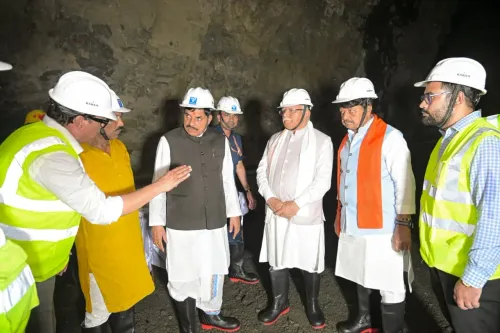
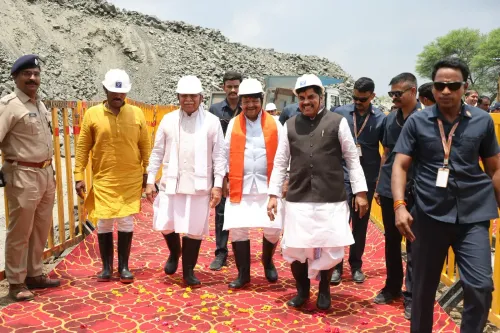
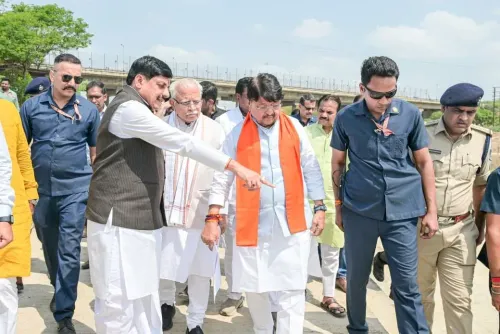
Madhya Pradesh CM Dr. Mohan Yadav and Union Minister Manohar Lal Khattar inspected the Kanh Diversion Close Duct Project in Ujjain on 20 June 2026. The 30-km-plus project will prevent polluted Kanh River water from entering the sacred Shipra River ahead of Simhastha-2028, with 8.15 km of a 12-km tunnel already excavated.
Key Takeaways
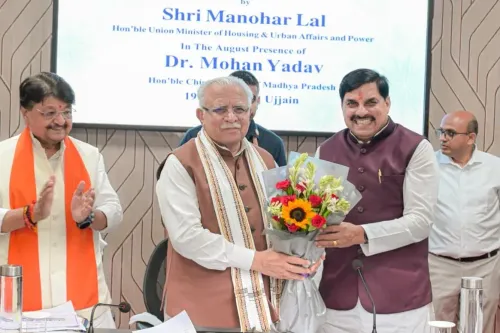
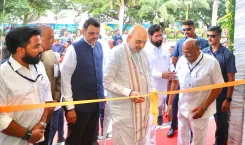
Mohan Yadav and Union Minister Manohar Lal Khattar jointly inspected the Kanh Diversion Close Duct Project in Ujjain on 20 June 2026 .
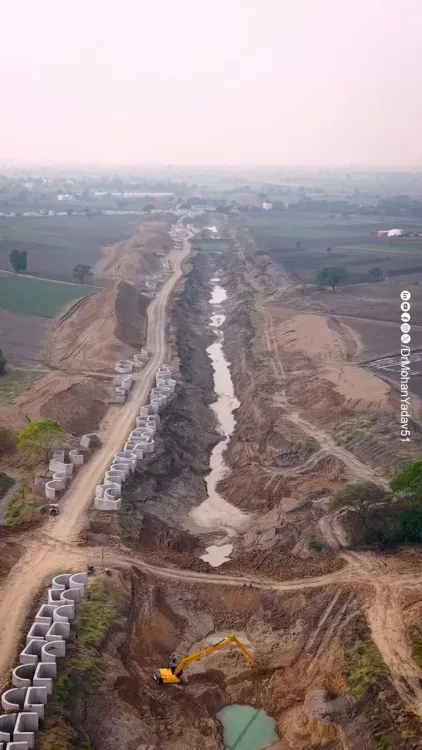
A barrage on the Kanh River will divert polluted water away from the Shipra River , releasing it 30 km away at the downstream of Gambhir Dam .
The project's total duct length exceeds 30 kilometres , including a 12-km tunnel , of which 8.15 km of excavation is complete.
The project is designed to accommodate 25 years of future population growth, reflecting long-term planning.
The government's stated goal is to ensure all pilgrims can bathe in clean Shipra waters during Simhastha-2028 .
The project reflects a broader pattern of central-state coordination on river infrastructure ahead of major religious gatherings in India.
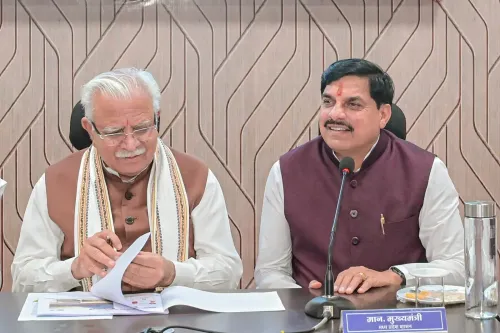
Madhya Pradesh Chief Minister Dr. Mohan Yadav on Saturday, 20 June 2026, inspected the Kanh Diversion Close Duct Project in Ujjain alongside Union Minister Manohar Lal Khattar, reaffirming the state government's commitment to ensuring clean water in the Shipra River for the Simhastha-2028 Kumbh Mela.
Context
Chief Minister Dr. Mohan Yadav posted on X, stating: 'माननीय केंद्रीय मंत्री श्री @mlkhattar जी के साथ आज उज्जैन में कान्ह डायवर्शन क्लोज डक्ट परियोजना का निरीक्षण किया' ('Today inspected the Kanh Diversion Close Duct Project in Ujjain along with honourable Union Minister Shri Khattar ji'). The joint inspection signals active central-state coordination on a project that carries both infrastructure and religious significance.
The Shipra River, which flows through Ujjain, is considered sacred by millions of Hindu devotees and is the primary bathing site during the Simhastha Kumbh Mela. Protecting its water quality ahead of the next edition in 2028 has been declared a core government priority.
Policy Backdrop
Under the project, a barrage is being constructed on the Kanh River to intercept polluted water before it merges with the Shipra. The diverted water will be channelled through a closed duct system and released approximately 30 kilometres away at the downstream of Gambhir Dam, keeping the Shipra's ritual bathing stretch free of contamination.
The project has been designed with a 25-year population growth projection built into its capacity parameters, reflecting a long-term infrastructure outlook. The total duct length exceeds 30 kilometres, with a tunnel component of 12 kilometres, of which 8.15 kilometres of excavation has been completed; remaining work is stated to be in progress.
Madhya Pradesh has a documented pattern of pairing Simhastha cycles with river conservation upgrades. Similar infrastructure interventions were undertaken ahead of the Simhastha-2016 event, establishing a precedent of state-led water quality management for large-scale religious gatherings.
Stakeholders and Impact
The primary beneficiaries are the millions of pilgrims and devotees expected to attend Simhastha-2028, for whom bathing in the Shipra's waters carries deep spiritual importance. Residents of Ujjain stand to gain from improved river health and reduced urban water pollution over the long term.
The presence of Union Minister Manohar Lal Khattar at the inspection underscores the project's federal dimension, with central government involvement likely extending to funding and technical oversight. Such central-state partnerships have been a recurring feature of large pilgrimage-linked infrastructure projects across India.
What's Next
With the tunnel excavation past the halfway mark, the immediate focus will be on completing the remaining boring work and integrating the duct system with Gambhir Dam operations. Water quality monitoring of the Shipra in the lead-up to Simhastha-2028 will serve as a key performance indicator for the project's success.
As 2028 approaches, the pace of construction and the quality of Shipra's water will be closely watched by both the state administration and the crores of devotees for whom the Kumbh bathing ritual is a once-in-twelve-years spiritual event.
Point of View
With water quality as the most visible and politically potent metric.
NationPress
20 Jun 2026
Frequently Asked Questions
What is the Kanh Diversion Close Duct Project in Ujjain?
The Kanh Diversion Close Duct Project is an infrastructure initiative in Ujjain, Madhya Pradesh, where a barrage is being built on the Kanh River to prevent polluted water from entering the sacred Shipra River. The diverted water is channelled through a closed duct system over 30 kilometres to the downstream of Gambhir Dam.
Why is the Shipra River important for Simhastha-2028?
The Shipra River is the central bathing site for the Simhastha Kumbh Mela held in Ujjain, a major Hindu pilgrimage event. Millions of devotees take a ritual dip in its waters, making water quality a critical religious and public health concern for Simhastha-2028.
How much of the Kanh diversion tunnel has been completed?
Of the 12-kilometre tunnel that forms part of the project, 8.15 kilometres of excavation has been completed, with the remaining work stated to be in progress as of June 2026.
Who inspected the Kanh Diversion Project on 20 June 2026?
Madhya Pradesh Chief Minister Dr. Mohan Yadav conducted the inspection alongside Union Minister Manohar Lal Khattar on 20 June 2026 in Ujjain.
When is Simhastha Kumbh Mela 2028 and where is it held?
Simhastha-2028 is the next edition of the Kumbh Mela held in Ujjain, Madhya Pradesh, scheduled for 2028. It is one of India's largest religious gatherings, held every 12 years on the banks of the Shipra River.