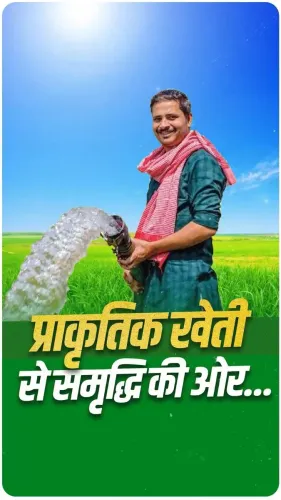
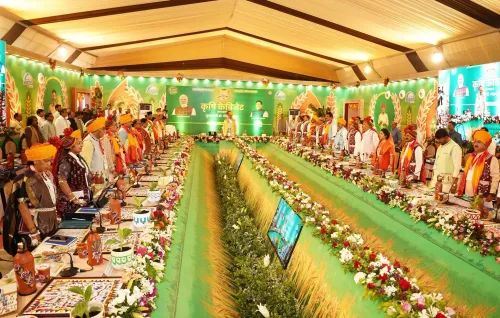
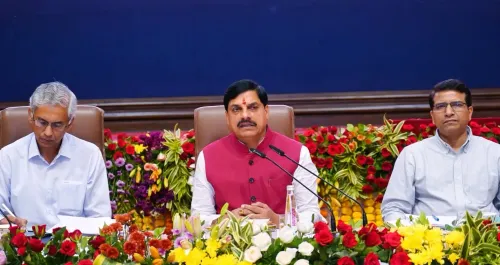
CM Mohan Yadav Pushes Natural Farming for Better Farmer Returns
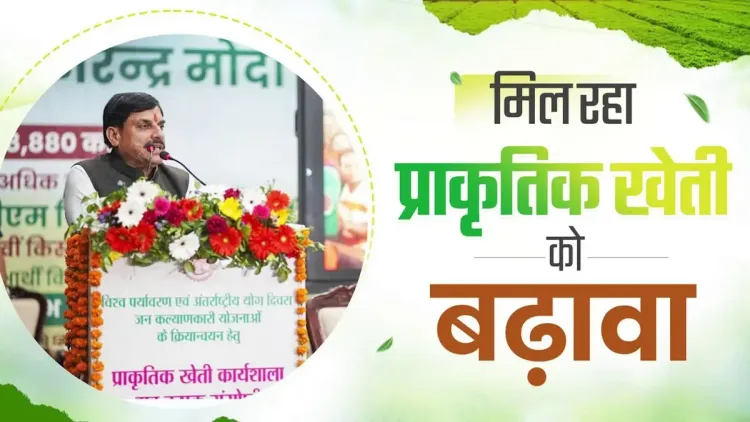
Synopsis
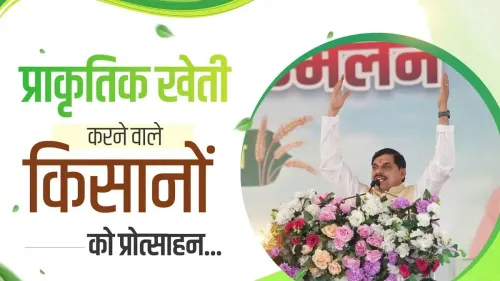
Chief Minister Dr. Mohan Yadav's office says natural farming delivers quality produce and better prices for Madhya Pradesh farmers, reaffirming the state's ongoing push to scale chemical-free agriculture in line with central schemes like PKVY and BPKP.
Key Takeaways
Mohan Yadav stated that natural farming secures both quality produce and better market prices for farmers in Madhya Pradesh .
The state is continuously promoting natural farming, with coordination tagged to the Union Ministry of Agriculture and Farmers Welfare .
The Paramparagat Krishi Vikas Yojana (PKVY) , launched in 2015 , and its sub-component Bharatiya Prakritik Krishi Paddhati (BPKP) , introduced in 2020 , form the national policy backbone for this push.
Natural farming reduces chemical input costs, providing direct financial relief to small and marginal farmers.
Madhya Pradesh has participated in national cluster programmes while running state-level training and awareness efforts.
The Chief Minister's Office of Madhya Pradesh, on behalf of Chief Minister Dr. Mohan Yadav, stated on Saturday, 20 June 2026 that natural farming not only yields quality produce but also secures better prices for farmers, reaffirming the state's commitment to continuously promoting the practice across Madhya Pradesh.
Context
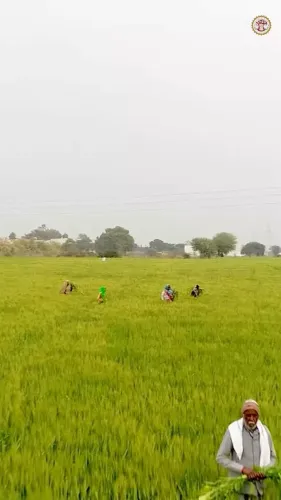
The post, shared via the official CMO handle and tagging the Union Ministry of Agriculture and Farmers Welfare as well as the Madhya Pradesh Agriculture Department, carries a direct statement attributed to CM Dr. Mohan Yadav: 'Prakritik kheti se gunavattapurn upaj ke saath hi kisanon ko behtar mulya bhi milte hain' ('Natural farming yields quality produce and also fetches better prices for farmers'). The statement adds that natural farming is being continuously promoted across the state. The post was accompanied by a video, likely featuring on-ground activities or official messaging on the subject.
Policy Backdrop
The push for natural farming in Madhya Pradesh is anchored within a broader national framework. The Paramparagat Krishi Vikas Yojana (PKVY), launched by the Union Government in 2015, promotes organic farming through a cluster-based approach by reducing chemical inputs and building farmer collectives. A key sub-component, the Bharatiya Prakritik Krishi Paddhati (BPKP), introduced in 2020, specifically encourages chemical-free natural farming methods across participating states.
Madhya Pradesh, one of India's largest agricultural states in central India, has been an active participant in these national cluster programmes. The state has run complementary training and awareness drives at the local level, aiming to bring more farmers into the natural farming fold while aligning with central scheme reviews and disbursements managed by the Ministry of Agriculture and Farmers Welfare.
Stakeholders and Impact
The primary beneficiaries of this policy direction are Madhya Pradesh's large farming community, which depends heavily on agriculture for its livelihood. Natural farming reduces dependence on chemical inputs, thereby lowering cultivation costs — a direct financial relief for small and marginal farmers. The promise of 'better prices' for chemical-free produce points to growing premium markets, both domestic and export-oriented, for naturally grown commodities.
The state's approach mirrors similar promotions undertaken by other Indian states seeking to balance agricultural productivity with environmental sustainability, including soil health preservation and groundwater protection. Coordination between state agencies and the Union Ministry of Agriculture remains central to scaling these efforts.
What's Next
Observers will watch for state-level progress reports on natural farming clusters, any new budget allocations, and fresh training targets for the sector. Coordination with central scheme reviews under PKVY and BPKP will be key to assessing how far Madhya Pradesh advances its stated goal of making natural farming a mainstream agricultural practice. The tagging of the Union Agriculture Ministry in the official post signals an intent to keep the Centre engaged in the state's implementation efforts.
Point of View
A priority that has gained political salience as farm input costs bite. By framing natural farming as a route to 'better prices', the CM is linking an environmental agenda to an economic one, a messaging shift that could resonate with farmer constituencies ahead of any electoral cycle. The post fits a broader pattern of BJP-governed states amplifying central agri-schemes through the CM's personal brand. Whether this translates into measurable cluster expansion or premium market linkages will be the real test of the rhetoric.
NationPress
19 Sept 2026
Frequently Asked Questions
What is natural farming and why is Madhya Pradesh promoting it?
Natural farming is a chemical-free agricultural practice that reduces input costs and can fetch premium prices for produce. Madhya Pradesh is promoting it as part of both state policy and central schemes like PKVY and BPKP to improve farmer incomes and soil health.
What did CM Mohan Yadav say about natural farming?
CM Dr. Mohan Yadav stated that natural farming yields quality produce and also secures better market prices for farmers, and that the state is continuously promoting the practice.
What is the Paramparagat Krishi Vikas Yojana?
The Paramparagat Krishi Vikas Yojana (PKVY) is a central government scheme launched in 2015 to promote organic and natural farming through cluster-based approaches, reducing chemical inputs across participating states including Madhya Pradesh.
How does natural farming benefit farmers in Madhya Pradesh?
Natural farming lowers cultivation costs by eliminating chemical inputs and can fetch higher market prices for chemical-free produce, improving the net income of small and marginal farmers in Madhya Pradesh.
What is Bharatiya Prakritik Krishi Paddhati?
Bharatiya Prakritik Krishi Paddhati (BPKP) is a sub-component of PKVY introduced in 2020 that specifically encourages chemical-free natural farming methods, and Madhya Pradesh has been implementing it alongside state-level training programmes.