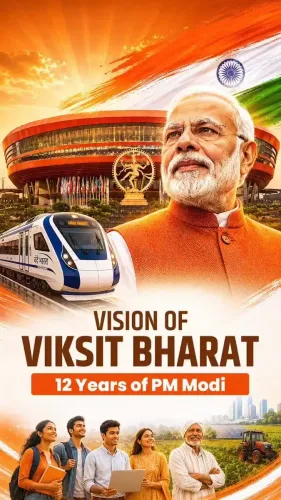
CM Mohan Yadav Marks 12 Years of Make in India

Synopsis
On its 12th anniversary, Madhya Pradesh CM Dr. Mohan Yadav celebrated Make in India, praising PM Modi's leadership for transforming India's manufacturing identity and pushing Indian products into global markets under the 'Make for the World' vision.
Key Takeaways
Make in India completed 12 years on 25 September 2026 , having been launched on the same date in 2014 .
MP Chief Minister Dr.
Mohan Yadav posted a congratulatory message on X, crediting PM Narendra Modi's leadership for the initiative's growth.
The 'Make in India — Make for the World' framing reflects India's shift from import substitution toward global export competitiveness.
The scheme is now linked to the broader Atmanirbhar Bharat push and Production-Linked Incentive (PLI) schemes across sectors including electronics, automobiles and pharmaceuticals.
Both the scheme and its offshoots feed into the Viksit Bharat 2047 goal of positioning India as a fully developed economy.
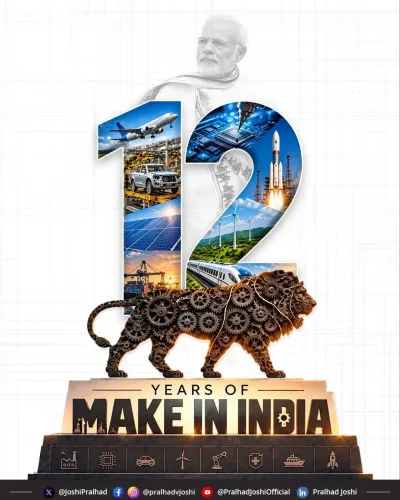
Twelve years after Prime Minister Narendra Modi unveiled it on 25 September 2014, Make in India has grown from a campaign slogan into the structural spine of India's industrial policy — and Madhya Pradesh Chief Minister Dr. Mohan Yadav marked the anniversary on Friday, 25 September 2026, with a salute to that journey.
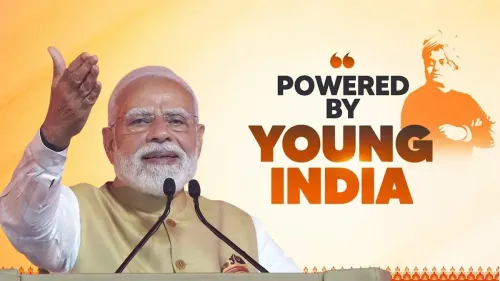
Writing in Hindi on X, Dr. Yadav offered congratulations to the nation on completing 'गौरवशाली 12 वर्ष' ('glorious 12 years') of Make in India, crediting Prime Minister Modi's leadership for giving India 'a new identity in manufacturing, innovation and investment.' He specifically invoked the 'Make in India — Make for the World' vision, describing it as the pathway that has opened global markets to Indian products.
From a 2014 launch to a manufacturing identity
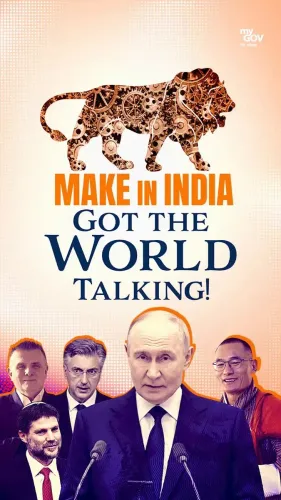
Make in India was launched on 25 September 2014 with a single, clear ambition: raise manufacturing's share of GDP and create large-scale employment. The logo — a striding lion made entirely of cogs — became one of the most recognised symbols of the Modi government's economic pitch to global investors. Over the following decade, the scheme expanded well beyond its original scope, pulling in sectors from defence and aerospace to mobile phones and pharmaceuticals.
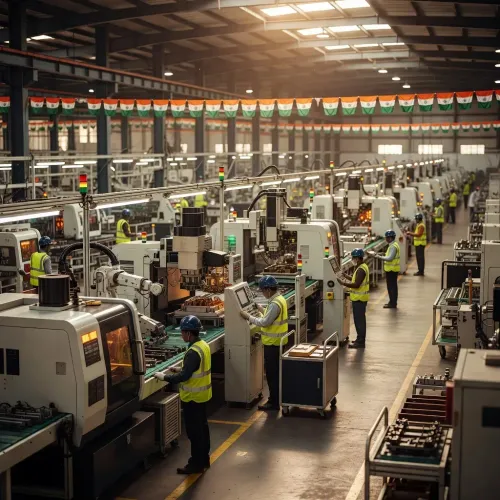
The 2020 Atmanirbhar Bharat push deepened that foundation, adding a self-reliance dimension that reframed foreign investment not as dependency but as a lever for domestic capability-building. Production-Linked Incentive (PLI) schemes — rolled out across more than a dozen sectors including electronics, automobiles and specialty chemicals — became the operational instrument that turned the Make in India promise into factory-floor reality.
The 'Make for the World' pivot and Viksit Bharat's industrial ambition
Dr. Yadav's post highlights a phrase that has gained currency in recent years: 'Make for the World.' The formulation is significant — it signals a deliberate shift from import substitution alone toward export competitiveness and integration into global value chains. India's positioning as an alternative manufacturing hub, particularly in electronics and pharmaceuticals, has driven this pivot.
Both threads — domestic self-reliance and global export reach — now feed into the government's Viksit Bharat (Developed India) vision, which sets 2047 as the horizon for India's emergence as a fully developed economy. For Madhya Pradesh, a state that has aggressively courted investment through its own Global Investors Summit, the anniversary is also a moment to claim a share of that national industrial narrative.
As the next Annual Survey of Industries data and potential PLI expansions in the coming Union Budget loom on the horizon, the 12-year milestone is less a finish line than a checkpoint — one that measures how far the factory floor has come, and how far it still has to go to deliver on the 'Viksit Bharat' promise.
Point of View
The 12-year mark invites scrutiny: Make in India has delivered visible gains in mobile phone manufacturing and defence indigenisation, but manufacturing's share of GDP has remained stubbornly below the original targets, making the 'Make for the World' pivot a crucial reframing. The Viksit Bharat 2047 anchor gives the government a long runway to claim success, but also raises the stakes — every subsequent data release on industrial output and exports will be measured against this milestone year.
NationPress
25 Sept 2026
Frequently Asked Questions
When was Make in India launched?
Make in India was launched by Prime Minister Narendra Modi on 25 September 2014 , making 2026 its 12th anniversary.
What is the 'Make for the World' concept?
'Make for the World' is an extension of Make in India that shifts the focus beyond domestic production to positioning India as an export hub integrated into global value chains, particularly in electronics, pharmaceuticals and defence.
What is Viksit Bharat and how does Make in India relate to it?
Viksit Bharat is the government's vision for India to become a fully developed economy by 2047 . Make in India, Atmanirbhar Bharat and PLI schemes are the industrial policy tools designed to achieve that goal.
Why did Madhya Pradesh CM Mohan Yadav comment on Make in India?
As a BJP state chief minister, Dr. Mohan Yadav regularly amplifies central government schemes. Madhya Pradesh has also hosted its own Global Investors Summit, making it an active participant in the broader Make in India push.
What are Production-Linked Incentive (PLI) schemes?
PLI schemes are financial incentives offered by the central government to manufacturers in over a dozen sectors — including mobile phones, automobiles and pharmaceuticals — to boost domestic production and exports under the Make in India framework.