CM Mohan Yadav Marks World Food Day With Call to End Waste
Synopsis
MP Chief Minister Dr. Mohan Yadav marked World Food Day 2026 by calling on citizens to end food waste and ensure nutritious food reaches every person, framing food respect as a core cultural value alongside India's statutory food security goals.
Key Takeaways
World Food Day is observed on 16 October every year, established by the FAO in 1979 .
Mohan Yadav called for a public pledge to stop food waste and improve nutritional access across society.
He framed food respect as sanskar — a fundamental cultural value — not merely a policy directive.
India's National Food Security Act, 2013 guarantees subsidised grains to 75% of rural and 50% of urban population.
Madhya Pradesh's rollout of nutrition and food-distribution schemes will be a key indicator of how this pledge translates into action.
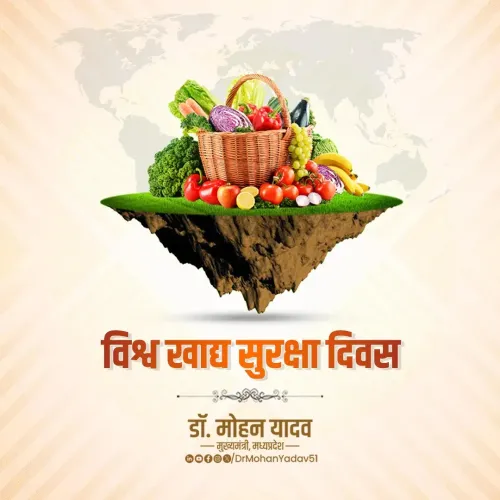
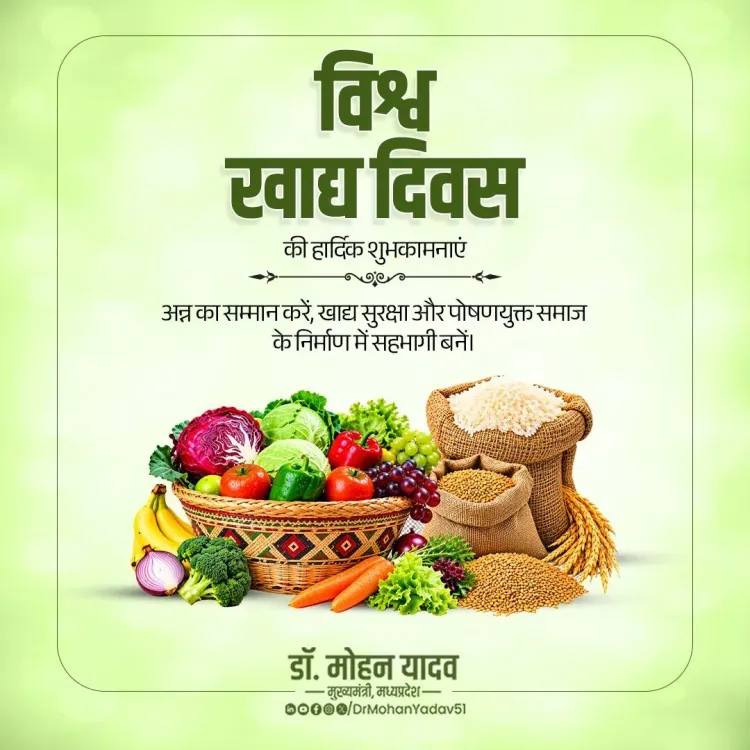
On World Food Day, 16 October 2026, Madhya Pradesh Chief Minister Dr. Mohan Yadav issued a public call to action — urging citizens to stop food waste, secure food access for every individual, and build a healthier, well-nourished society rooted in India's cultural reverence for food.
Writing in Hindi, Dr. Yadav framed the day not merely as a calendar observance but as a moral prompt: 'अन्न का सम्मान हमारी संस्कृति और जीवन का मूल संस्कार है' ('Respect for food is the fundamental value of our culture and life'). The message called for a collective pledge — to reduce waste, ensure food security, and make nutritious food reachable for every person.
World Food Day and India's food security architecture
World Food Day is observed every year on 16 October, a date established by the Food and Agriculture Organisation (FAO) in 1979 to focus global attention on hunger, nutrition, and sustainable food systems. India's own statutory backbone for food security is the National Food Security Act, 2013, which guarantees subsidised food grains to 75% of the rural population and 50% of urban households — one of the largest food entitlement programmes in the world.
Madhya Pradesh has been a significant delivery node for central nutrition programmes, including the Public Distribution System and schemes targeting maternal and child nutrition. State-level execution — budget allocations, last-mile infrastructure, beneficiary identification — is where national policy goals either land or falter.
A cultural framing that goes beyond routine wishes
Indian leaders routinely mark World Food Day with social-media messages, but Dr. Yadav's framing carries a specific register: it invokes cultural obligation alongside policy intent, positioning food respect as sanskar — a deeply ingrained social value — rather than just a government target. That language is deliberate. It mobilises community norms around food waste at a household level, where no scheme alone can reach.
Food waste is a concrete, measurable problem in India. While the Chief Minister's post contains no new scheme announcement or statistics, the underlying challenge is well-documented — and the call to end waste, paired with calls for nutritional access, reflects the dual front any state government must fight: surplus mismanagement on one end, persistent undernourishment on the other.
Eyes now turn to Madhya Pradesh's next assembly session and its budget allocations for nutrition and food-security programmes — the arena where today's pledge will be tested against actual delivery.
Point of View
But the cultural framing — grounding food security in sanskar — is politically calculated to resonate beyond typical government messaging. It positions the BJP-led state government as custodians of both tradition and welfare simultaneously. The real policy test, however, lies downstream: Madhya Pradesh's budget commitments to PDS infrastructure and nutrition schemes will determine whether today's sentiment translates into measurable improvement in one of India's most populous states. Routine observances like this one also set the rhetorical baseline against which opposition parties can benchmark actual delivery.
NationPress
16 Oct 2026
Frequently Asked Questions
When is World Food Day observed and why?
World Food Day is observed every year on 16 October . It was established by the Food and Agriculture Organisation (FAO) in 1979 to promote global awareness of hunger, food security, and sustainable nutrition.
What did MP CM Dr. Mohan Yadav say on World Food Day 2026?
Dr. Mohan Yadav urged citizens to pledge against food waste, ensure food security, and work toward making nutritious food accessible to every individual, calling food respect a core cultural value.
What is the National Food Security Act and how does it apply to Madhya Pradesh?
The National Food Security Act, 2013 gives a statutory right to subsidised food grains to 75% of rural and 50% of urban population across India. Madhya Pradesh is one of the largest beneficiary states under this law.
How does India address food waste at the policy level?
India addresses food waste through PDS reforms, storage infrastructure upgrades, and awareness campaigns. State governments are key implementers, and budget allocations each assembly session determine the actual pace of progress.
What nutrition schemes is Madhya Pradesh implementing?
Madhya Pradesh implements central schemes including the Public Distribution System and maternal and child nutrition programmes. Specific 2026 budget allocations and their rollout will be clearer at the next assembly session.