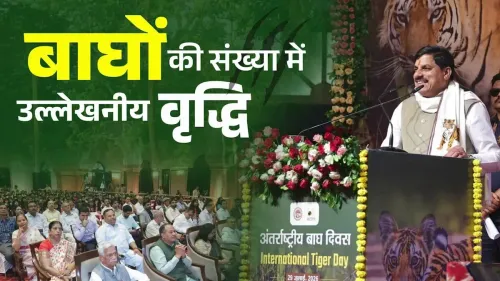
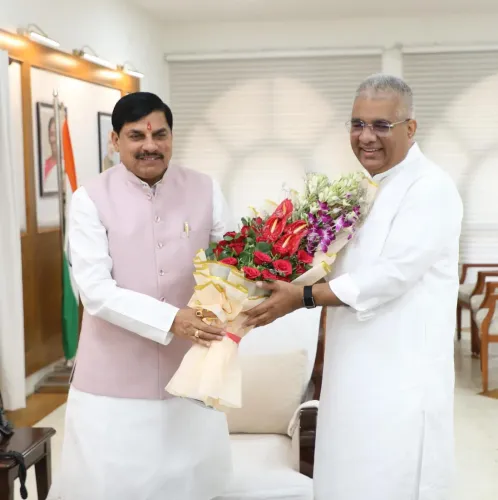
CM Mohan Yadav meets Union Env Minister on MP forest cover
Synopsis
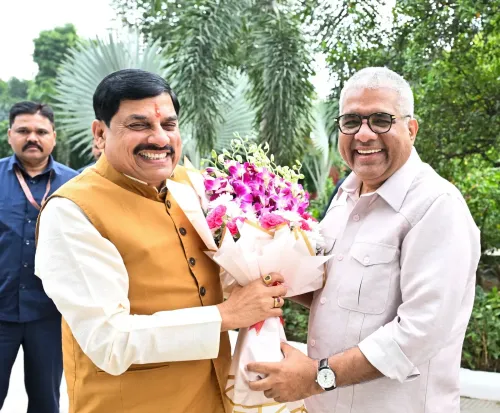
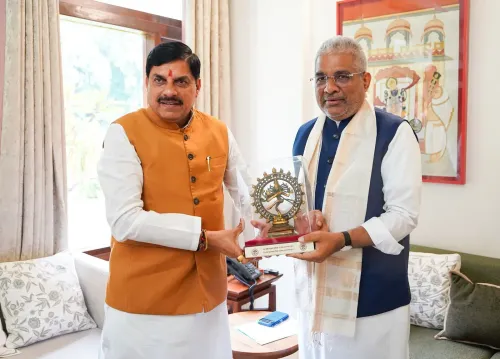
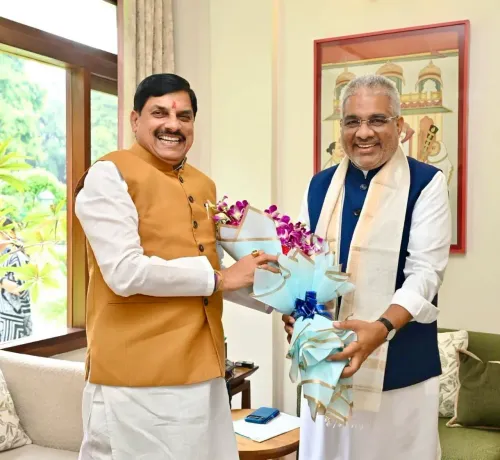
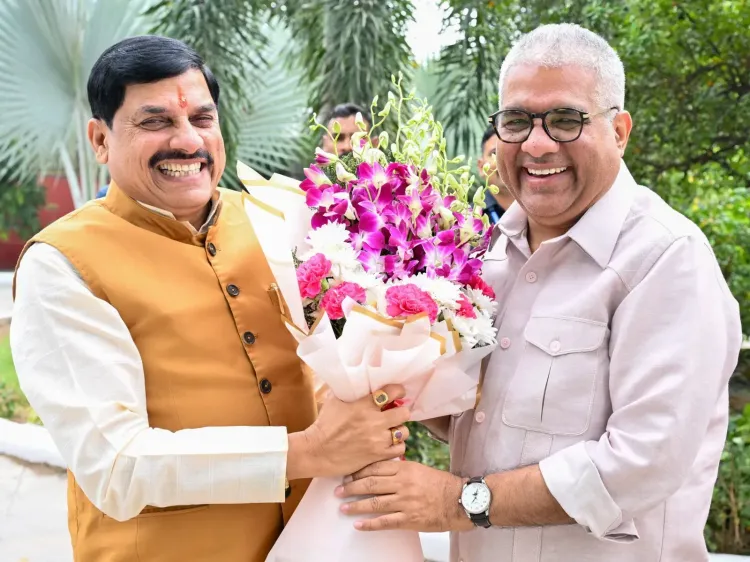
Madhya Pradesh CM Dr. Mohan Yadav met Union Environment Minister Bhupendra Yadav in New Delhi on October 29, 2026, holding focused discussions on expanding forest cover and strengthening wildlife conservation in the state.
Key Takeaways
Mohan Yadav met Bhupendra Yadav , Union Minister for Environment, Forest and Climate Change, in New Delhi on October 29, 2026 .
Discussions centred on the development of forest areas and wildlife conservation in Madhya Pradesh .
Madhya Pradesh hosts major tiger reserves including Kanha and Bandhavgarh , giving it outsized importance in national conservation policy.
The Wildlife (Protection) Act, 1972 forms the legal framework within which state-level wildlife decisions operate.
The meeting reflects India's federal model where state governments coordinate directly with the Union Ministry on forest and biodiversity priorities.
Madhya Pradesh Chief Minister Dr. Mohan Yadav used a visit to New Delhi on Thursday, October 29, 2026 to hold talks with Union Minister for Environment, Forest and Climate Change Bhupendra Yadav — centering the conversation on forest enrichment and wildlife protection across the state's vast natural habitats.
Posting on X after the meeting, Dr. Mohan Yadav wrote: 'Aaj Nayi Dilli pravas ke dauran... sarthak charcha hui' — 'During today's visit to New Delhi, I met the honourable Union Minister for Environment, Forest and Climate Change Shri Bhupendra Yadav. On this occasion, meaningful discussions were held on topics related to the development of forest areas and the conservation of wildlife in Madhya Pradesh.'
Why MP's forests sit at the heart of national conservation
Madhya Pradesh is home to some of India's most celebrated tiger reserves — Kanha and Bandhavgarh foremost among them — making it a cornerstone of the country's wildlife conservation architecture. The state's forest department, tribal communities living in and around forest zones, and wildlife protection groups all have a direct stake in how policy gets shaped and funded at the national level.
The legal backbone for this work is the Wildlife (Protection) Act, 1972, which established the national framework that state governments operate within. Any expansion of protected areas, enhanced anti-poaching measures, or fresh afforestation drives in Madhya Pradesh must align with — and often requires active coordination with — the Union Ministry that Bhupendra Yadav heads.
Federal ecology: how Centre and state coordinate on ground
Such bilateral meetings between a state chief minister and the Union environment minister are a routine but consequential feature of India's federal approach to ecological governance. States bring ground-level implementation challenges; the Centre brings policy direction, statutory approvals, and funding mechanisms. Madhya Pradesh has historically been an active participant in this dialogue, given the scale of its natural endowments.
The meeting signals that the state government is actively seeking to align local forest and wildlife priorities with national frameworks — whether that translates into fresh project approvals, enhanced funding for existing sanctuaries, or new joint conservation initiatives remains to be formalised.
With India's biodiversity commitments increasingly under international scrutiny, a chief minister making time for a dedicated environment conversation in the capital is a signal in itself — that forest governance is on the political agenda, not just the bureaucratic one.
Point of View
Funding, and policy alignment. For Madhya Pradesh — whose tiger population and forest area make it a flagship state for conservation optics — this kind of direct ministerial engagement is both politically smart and administratively necessary. With India's international climate and biodiversity commitments growing more demanding, such Centre-state coordination meetings are acquiring greater strategic weight than their routine appearance suggests. Whether this particular meeting produces tangible announcements — new sanctuary buffers, tribal-forest interface initiatives, or enhanced green corridor funding — will be the real test of its consequence.
NationPress
29 Oct 2026
Frequently Asked Questions
Why did CM Mohan Yadav meet Bhupendra Yadav in Delhi?
CM Dr. Mohan Yadav met Union Environment Minister Bhupendra Yadav in New Delhi on October 29, 2026, to discuss the development of forest areas and wildlife conservation in Madhya Pradesh.
Which tiger reserves does Madhya Pradesh have?
Madhya Pradesh is home to several major tiger reserves including Kanha and Bandhavgarh, making it one of India's most important states for wildlife conservation.
What is Bhupendra Yadav's role in forest policy?
Bhupendra Yadav is the Union Minister for Environment, Forest and Climate Change, overseeing national forest and wildlife policies that state governments must align with.
What law governs wildlife conservation in India?
The Wildlife (Protection) Act, enacted in 1972, provides the national legal framework for wildlife conservation across all Indian states, including Madhya Pradesh.
How does Centre-state coordination on forests work in India?
Under India's federal system, states like Madhya Pradesh coordinate directly with the Union Ministry for Environment on forest cover expansion, protected area approvals, and wildlife funding — meetings between state CMs and the Union minister are a regular part of this process.