CM Mohan Yadav: MP Sends ₹701 Cr Scholarships to 1.25 Cr Students
Synopsis
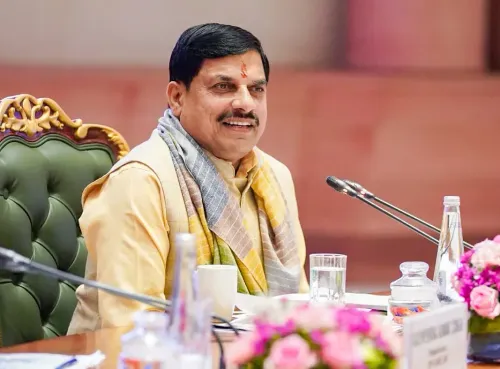
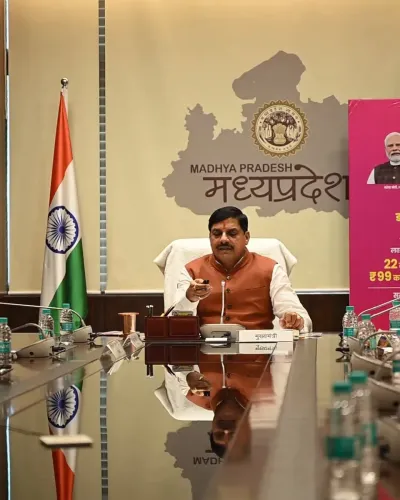
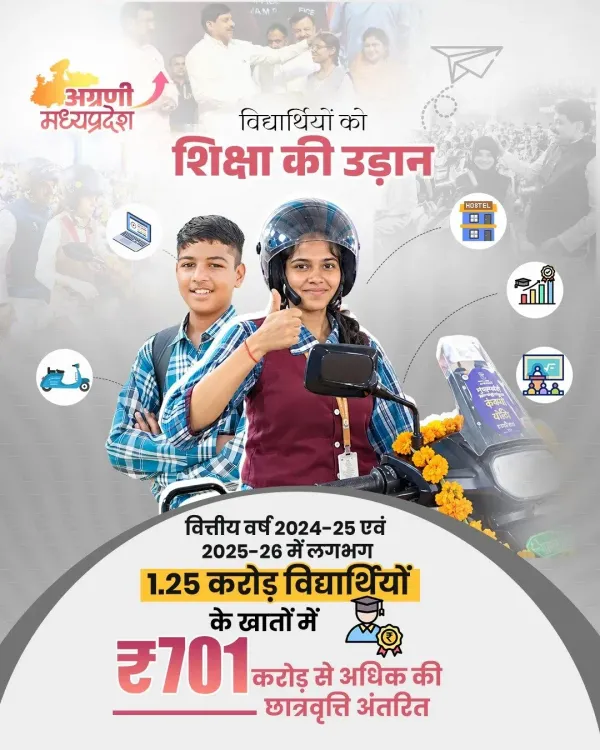
Madhya Pradesh CM Dr. Mohan Yadav announced that over ₹701 crore in scholarships have been transferred directly to 1.25 crore students' bank accounts across FY 2024-25 and 2025-26 under the 'Agrani Madhya Pradesh' initiative.
Key Takeaways
Over ₹701 crore in scholarships disbursed by the Madhya Pradesh government across FY 2024-25 and 2025-26 .
Approximately 1.25 crore students received funds directly into their bank accounts via Direct Benefit Transfer.
The disbursal is part of the state government's 'Agrani Madhya Pradesh' (Leading Madhya Pradesh) development initiative.
Mohan Yadav , in office since December 2023, has prioritised education as a pillar of the state's development agenda.
The DBT-based delivery model is designed to reduce leakages and ensure funds reach students — particularly from SC, ST, and OBC communities — directly.
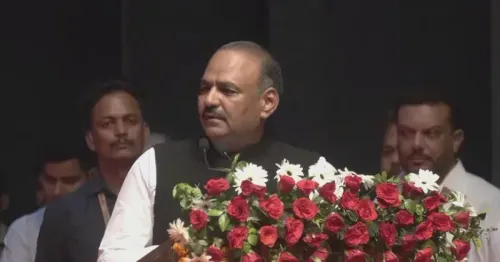
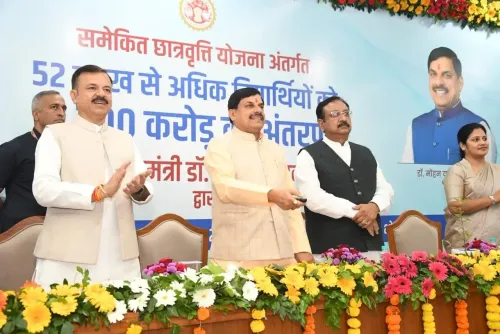
Across Madhya Pradesh, more than 1.25 crore students have had scholarship money land directly in their bank accounts — a quiet but consequential intervention in a state where the gap between enrolment and educational attainment has long been a challenge. Madhya Pradesh Chief Minister Dr. Mohan Yadav announced on Thursday, November 12, 2026, that his government has disbursed over ₹701 crore in scholarships across financial years 2024-25 and 2025-26 under the banner of the state's flagship resolve, 'Agrani Madhya Pradesh' (Leading Madhya Pradesh).
₹701 Crore, 1.25 Crore Bank Accounts — How the Money Moved
The disbursement was routed directly into students' bank accounts — in line with the Direct Benefit Transfer (DBT) framework that both state and central governments have championed as the cleanest way to get welfare spending to its intended recipients. By cutting out intermediaries, DBT has become the architecture of choice for scholarship delivery across India, reducing leakages and making it harder for funds to disappear mid-chain.
Madhya Pradesh's scale here is notable. Reaching 1.25 crore beneficiaries in two successive financial years means the scheme is operating at the width of a large-state-level intervention, not a pilot. At an average of roughly ₹560 per student — though individual amounts vary by category and level of study — the transfers are designed to offset the hidden costs of schooling: textbooks, transport, uniforms, and the opportunity cost that often pulls students, particularly girls and students from marginalised communities, out of classrooms.
'Agrani Madhya Pradesh' — The Ambition Behind the Slogan
The 'Agrani Madhya Pradesh' (Leading MP) initiative is Dr. Mohan Yadav's government framing its entire developmental push around a single forward-positioning idea: that the state, historically seen as a mid-table performer in human development indices, can break into the front rank. Dr. Yadav, who took office in December 2023, has repeatedly placed education at the centre of that pitch.
The scholarship push fits neatly into that narrative — but it also reflects a harder operational reality. Madhya Pradesh has a large scheduled caste, scheduled tribe, and Other Backward Class student population, all of whom qualify for central and state scholarship schemes. Getting that money to them, reliably and on time, has historically been uneven. A claim of two back-to-back years of full-scale disbursal would, if borne out, represent a genuine improvement in delivery infrastructure.
What the Disbursal Record Means for Students on the Ground
For policymakers and parents alike, the number that matters is not just the rupee figure but the trajectory. India's scholarship ecosystem spans dozens of central and state schemes — pre-matric, post-matric, merit-cum-means — and Madhya Pradesh's student population, particularly in rural and tribal belt districts, has been among the hardest to reach consistently. When transfers arrive on time, research consistently shows retention rates improve, especially at the secondary level.
The government's framing also signals where it expects political credit to accrue: with the student community and their families, a vote bloc that cuts across caste and class and that the BJP in Madhya Pradesh has worked systematically to consolidate since its return to power.
With the state's education budget and enrolment outcome data expected in upcoming official reports, the ₹701 crore disbursal now becomes a benchmark — and the next question is whether the learning numbers move in the same direction as the money.
Point of View
Which is seeking to improve its human development ranking, consistent scholarship disbursal over two consecutive fiscal years signals institutional follow-through, not just one-time optics. The 'Agrani Madhya Pradesh' branding also reveals a deliberate reputational bet: that welfare delivery at scale can reposition the state's image from a laggard to a leader. The real test will be whether enrolment retention and learning outcome data, once published, corroborate the financial disbursement figures.
NationPress
12 Nov 2026
Frequently Asked Questions
How much scholarship money has Madhya Pradesh distributed to students?
Madhya Pradesh has distributed over ₹701 crore in scholarships to approximately 1.25 crore students across financial years 2024-25 and 2025-26, according to CM Dr. Mohan Yadav's announcement.
What is the 'Agrani Madhya Pradesh' initiative?
'Agrani Madhya Pradesh' (Leading Madhya Pradesh) is the CM Dr. Mohan Yadav-led state government's development-positioning initiative aimed at making Madhya Pradesh a front-rank state across sectors including education.
How does Madhya Pradesh distribute scholarships to students?
The state government uses the Direct Benefit Transfer (DBT) mechanism to deposit scholarship amounts directly into eligible students' bank accounts, reducing intermediaries and leakages.
Who are the beneficiaries of Madhya Pradesh's scholarship scheme?
The scholarship scheme covers a wide cross-section of students, with particular focus on students from Scheduled Caste, Scheduled Tribe, and Other Backward Class communities across pre-matric and post-matric levels.
When did Dr. Mohan Yadav become Chief Minister of Madhya Pradesh?
Dr. Mohan Yadav assumed office as Chief Minister of Madhya Pradesh in December 2023, following the BJP's victory in the state assembly elections.