CM Mohan Yadav Offers Prayers at Ujjain's Sandipani Ashram on Guru Purnima

Synopsis
On Guru Purnima 2026, MP Chief Minister Dr. Mohan Yadav visited Ujjain's Maharshi Sandipani Ashram, performed traditional worship, and offered his self-authored book on the gurukul tradition at the sage's feet.
Key Takeaways
Mohan Yadav visited Maharshi Sandipani Ashram, Ujjain on Guru Purnima, 29 July 2026 for annual worship.
He offered his self-authored book 'Maharshi Sandipani: Bharatiya Gurukul Parampara ke Shilpi' at the sage's feet.
Prayers were also offered at the ancient Shri Kundeshwar Mahadev and Shri Sarveshwar Mahadev temples within the ashram complex.
Yadav prayed for the welfare of Madhya Pradesh residents during the visit.
He described the ashram as 'a remarkable symbol of our glorious cultural and spiritual heritage.'
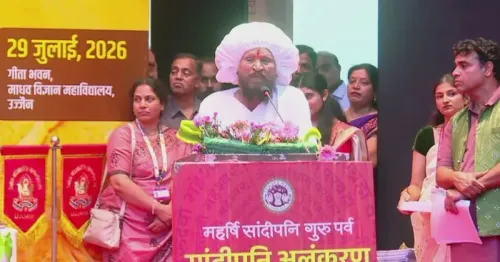
On the sacred occasion of Guru Purnima, Madhya Pradesh Chief Minister Dr. Mohan Yadav visited the ancient Maharshi Sandipani Ashram in Ujjain on Wednesday, 29 July 2026, continuing what he described as a personal tradition of annual worship at the historic site — and this year, he arrived bearing a gift of his own authorship.
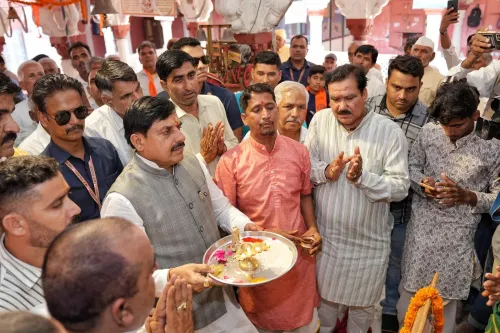
Dr. Yadav performed poojan-archan (ritual worship) at the ashram and sought the blessings of his guruji. He then placed a copy of his self-authored book, 'Maharshi Sandipani: Bharatiya Gurukul Parampara ke Shilpi' (Maharshi Sandipani: The Architect of India's Gurukul Tradition), at the feet of the sage's idol — a gesture of offering one's intellectual work to the source of knowledge itself.
Ancient temples, a modern Chief Minister's prayer
Within the ashram complex, Dr. Yadav also offered prayers at two revered shrines: Shri Kundeshwar Mahadev and Shri Sarveshwar Mahadev, both described as ati prachin — extremely ancient. He prayed for the welfare of the people of Madhya Pradesh. 'The Maharshi Sandipani Ashram, situated in the city of Mahakal, is a remarkable symbol of our glorious cultural and spiritual heritage,' he wrote.
Why Sandipani Ashram carries such weight
Ujjain — one of India's seven sacred cities and home to the Mahakaleshwar Jyotirlinga — holds the Sandipani Ashram as a site of particular reverence. Hindu tradition holds that Lord Krishna himself received his education here under Sage Sandipani, making it one of the most symbolically potent addresses in the gurukul tradition. Guru Purnima, observed on the full moon of the Hindu month of Ashadha, is the annual occasion when that tradition is honoured across the country.
Madhya Pradesh's political leadership has consistently woven the state's dense religious geography into its public identity — Ujjain's temples and ashrams serving as recurring backdrops for ceremonial engagements. Dr. Yadav's book, dedicated to Sandipani's legacy, signals a step beyond attendance: a personal intellectual investment in the narrative of India's ancient educational lineage.
For a Chief Minister who holds a doctorate and leads a state that markets itself on its spiritual tourism infrastructure, the Guru Purnima visit is both devotion and statement — that the gurukul tradition is not museum history, but living inheritance.
Point of View
A framing with clear resonance in the current national discourse on reclaiming indigenous knowledge systems. Watch whether the book prompts any formal state initiative around gurukul-inspired education or Sandipani Ashram's heritage infrastructure.
NationPress
29 Jul 2026
Frequently Asked Questions
Why did CM Mohan Yadav visit Sandipani Ashram in Ujjain?
Dr. Mohan Yadav visited Maharshi Sandipani Ashram in Ujjain on the occasion of Guru Purnima to perform annual worship, seek blessings, and offer a copy of his self-authored book on the sage's gurukul legacy.
What is the significance of Maharshi Sandipani Ashram in Ujjain?
The ashram is traditionally believed to be where Lord Krishna received his education under Sage Sandipani, making it one of the most revered symbols of India's ancient gurukul tradition.
What book did CM Mohan Yadav present at the ashram?
He presented his self-authored book titled 'Maharshi Sandipani: Bharatiya Gurukul Parampara ke Shilpi' — meaning 'Maharshi Sandipani: The Architect of India's Gurukul Tradition' — placing it at the sage's feet as an offering.
What is Guru Purnima and when is it celebrated?
Guru Purnima is an annual Hindu observance honouring teachers and the guru-shishya (teacher-disciple) tradition. It falls on the full moon of the Hindu month of Ashadha, which in 2026 was on 29 July.
Which temples did CM Mohan Yadav visit inside the Sandipani Ashram complex?
He offered prayers at two ancient temples within the ashram: Shri Kundeshwar Mahadev and Shri Sarveshwar Mahadev, praying for the welfare of Madhya Pradesh's residents.