Dr. Jitendra Singh fires poetic salvo at opposition in Lok Sabha
Synopsis
Union Minister Dr. Jitendra Singh fired a poetic political broadside on 29 July 2026, quoting a classical Urdu ghazal to mock the opposition's failure to capture the Prime Ministership and their subsequent protest outside 7 Lok Kalyan Marg, tagging the dig to #LokSabha.
Key Takeaways
Jitendra Singh posted a pointed Hindi-Urdu jibe at the opposition on 29 July 2026 , tagged to #LokSabha .
The post mocks rivals for failing to win the Prime Ministership and instead staging a dharna outside 7 Lok Kalyan Marg , the PM's official residence.
He closed with a classical Urdu couplet framing the opposition's ambitions as falling decisively short.
The post included a video, suggesting it was tied to a live or recent parliamentary moment.
The use of ghazal verse to deliver political critique is a recurring rhetorical device in Indian political communication.
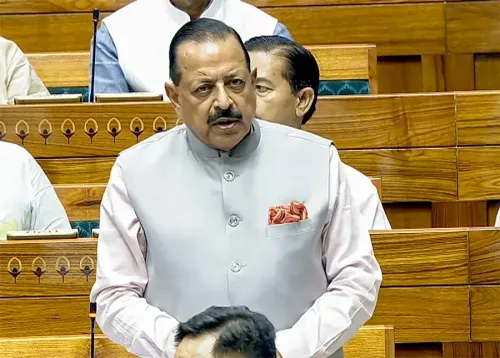
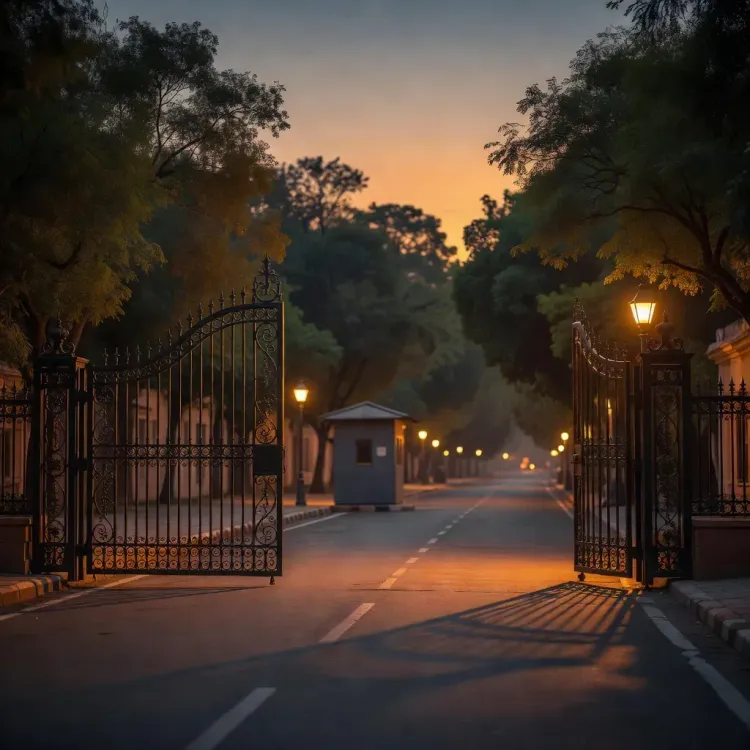
A verse of classical Urdu poetry became a political weapon on Wednesday, 29 July 2026, as Union Science and Technology Minister Dr. Jitendra Singh turned to the ghazal tradition to deliver a sharp rebuke — targeting what he framed as the opposition's humiliating failure to claim the Prime Minister's chair and their subsequent resort to protest outside 7 Lok Kalyan Marg, the official residence of India's Prime Minister in New Delhi.
The verse that landed like a verdict
Dr. Singh's post opened with a pointed political observation in Hindi — 'प्रधानमंत्री बन कर 7 लोक कल्याण मार्ग में जा के ना रह सके, तो उसके दरवाजे पर धरना लगा कर बैठ गए' — which translates to: 'Could not become Prime Minister and move into 7 Lok Kalyan Marg, so they sat down to protest at its very gates.' He then landed the blow with a couplet: 'बड़े बेआबरू होकर तेरे कूचे से हम निकले, बहुत निकले मेरे अरमान लेकिन फिर भी कम निकले' — 'We left your lane deeply dishonoured; many were my ambitions, yet they fell short.'
The couplet, drawn from classical Urdu poetry, is a well-known verse of longing and defeat — deployed here with unmistakable political intent. By tagging #LokSabha, Dr. Singh anchored the jab squarely in the parliamentary arena, signalling that the target is the opposition's conduct and aspirations in the context of the general election and its aftermath.
Poetry as political artillery — a familiar BJP playbook
This is not a rhetorical accident. Indian political figures, particularly from the ruling dispensation, have long weaponised classical Urdu and Hindi verse to deliver critiques that land harder than a press statement and travel further on social media. The choice of a ghazal — a form associated with unrequited longing — to describe the opposition's failed bid for 7 Lok Kalyan Marg is deliberate and layered. It frames the opposition not as a defeated rival but as a lovesick suitor who never stood a chance.
The reference to a dharna (sit-in protest) at the Prime Minister's residence gates sharpens the image further — casting opposition leaders as those reduced to agitating outside the very address they could not enter through the ballot box.
What the Lok Sabha tag signals
By attaching the #LokSabha hashtag, Dr. Singh ties his commentary directly to parliamentary proceedings — suggesting the post responds to something said or done inside the House, or to the broader political climate surrounding the session. The post, which includes a video, points to a moment of active political sparring, not a routine social media update.
In the combative grammar of Indian parliamentary politics, a minister quoting a verse of defeat at the opposition is a signal that the ruling side considers the contest settled — and wants the opposition to know it.
The ghazal's final line does the real work: ambitions were many, but they came up short. In Parliament, that line needs no translation.
Point of View
Not accidental. Tying it to #LokSabha suggests this is coordinated parliamentary-session communication, not a lone social media flourish. The broader pattern is clear: the BJP uses cultural idiom (Urdu poetry, Sanskrit shlokas, folk proverbs) to make political attacks feel timeless rather than tactical, giving them longer shelf-life and wider emotional reach.
NationPress
28 Oct 2026
Frequently Asked Questions
What did Dr. Jitendra Singh post about the Lok Sabha?
On 29 July 2026, Dr. Jitendra Singh posted a Hindi-Urdu message mocking the opposition for failing to become Prime Minister and instead staging a protest outside 7 Lok Kalyan Marg, the PM's official residence, closing with a classical Urdu couplet about unfulfilled ambitions.
What is 7 Lok Kalyan Marg?
7 Lok Kalyan Marg is the official residence of the Prime Minister of India, located in New Delhi. It was previously known as 7 Race Course Road before being renamed.
What does the Urdu couplet in Dr. Singh's post mean?
The couplet translates to: 'We left your lane deeply dishonoured; many were my ambitions, yet they fell short.' It is a verse of longing and defeat from the classical Urdu ghazal tradition, used here to describe the opposition's failed political aspirations.
Who is Dr. Jitendra Singh?
Dr. Jitendra Singh is the Union Minister of State (Independent Charge) for Science and Technology and Earth Sciences, and also holds the portfolio of Minister of State in the Prime Minister's Office and for Personnel.
Why do Indian politicians use Urdu poetry in political statements?
Classical Urdu poetry carries cultural weight and emotional resonance across India's political landscape. Politicians use ghazals and couplets to deliver critiques that feel literary rather than partisan, giving the message wider appeal and longer circulation on social media.