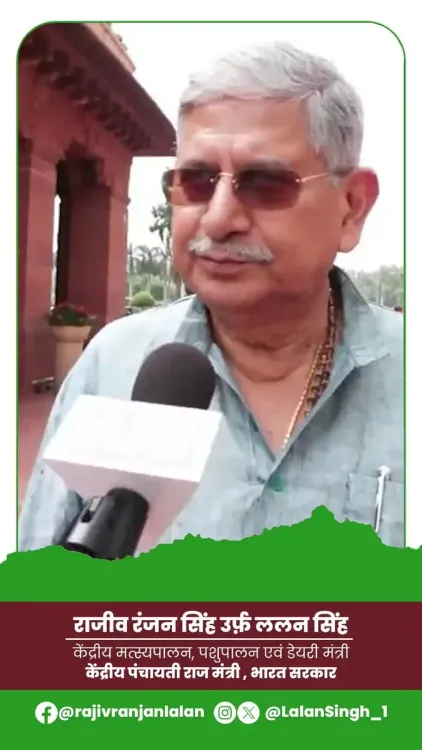
Lalan Singh demands Rahul Gandhi apologise for unparliamentary conduct
Synopsis
Union Minister Rajiv Ranjan Singh (Lalan Singh) publicly demands that Leader of the Opposition Rahul Gandhi apologise for using unparliamentary language in Lok Sabha, making unverified allegations, and behaving in ways he calls anti-democratic and a 'stain on democracy.'
Key Takeaways
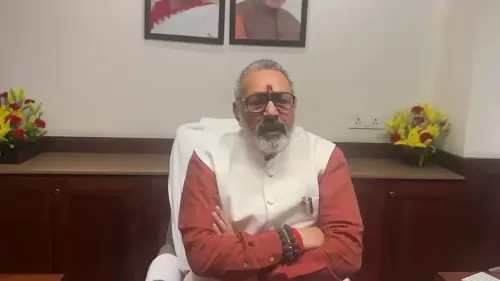
Lalan Singh , Union Minister and senior JD(U) leader, publicly demanded that Rahul Gandhi apologise for unparliamentary conduct in Parliament on 29 July 2026 .
He accused Gandhi of using 'street language' in the House, making claims 'beyond facts,' and failing to verify his allegations.
Singh stressed that the Leader of the Opposition holds a 'responsible post' and must speak with accountability on the floor of the House.
Rahul Gandhi was formally recognised as Leader of the Opposition after the 2024 Lok Sabha elections , restoring a post vacant since 2014 .
Singh called Gandhi's behaviour a 'stain' and a 'stigma' on democracy, ending his post with a prayer that 'God protect democracy from such people.'
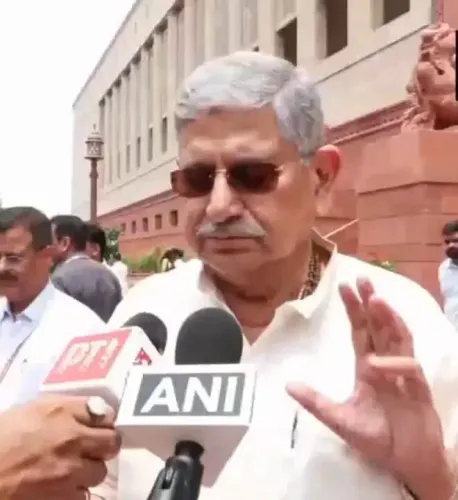
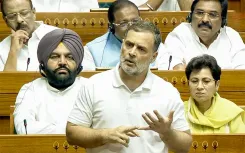
Parliament's dignity is not optional — and Union Minister Rajiv Ranjan Singh, popularly known as Lalan Singh, made that point with unmistakable force on Wednesday, 29 July 2026, publicly demanding that Leader of the Opposition Rahul Gandhi apologise for what he called unparliamentary language, unverified allegations, and behaviour that amounts to a 'stain on democracy.'
Posting in Hindi on X, the senior Janata Dal (United) leader and NDA cabinet minister did not mince words: 'Sansad desh ki sarvochch loktantrik vyavastha hai. Sadak ki bhasha sansad mein istemaal nahin ki ja sakti' — 'Parliament is the country's supreme democratic institution. The language of the street cannot be used inside it.' He called the position of Leader of the Opposition a 'responsible post' and argued that its holder is duty-bound to speak with accountability, not impunity.
The charge: lies, unverified claims, and democratic damage
Lalan Singh's indictment was three-pronged. First, that Gandhi has used unparliamentary expressions on the floor of the House. Second, that he has spoken 'beyond facts' and made false claims. Third — and pointedly — that he has refused to substantiate those claims: 'He should verify his allegations,' Singh wrote, adding that Gandhi's conduct is 'anti-democratic' and warrants a public apology.
The minister drew a sharp distinction between public rallies and the Lok Sabha chamber: 'What he says on the street is irrelevant to us, but when you speak in Parliament, it carries weight. You must speak responsibly here. The House has its own dignity; the House has its own rules.' Singh concluded with an appeal that carried unmistakable political edge — 'Bhagwan aise logon ko sadbuddhi den. Bhagwan loktantra ko aise logon se bachaen' — 'May God grant wisdom to such people. May God protect democracy from such people.'
Rahul Gandhi as Leader of the Opposition — a post restored after a decade
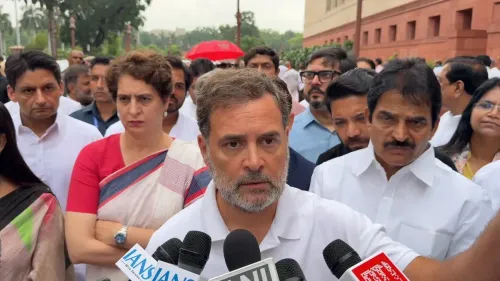
The target of Lalan Singh's criticism holds a position of considerable constitutional weight. After the 2024 Lok Sabha elections, the Lok Sabha Speaker formally recognised Rahul Gandhi as Leader of the Opposition — restoring a statutory post that had remained vacant since 2014, when no single opposition party held the minimum threshold of seats required. The role carries defined privileges, speaking time, and institutional responsibilities, which is precisely the lever Lalan Singh is pulling: the higher the office, the higher the standard expected.
A long-running battle over parliamentary decorum
Clashes over the tone and factual accuracy of parliamentary speeches are as old as the Lok Sabha itself. Successive Speakers have issued expunction orders and decorum rulings across every government since the first Lok Sabha session. What gives this round its particular charge is the identity of the combatants: a senior minister of an NDA ally publicly calling out the constitutionally recognised leader of the opposition — not in the chamber, but on a mass social-media platform, amplifying the fight well beyond the well of the House.
Whether Congress responds formally — inside Parliament or outside it — will set the next beat of this confrontation. The rules of the House give the Speaker the authority to act; the rules of politics give both sides every incentive to keep the argument alive.
Point of View
Not merely a procedural one. By invoking the dignity of the House rather than a specific policy dispute, Singh shifts the argument onto constitutional terrain where the ruling coalition holds structural advantage. The demand for a public apology is almost certainly not expected to be met; its function is to keep Gandhi on the defensive and signal to swing voters that the opposition's most prominent voice is reckless rather than responsible. How Congress responds — and whether the Speaker is drawn in — will determine whether this remains a social-media skirmish or escalates into a formal parliamentary confrontation.
NationPress
29 Jul 2026
Frequently Asked Questions
Why is Lalan Singh demanding Rahul Gandhi apologise?
Union Minister Lalan Singh accused Rahul Gandhi of using unparliamentary language in Lok Sabha, making unverified and false allegations, and behaving in a manner he described as anti-democratic, calling it a 'stain on democracy.'
What is the Leader of the Opposition's role in India?
The Leader of the Opposition in Lok Sabha is a statutory position with defined privileges and speaking rights. It was formally restored to Rahul Gandhi after the 2024 general elections , ending a gap since 2014 when no opposition party held the required seat threshold.
What does 'unparliamentary language' mean in India?
Unparliamentary language refers to expressions deemed undignified, offensive, or in violation of Lok Sabha rules and traditions. The Speaker has the authority to expunge such remarks from the official record.
Can the Lok Sabha Speaker take action over unparliamentary conduct?
Yes. The Lok Sabha Speaker has the authority to expunge remarks, issue rulings on decorum, and take disciplinary action against members who violate parliamentary rules and dignity of the House.