Dr. Jitendra Singh schools Rahul Gandhi on magisterial firing orders
Synopsis
Union Minister Dr. Jitendra Singh corrected Rahul Gandhi in Lok Sabha on July 29, 2026, stating that orders to fire on a protesting mob are issued by a District or Sub-Divisional Magistrate — never by a Minister — during debate on the Public Examinations Amendment Bill, 2026.
Key Takeaways
Jitendra Singh clarified in Lok Sabha on July 29, 2026 that firing orders on mobs are issued by a Magistrate (DM or SDM) , not a Minister.
The clarification was directed at Leader of Opposition Rahul Gandhi during debate on 'The Public Examinations (Prevention of Unfair Means) Amendment Bill, 2026' .
Under India's administrative framework, executive magistrates — not the political executive — hold authority over ground-level law-and-order decisions including dispersal orders.
The parent legislation, the Public Examinations (Prevention of Unfair Means) Act, 2024 , introduced penalties for exam malpractice and paper leaks.
The exchange reflects a recurring pattern in Parliament where opposition leaders raise broader governance questions during bill debates, prompting ministerial rebuttals on constitutional roles.
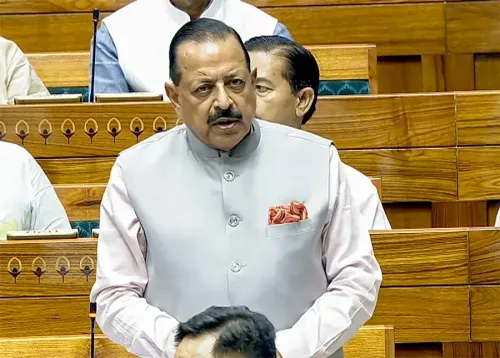
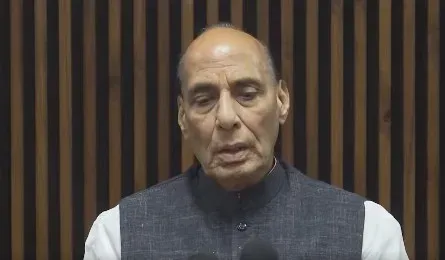
In a sharp parliamentary exchange that cut to the heart of how law-and-order authority actually works in India, Union Minister of State Dr. Jitendra Singh corrected Leader of Opposition Rahul Gandhi on the floor of Lok Sabha on Wednesday, July 29, 2026 — making clear that orders to open fire on a protesting mob are issued by a Magistrate, never by a Minister.
What Dr. Jitendra Singh actually said — and why it matters
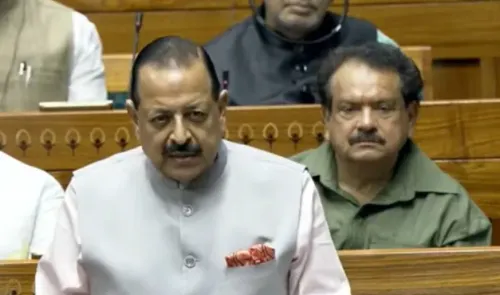
The clarification came during the debate on 'The Public Examinations (Prevention of Unfair Means) Amendment Bill, 2026' — a bill focused on curbing malpractice in competitive exams. When Rahul Gandhi raised the question of firing orders during the discussion, Dr. Singh delivered a pointed rebuttal: 'The orders of firing on a protesting mob are always issued by a Magistrate (DM, SDM), never by a Minister.'
The distinction is not a technicality. Under India's legal framework, the power to order the use of force to disperse an unlawful assembly — including firing — rests with the executive magistracy: the District Magistrate (DM) or Sub-Divisional Magistrate (SDM). Ministers, who are part of the political executive, have no direct command authority over such ground-level law-and-order decisions. It is a firewall built into the administrative structure.
A recurring fault line in Parliament
This kind of exchange is not unusual in Lok Sabha. Parliamentary debates in India frequently become arenas where the opposition raises broader governance questions — sometimes tangentially — during bill discussions, and ministers respond by drawing sharp lines between political and administrative responsibility. Dr. Singh's interjection fits that pattern precisely: a constitutional clarification delivered mid-debate to check a narrative before it takes hold.
The Public Examinations (Prevention of Unfair Means) Act, 2024 — the parent legislation being amended — was itself a significant move to impose strict penalties on exam fraud, cheating networks, and paper leaks. The 2026 amendment bill continues that legislative effort. That Rahul Gandhi chose this debate to raise a law-and-order question underlines how opposition leaders use legislative floors as a broader accountability platform.
Dr. Singh's response was a reminder that the chain of command in such situations runs through the district administration, not the Cabinet — and that conflating the two, in Parliament or elsewhere, distorts public understanding of how the Indian state actually functions.
Point of View
He not only deflected a political charge but reinforced the government's line that administrative decisions are insulated from political interference. The exchange also signals that the Public Examinations Amendment Bill, 2026, is contested enough for the opposition to use its debate as a vehicle for wider accountability questions. Whether the clarification lands as constitutional fact-setting or partisan deflection will depend on how the broader debate on the bill unfolds in the days ahead.
NationPress
29 Jul 2026
Frequently Asked Questions
Who has the authority to order firing on a protesting mob in India?
Under India's administrative and legal framework, only an executive Magistrate — a District Magistrate (DM) or Sub-Divisional Magistrate (SDM) — can issue an order to open fire on an unlawful assembly. Ministers of the political executive do not hold this authority.
What did Dr. Jitendra Singh say to Rahul Gandhi in Lok Sabha?
Dr. Jitendra Singh told Rahul Gandhi that 'The orders of firing on a protesting mob are always issued by a Magistrate (DM, SDM), never by a Minister,' during the debate on the Public Examinations (Prevention of Unfair Means) Amendment Bill, 2026.
What is the Public Examinations (Prevention of Unfair Means) Amendment Bill, 2026?
It is an amendment to the Public Examinations (Prevention of Unfair Means) Act, 2024, which established strict penalties for malpractice, cheating, and paper leaks in public competitive examinations in India.
Why did Rahul Gandhi raise the issue of firing orders during an exam bill debate?
Rahul Gandhi, as Leader of Opposition, raised the question during the Lok Sabha debate on the exam bill — a common parliamentary practice where opposition leaders use legislative discussions as a platform to question broader governance and law-and-order matters.
What is the role of a DM or SDM in law and order in India?
A District Magistrate (DM) and Sub-Divisional Magistrate (SDM) are executive magistrates who hold judicial and administrative powers over law-and-order situations in their jurisdictions, including the authority to order the use of force to disperse unlawful assemblies.