CM Fadnavis Unveils Five-Point Tiger Strategy at Nagpur
Synopsis
Chief Minister Devendra Fadnavis addressed an International Tiger Day event in Nagpur on 29 July 2026, unveiling a five-point tiger conservation strategy for Maharashtra that includes AI-based early warning systems, a green livelihood mission, CSR funding policy, and sustainable tourism — as India and Nepal remain the only countries to have met global tiger recovery targets.
Key Takeaways
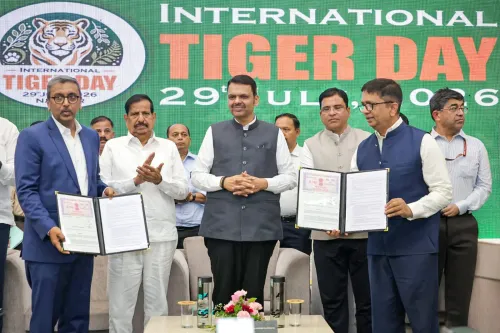
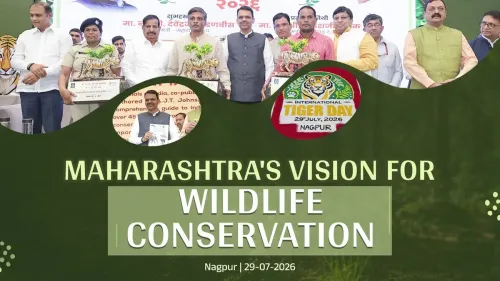
CM Devendra Fadnavis addressed the International Tiger Day 2026 event in Nagpur on 29 July 2026 .
He announced a five-point (panchsutri) strategy covering conflict mitigation, a Green Livelihood Mission, CSR policy, sustainable tourism, and reinvestment of tourism revenue into conservation.
Maharashtra is deploying camera tracking and an AI-based Early Warning System to monitor tiger movement and prevent human-wildlife conflict.
Approximately 75% of the world's wild tigers live in India; only India and Nepal achieved the post-2010 global tiger doubling target.
The Maharashtra Forest Department is facilitating voluntary village relocation from core tiger reserve areas.
Representatives from Bhutan, Cambodia, and Bangladesh attended the Nagpur event alongside state ministers and legislators.
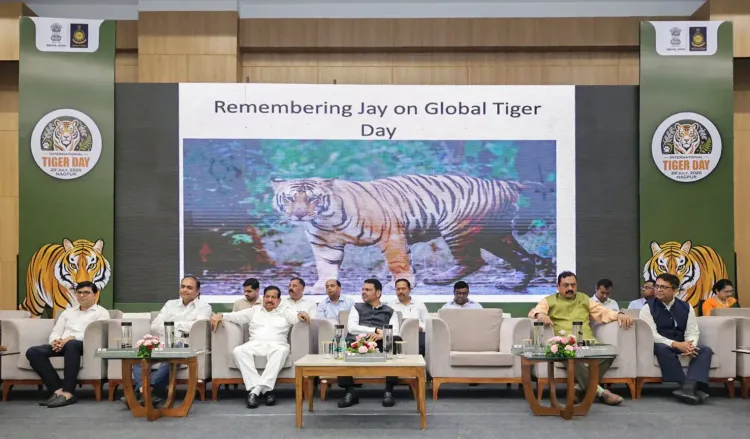
Seventy-five percent of the world's wild tigers live in India — and on International Tiger Day, 29 July 2026, Chief Minister Devendra Fadnavis stood in Nagpur, the city that sits at the heart of Maharashtra's tiger country, to announce a sharper, technology-driven plan to keep that number growing.
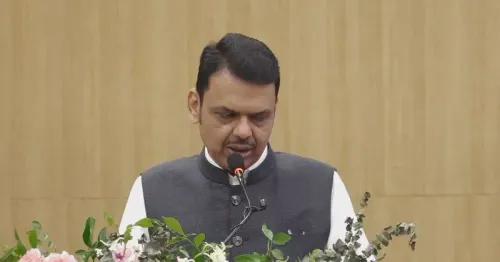
Addressing a state-level event organised to mark the occasion, CM Fadnavis underscored the ecological centrality of tigers to the food chain and noted that conservation efforts in Maharashtra have been running for over 30 years. 'Tiger reserves are not the sole responsibility of the forest department,' he said. 'Every section of society must contribute to conservation.'
A five-point formula for Maharashtra's forests
The Chief Minister outlined what he called a panchsutri (five-point strategy) for tiger conservation in the state. The plan covers: reducing human-wildlife conflict in villages bordering reserves; launching a Tiger Habitat Green Livelihood Mission; framing a CSR policy to channel corporate funds into conservation; creating a sustainable tourism policy to generate employment; and ensuring that tourism revenue is reinvested into forest protection. It is a model that treats the tiger reserve not as a walled sanctuary but as an economic engine for surrounding communities.
AI and cameras on the frontline of conflict mitigation
On the technology front, Fadnavis highlighted the deployment of camera tracking systems to monitor tiger movement and, crucially, an AI-based Early Warning System that alerts communities before a tiger enters a human-use zone. These tools sit within a wider national pattern: several Indian states have adopted GPS monitoring and AI-assisted surveillance to reduce retaliatory killings and livestock loss — the two biggest drivers of human-wildlife conflict near reserves. The Maharashtra Forest Department has also been facilitating voluntary relocation of villages from core reserve areas, with residents choosing to move rather than being displaced.
India and Nepal: the only two nations to hit the global tiger target
The backdrop to the event is a genuine conservation success story. When International Tiger Day was established following the 2010 St. Petersburg Tiger Summit, nations pledged to double wild tiger populations by 2022. Of all the tiger-range countries, only India and Nepal met that target. India's Project Tiger, launched in 1973, now oversees a network of reserves whose core areas have steadily expanded. Maharashtra has been a consistent contributor to that national count, with the state's tiger population on a sustained upward trajectory.
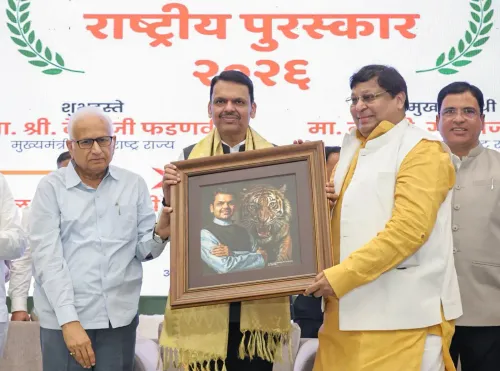
The Nagpur event was attended by Minister Ganesh Naik, Minister of State Dr. Pankaj Bhoyar, Minister of State Adv. Ashish Jaiswal, MLA Sumit Wankhede, and representatives from Bhutan, Cambodia, and Bangladesh, signalling that Maharashtra's conservation push is drawing regional attention.
The next test will be whether the five-point strategy moves from announcement to implementation — and whether Maharashtra's AI-warning infrastructure can be scaled fast enough to meaningfully reduce the conflict incidents that still cost lives on both sides of the forest boundary.
Point of View
Reflecting a broader national shift away from purely fortress-style conservation. The inclusion of an AI early warning system signals that state governments are now treating wildlife conflict as a technology-solvable problem, not just a land-use one. For Fadnavis, hosting an international event in Nagpur — the gateway to Vidarbha's tiger belt — carries clear political symbolism: positioning Maharashtra as a conservation leader ahead of the next national tiger census. The real measure will be whether the CSR policy and sustainable tourism guidelines are notified within the financial year or remain aspirational.
NationPress
28 Oct 2026
Frequently Asked Questions
What is Maharashtra's five-point tiger conservation strategy?
CM Fadnavis announced a five-point plan covering: reducing human-wildlife conflict near reserves, launching a Tiger Habitat Green Livelihood Mission, framing a CSR policy for corporate conservation funding, creating a sustainable tourism policy for employment, and channelling tourism revenue back into forest protection.
How does the AI early warning system for tigers work in Maharashtra?
Maharashtra is deploying an AI-based Early Warning System alongside camera traps to monitor tiger movement and alert nearby communities before a tiger enters a human-use zone, aiming to prevent conflict incidents and retaliatory killings.
Which countries met the global tiger doubling target?
Only India and Nepal achieved the goal of doubling wild tiger populations set at the 2010 St. Petersburg Tiger Summit, with India reaching the target nationally by 2022 through its Project Tiger programme.
What percentage of the world's tigers are in India?
India is home to approximately 75% of the world's wild tigers, making it the most critical range country for the species' survival, as stated by CM Fadnavis at the International Tiger Day 2026 event.
Why was International Tiger Day 2026 celebrated in Nagpur?
Nagpur is the gateway to Vidarbha, Maharashtra's primary tiger belt, making it a symbolically and logistically fitting venue for the state government's International Tiger Day event, which was attended by ministers and international delegates.