Maharashtra tiger population nears 600 as CM Fadnavis unveils five-point conservation plan
Synopsis
Maharashtra's tiger count has more than doubled — from 190 in 2014 to 444 — and CM Devendra Fadnavis is betting a new five-point plan, 11 signed MoUs, and AI-based conflict-mitigation tools will push that number past 600 and lift the state from third to first in India's tiger rankings.
Key Takeaways
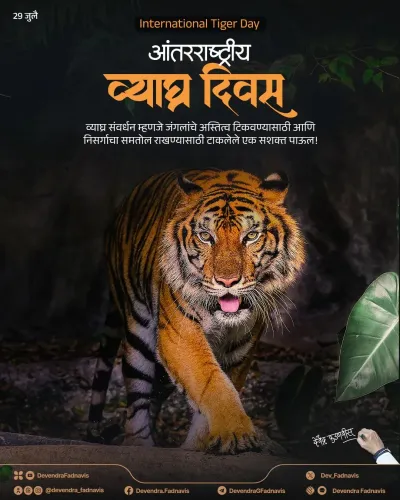
CM Devendra Fadnavis unveiled a five-point tiger conservation plan on 29 July at IIM Nagpur on International Tiger Day.
Maharashtra's tiger population has grown from 190 in 2014 to 444 ; the latest census is expected to cross 600 .
The plan covers human-wildlife conflict mitigation, green livelihoods, a dedicated CSR policy , sustainable tourism, and forest revenue generation.
AI-based early warning systems and camera tracking have been deployed in villages adjacent to the state's six tiger reserves .
11 MoUs were signed at the conference to advance forest conservation and sustainable development.
The state targets planting 300 crore trees and has set up five tissue culture laboratories for sapling production.
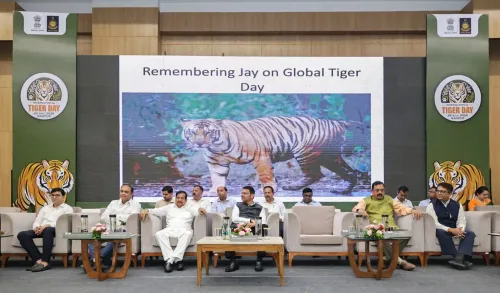
Maharashtra Chief Minister Devendra Fadnavis on Wednesday, 29 July announced a new five-point tiger conservation plan at an International Tiger Day conference held at the Indian Institute of Management (IIM) Nagpur, organised by the state's Forest Department. The Chief Minister stated that the state's tiger count had risen from 190 in 2014 to 444, with expectations that the latest census would push the figure beyond 600.
Key Developments at the IIM Nagpur Conference
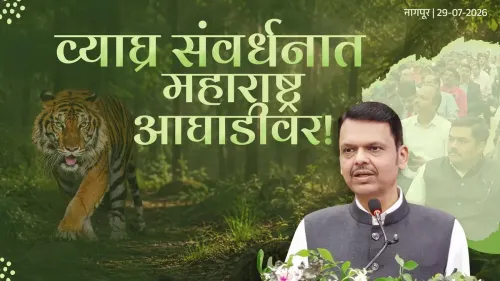
Addressing the gathering, Fadnavis underscored that tigers were central to the ecosystem and the food chain, and that their conservation directly safeguarded forests and the broader environment. He emphasised the government's commitment to a scientific, value-based approach to conservation that simultaneously preserved natural habitats.
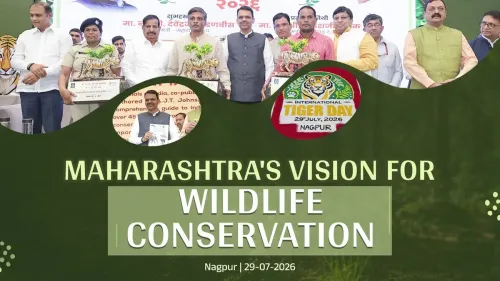
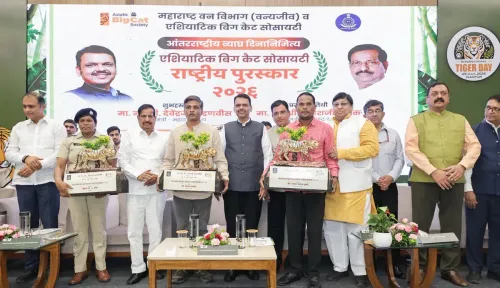
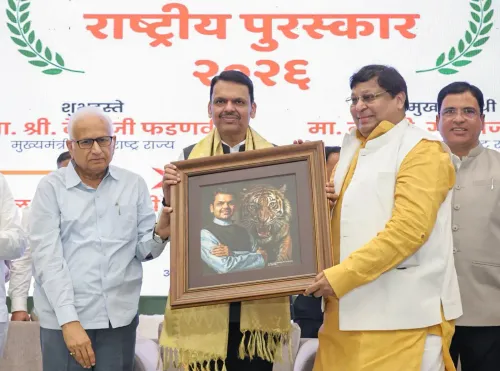
Notably, 11 Memorandums of Understanding (MoUs) were signed in the presence of the Chief Minister to advance forest conservation and sustainable development. Fadnavis also presented the Asiatic Big Cat Society National Awards to individuals who made outstanding contributions to tiger conservation.
What the Five-Point Plan Covers
The new conservation framework will focus on five priority areas: mitigating human-wildlife conflict, promoting green livelihood initiatives, establishing a dedicated CSR policy for conservation funding, driving sustainable tourism and job creation, and generating dedicated revenue streams for forest protection. According to the Chief Minister, planned interventions around reserves will include AI-based early warning systems and camera tracking in villages adjacent to tiger reserves — tools already deployed to reduce human-wildlife conflict.
Relocation, Buffer Zones, and Conflict Mitigation
Fadnavis noted that villages in the core areas of the state's six tiger reserves had been relocated, creating new buffer zones. He said local villagers had voluntarily come forward for rehabilitation and relocation under the Forest Department's revised policies — a shift that officials credit with enabling a more stable habitat for tigers and biodiversity. Structured conflict-mitigation methodologies have been extended to villages on the periphery of reserves, supporting both wildlife safety and eco-tourism growth.
Maharashtra's National and Global Standing
India currently harbours 75 per cent of the world's tiger population, according to the Chief Minister, with Maharashtra ranked third nationally. Fadnavis said that conservation measures implemented over the past two decades were now positioning the state to challenge for the top rank.
Forest Minister Ganesh Naik noted that under Fadnavis's leadership, the Forest Department was undergoing a major transformation, including an ambitious target of planting 300 crore trees and the establishment of five tissue culture laboratories across Maharashtra to produce high-quality saplings at scale. Minister of State for School Education Pankaj Bhoyer expressed confidence that such conferences would boost eco-tourism and expand regional employment in the years ahead.
What Comes Next
The conference featured expert presentations on community-based livelihood initiatives, the green economy, CSR investment strategies for tiger conservation, and human-tiger coexistence models. With the latest census results awaited and the five-point plan now formalised, Maharashtra's conservation trajectory will be closely watched as the state eyes a move to the national top rank.
Point of View
Which are aspirational rather than binding. Human-wildlife conflict remains the most politically charged variable: voluntary relocation works until it doesn't, and the gap between official optimism and ground-level friction in buffer zones is rarely captured in conference presentations. If the latest census does cross 600, the pressure on land use around reserves will intensify, not ease — and that tension is conspicuously absent from the plan's framing.
NationPress
28 Oct 2026
Frequently Asked Questions
What is Maharashtra's new five-point tiger conservation plan?
It is a framework announced by Chief Minister Devendra Fadnavis on 29 July 2025 covering human-wildlife conflict mitigation, green livelihood initiatives, a dedicated CSR policy for conservation funding, sustainable tourism and job creation, and dedicated revenue streams for forest protection. The plan was unveiled at an International Tiger Day conference at IIM Nagpur.
What is Maharashtra's current tiger population?
Maharashtra's tiger population stands at 444, up from 190 in 2014, according to CM Fadnavis. The state ranks third nationally, and officials expect the latest census to push the count beyond 600.
How is Maharashtra addressing human-wildlife conflict near tiger reserves?
The state has deployed AI-based early warning systems and camera tracking in villages adjacent to its six tiger reserves. Core-area villages have also been relocated to create new buffer zones, with local residents reportedly coming forward voluntarily for rehabilitation under revised Forest Department policies.
What was signed at the IIM Nagpur conference on International Tiger Day?
Eleven Memorandums of Understanding (MoUs) were signed in the presence of CM Fadnavis to advance forest conservation and sustainable development. The event also featured the presentation of Asiatic Big Cat Society National Awards for outstanding contributions to tiger conservation.
What is India's share of the global tiger population?
India harbours 75 per cent of the world's tiger population, according to CM Fadnavis. Within India, Maharashtra currently ranks third among states for tiger numbers, with conservation efforts over the past two decades aimed at moving it to the top position.