CM Mohan Yadav Orders Free Land Registry for Tribal Areas
Synopsis
Madhya Pradesh CM Dr. Mohan Yadav has announced free land registration for tribal areas, replacing pattas with formal registered titles at no cost to tribal landholders — closing a long-standing gap between land allotment and legal ownership security.
Key Takeaways
Mohan Yadav announced on 31 July 2026 that tribal areas in Madhya Pradesh will shift from pattas to free land registration.
Free registration converts an administrative allotment document into a legally enforceable property title, at zero cost to the tribal landholder.
Madhya Pradesh has one of India's largest tribal populations, with scheduled areas spanning districts including Mandla, Dindori, Alirajpur , and Jhabua .
The move builds on the framework of the central Forest Rights Act, 2006 , which recognised individual and community land rights for scheduled tribes.
Implementation details — eligible districts, qualifying landholders, and linkage with existing forest rights claims — are expected via state government orders.
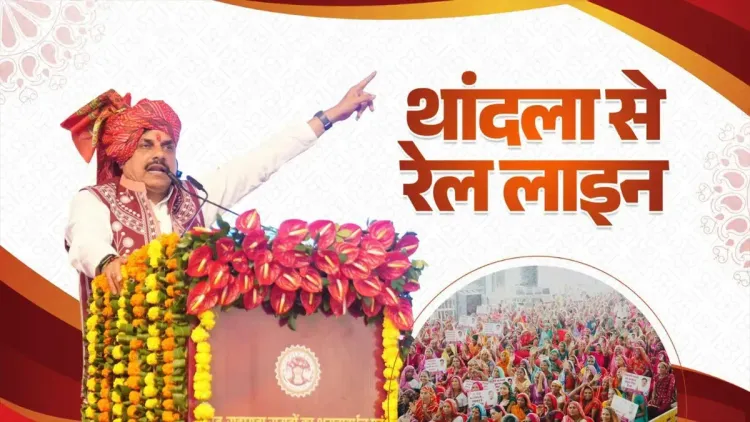
For tribal communities across Madhya Pradesh, land has long been a promise deferred — pattas issued, but the cost and complexity of formal registration keeping full ownership just out of reach. Madhya Pradesh Chief Minister Dr. Mohan Yadav has now announced a direct fix: in tribal areas, free registration will replace the existing patta system, removing a critical financial barrier to secure land titles.
Posting on 31 July 2026, the Chief Minister stated in Hindi: 'जनजातीय क्षेत्र में पट्टों के बजाय अब निःशुल्क रजिस्ट्री कराई जाएगी' — 'In tribal areas, instead of pattas, free registration will now be carried out.'
Pattas vs. Registry — Why the Distinction Matters
A patta is an administrative land allotment document, but it is not the same as a registered title. Without formal registration, tribal landholders face persistent legal vulnerability — they cannot easily access institutional credit, enforce boundary rights, or defend against encroachment. The shift to free registration converts a bureaucratic certificate into a legally enforceable property right, at no cost to the holder. That is not a small thing for communities where registration fees can represent weeks of income. Madhya Pradesh is home to one of India's largest tribal populations, spread across scheduled areas in districts like Mandla, Dindori, Balaghat, Alirajpur, and the Jhabua belt. The state has processed multiple rounds of land allotment and forest rights claims under both state schemes and the central Scheduled Tribes and Other Traditional Forest Dwellers (Recognition of Forest Rights) Act, 2006 — but the gap between allotment and registration has remained a persistent bottleneck.A Pattern of Reducing Transaction Costs in Tribal Belts
This announcement follows a broader pattern visible across Indian states: recognising that the last mile of land formalisation — the stamp duty, the registration fee, the bureaucratic visit — is often where tribal land security breaks down. By absorbing that cost at the state level, Dr. Mohan Yadav's government is attempting to close the loop between policy intent and ground reality. The specifics — which districts are covered, which categories of tribal landholders qualify, and how existing forest rights claim settlements will be linked — will emerge through state government orders and circulars. Those details will determine whether the announcement translates into durable change or remains a headline without implementation muscle. For now, the signal is clear: in Madhya Pradesh, the era of the patta as the endpoint of tribal land reform is being declared over. Whether the registry follows is the next question to answer.Point of View
Which governs a state with a substantial Adivasi electorate and a history of competitive politics in tribal belts, this is also a welfare signal with electoral resonance. The move aligns with the central government's broader push to formalise land rights for marginal communities, but the test will be in the circulars, not the tweet. If implementation is patchy or district-level bureaucracy creates new bottlenecks, the announcement risks becoming another in a long line of unfulfilled tribal land promises.
NationPress
1 Aug 2026
Frequently Asked Questions
What did MP CM Mohan Yadav announce for tribal areas?
CM Dr. Mohan Yadav announced that tribal areas in Madhya Pradesh will now have free land registration instead of pattas, giving tribal landholders formal, legally enforceable property titles at no cost.
What is the difference between a patta and a registered land title?
A patta is an administrative allotment document issued by the government, while a registered title is a legally enforceable property record. Registration provides stronger legal protection, including the ability to access institutional credit and defend against encroachment.
Which tribal communities in Madhya Pradesh will benefit from free land registration?
The announcement covers tribal communities in scheduled areas of Madhya Pradesh. Specific eligible districts and categories of landholders will be defined in state government orders and circulars.
How does this relate to the Forest Rights Act 2006?
The Forest Rights Act 2006 established the national framework for recognising land rights of scheduled tribes and traditional forest dwellers. Madhya Pradesh's free registration move builds on that framework by formalising titles without charging registration fees.
When was the free tribal land registration announcement made?
CM Dr. Mohan Yadav made the announcement on 31 July 2026 via a post on X.