CM Mohan Yadav: Over 10 Lakh Back MP Legislative Consultation
Synopsis
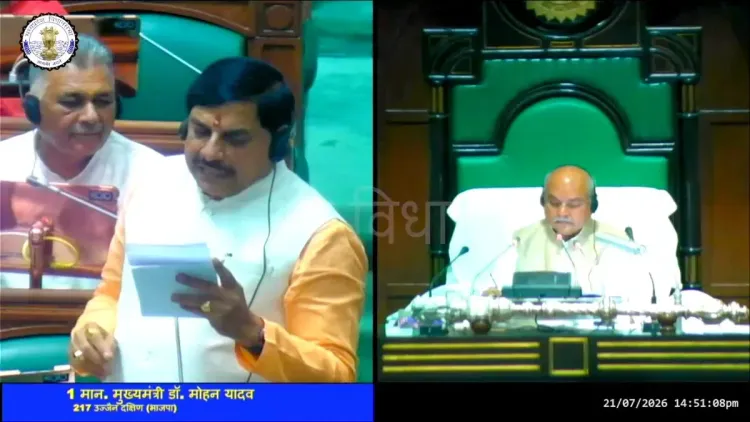
Madhya Pradesh Chief Minister Dr. Mohan Yadav announced that over 10 lakh citizens responded to a state consultation drive that had invited more than 3.49 crore residents to submit suggestions ahead of the Vidhan Sabha session, calling the turnout a matter of pride.
Key Takeaways
3 crore 49 lakh+ Madhya Pradesh citizens were invited by the state government to submit suggestions in a pre-Vidhan Sabha consultation drive.
More than 10 lakh citizens responded, according to Chief Minister Dr.
Mohan Yadav's post on 22 July 2026 .
The exercise was described as a vimarsh (deliberative consultation) and is linked to the #VidhanSabhaMP hashtag.
The drive follows a pattern of digital and SMS-based citizen outreach seen across BJP-governed states over the past decade.
The compiled suggestions are expected to be referenced during the next sitting of the Madhya Pradesh Vidhan Sabha .
Madhya Pradesh Chief Minister Dr. Mohan Yadav announced on Wednesday, 22 July 2026 that more than 10 lakh citizens responded to a state government consultation drive that had invited over 3 crore 49 lakh residents to submit suggestions ahead of the Madhya Pradesh Vidhan Sabha session.
Context
In a post on X, Dr. Yadav wrote: 'मुझे गर्व है, प्रदेश के 10 लाख से ज्यादा लोगों का समर्थन मिला' ('I am proud that more than 10 lakh people of the state extended their support'). The drive was framed as a vimarsh — a deliberative consultation — inviting citizens to submit legislative or policy suggestions to the state government. The hashtag #VidhanSabhaMP anchored the campaign to the state legislature.
The announcement positions the exercise as a milestone in participatory governance for Madhya Pradesh, a state of over 8 crore residents whose unicameral assembly is currently controlled by the BJP.
Policy Backdrop
Large-scale citizen consultation before legislative sessions has grown into a recognisable pattern among Indian state governments over the past decade. The practice draws on frameworks pioneered by the Government of India's MyGov platform, launched in 2014, which enabled structured public input on draft policies and legislation at the national level.
BJP-ruled states in particular have periodically run digital and SMS-based outreach drives ahead of budget cycles or major legislative business, presenting them as evidence of grassroots democratic engagement. The Madhya Pradesh drive follows this broader template, scaling the invitation to a significant share of the state's adult population.
Stakeholders and Impact
The primary stakeholders are Madhya Pradesh's roughly 3 crore 49 lakh citizens who were formally invited to participate, and the more than 10 lakh who submitted responses. For state voters, the exercise signals an open-door approach to the upcoming Vidhan Sabha session and may shape the legislative agenda.
For the Yadav government, the response figure — approximately one in every 35 invited citizens — offers a data point to demonstrate public engagement. Civil society groups and opposition parties may scrutinise how the compiled suggestions are reflected in actual legislation or policy orders.
What's Next
Attention will now turn to the next sitting of the Madhya Pradesh Vidhan Sabha, where the government is expected to reference the consultation's findings. Any bills, budget provisions, or government orders that explicitly cite citizen suggestions from this drive will serve as the clearest measure of the exercise's substantive impact.
If the government publishes a summary of the suggestions received, it would also allow independent scrutiny of which themes dominated public input — and whether legislative outcomes align with them.
Point of View
But its real significance will depend on how transparently the suggestions are compiled and how visibly they shape the Vidhan Sabha's agenda. The exercise also reflects the BJP's broader effort to project mass participation as a pillar of its state-level governance model. Analysts will watch whether the consultation translates into concrete legislative outputs or remains primarily a communications exercise.
NationPress
22 Jul 2026
Frequently Asked Questions
What is the Madhya Pradesh citizen consultation announced by CM Mohan Yadav?
The Madhya Pradesh government invited over 3 crore 49 lakh citizens to submit suggestions — a process called vimarsh — ahead of the state Vidhan Sabha session. Chief Minister Dr. Mohan Yadav announced on 22 July 2026 that more than 10 lakh people responded.
How many people responded to the Madhya Pradesh Vidhan Sabha consultation drive?
According to Chief Minister Dr. Mohan Yadav, more than 10 lakh citizens submitted their suggestions in response to the state government's outreach.
What is #VidhanSabhaMP?
#VidhanSabhaMP is the hashtag used to anchor the Madhya Pradesh government's citizen consultation campaign linked to the state's legislative assembly, the Vidhan Sabha.
What happens to the suggestions collected in the MP citizen consultation?
The suggestions are expected to be discussed during the next Madhya Pradesh Vidhan Sabha session. Any bills or policy orders that cite the consultation will indicate how the public input was used.
How does Madhya Pradesh's citizen consultation compare to similar drives in other states?
Several Indian states, particularly those governed by the BJP, have run digital and SMS-based citizen outreach drives ahead of legislative sessions. The practice draws on the national MyGov model launched in 2014, and the Madhya Pradesh drive follows a similar participatory governance template.