CM Soren launches JFTI, signs MoU with SRFTI Kolkata
Synopsis
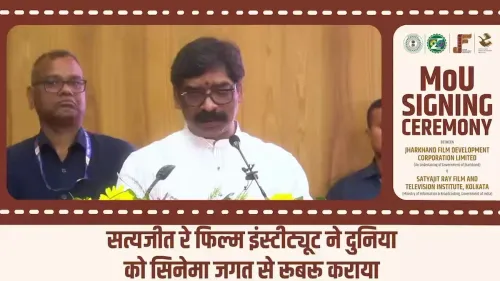
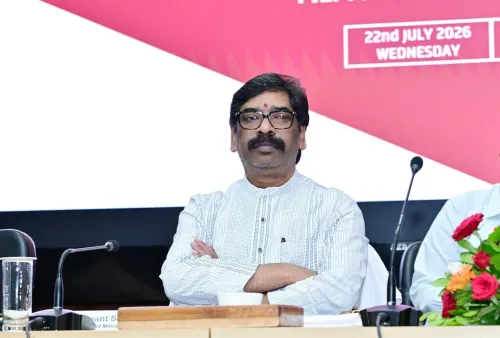
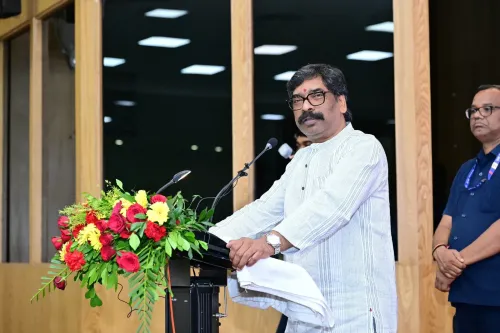
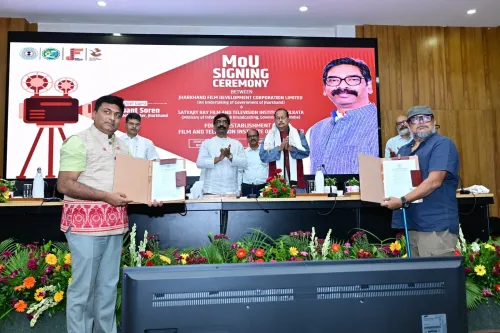
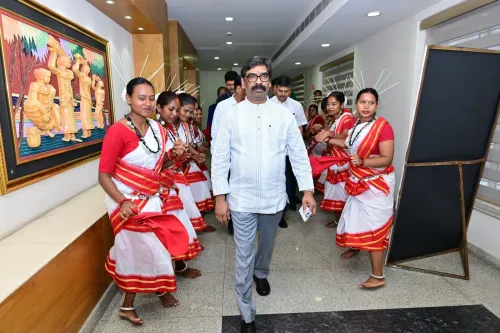
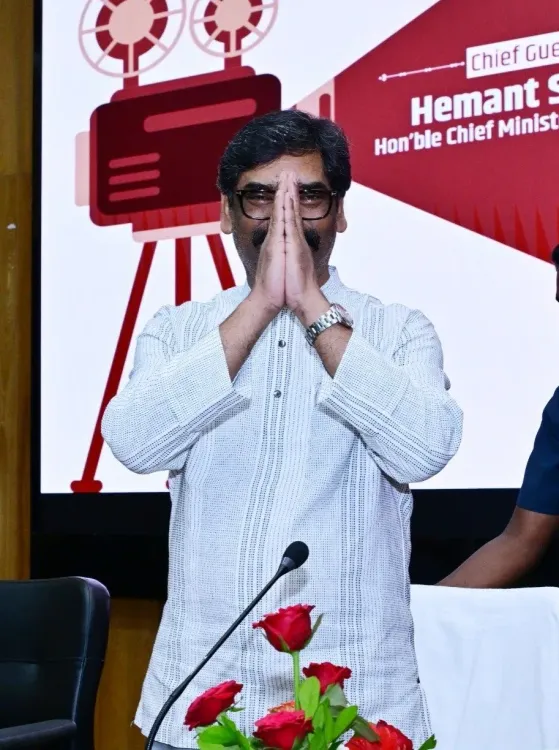
Jharkhand Chief Minister Hemant Soren inaugurated the Jharkhand Film and Television Institute on 22 July 2026, anchored by an MoU between the Jharkhand Film Development Corporation and SRFTI Kolkata. The institute will offer training in filmmaking, animation, editing and digital content, aiming to take state talent to national and global platforms.
Key Takeaways
Jharkhand Film and Television Institute (JFTI) was formally inaugurated by CM Hemant Soren on 22 July 2026 .
An MoU between the Jharkhand Film Development Corporation Limited and the Satyajit Ray Film and Television Institute, Kolkata underpins the institute.
Initial courses will cover sound designing, editing, animation, script and screenplay writing, cinematography, direction and film production .
The initiative targets both traditional cinema and the growing OTT and digital content sector.
SRFTI , established by the Government of India in 1995 , is one of the country's premier national film education institutions.
The partnership aims to give Jharkhand youth access to world-class creative industry training without leaving the state.
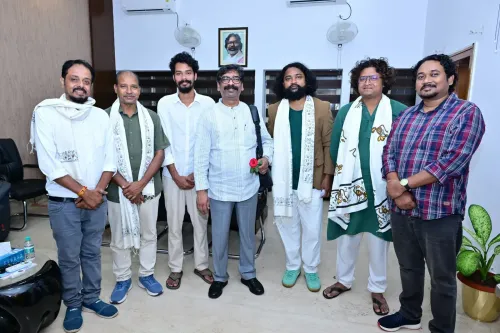
Jharkhand Chief Minister Hemant Soren on Wednesday, 22 July 2026 announced the inauguration of the Jharkhand Film and Television Institute (JFTI), describing it as a new beginning for the state's youth in the film, media and creative industries. The launch is backed by a memorandum of understanding between the Jharkhand Film Development Corporation Limited (JFDCL) and the Satyajit Ray Film and Television Institute (SRFTI), Kolkata, one of India's premier national film education bodies.
Context
Posting on X, CM Soren described the occasion as 'ek nayi shuruaat' (a new beginning) for Jharkhand's youth. He stated that through the MoU, young people from the state would gain access to 'world-class technical education and skilling' in film, media and the creative industry. He extended greetings to all, signing off with the traditional Adivasi salutation 'Johar.'
The initial phase of training under JFTI will cover sound designing, editing, animation, script and screenplay writing, cinematography, direction and film production. Soren also highlighted that the initiative would open doors in the OTT and digital content space, not just traditional cinema.
Policy Backdrop
The Satyajit Ray Film and Television Institute was established by the Government of India in 1995 as an autonomous institute under the Ministry of Information and Broadcasting, with its campus in Kolkata. It is recognised as one of the country's foremost institutions for specialised film education, offering programmes in direction, cinematography and allied disciplines.
The partnership between JFDCL and SRFTI follows a broader national pattern in which state governments have entered into MoUs with established national film institutes to build regional training capacity. This reflects a growing policy emphasis on the creative economy as a vehicle for youth employment and skill development, particularly as the OTT and digital content sector expands rapidly across India.
Stakeholders and Impact
The primary beneficiaries are Jharkhand's youth — aspiring filmmakers, animators, writers and technicians who have historically had to relocate to cities such as Mumbai, Pune or Kolkata to access comparable training. A state-level institute backed by SRFTI's academic framework could reduce that barrier significantly.
CM Soren framed the initiative as a means to take 'Jharkhand's talent to national and global platforms,' signalling an intent to position the state as a contributor to India's broader media and entertainment ecosystem. The Jharkhand Film Development Corporation is expected to serve as the institutional anchor for the new institute's operations.
What's Next
Attention will now turn to the rollout of the first batch of admissions under JFTI and the detailed curriculum to be implemented in partnership with SRFTI. Observers will also watch for any complementary state film policy announcements — such as production incentives or location-shooting facilitation — that could reinforce the institute's long-term viability.
If sustained, the JFTI–SRFTI partnership could establish Jharkhand as a model for how smaller states leverage national institutional expertise to build homegrown creative economies, with implications for similar efforts across eastern and central India.
Point of View
The Soren government is signalling that Jharkhand intends to compete in the national creative economy rather than merely supply talent to it. The emphasis on OTT and digital content alongside traditional cinema is strategically astute, given that streaming platforms have dramatically lowered the barriers to entry for regional storytelling. For the JMM-led government, which has consistently sought to foreground Jharkhand's distinct cultural identity, a film institute also carries symbolic weight — cinema is a powerful medium for projecting that identity outward. The real test will be whether the MoU translates into functional curriculum delivery, faculty deployment and, ultimately, industry placements for the first cohort of graduates.
NationPress
22 Jul 2026
Frequently Asked Questions
What is the Jharkhand Film and Television Institute (JFTI)?
JFTI is a new state-level film and media training institute inaugurated by Jharkhand Chief Minister Hemant Soren on 22 July 2026. It will offer courses in filmmaking, animation, editing, cinematography and digital content creation, backed by an MoU with the Satyajit Ray Film and Television Institute in Kolkata.
What courses will JFTI offer?
In its initial phase, JFTI will provide training in sound designing, editing, animation, script and screenplay writing, cinematography, direction and film production, with scope extended to OTT and digital content platforms.
What is the MoU between JFDCL and SRFTI about?
The MoU between the Jharkhand Film Development Corporation Limited and the Satyajit Ray Film and Television Institute, Kolkata, enables Jharkhand youth to access world-class technical education and skilling in film and media through the newly launched JFTI.
What is the Satyajit Ray Film and Television Institute?
The Satyajit Ray Film and Television Institute (SRFTI) is an autonomous national institute established by the Government of India in 1995 and located in Kolkata. It is one of India's premier institutions for specialised film education, covering direction, cinematography and related disciplines.
How will JFTI benefit Jharkhand youth?
JFTI will give aspiring filmmakers, animators and media professionals in Jharkhand access to nationally accredited training without having to relocate to cities like Mumbai or Kolkata, while also opening pathways into the rapidly growing OTT and digital content industry.