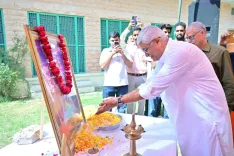
CM Hemant Soren to Witness MoU for Film Institute in Jharkhand

Synopsis
The Chief Minister's Office of Jharkhand announced that Jharkhand Film Development Corporation Ltd. and SRFTI, Kolkata will sign an MoU on July 22, 2026 to establish a Film and Television Institute in the state, in the presence of Chief Minister Hemant Soren.
Key Takeaways
The Jharkhand Film Development Corporation Ltd. (JFDC) and SRFTI, Kolkata will sign an MoU to establish a Film and Television Institute in Jharkhand.
Chief Minister Hemant Soren will be present at the MoU signing ceremony on July 22, 2026 .
SRFTI is an autonomous body under the Ministry of Information and Broadcasting , established in 1995 and based in Kolkata .
The initiative aims to provide professional film and television training to Jharkhand's youth without requiring them to relocate to other states.
The move aligns with a national pattern of Indian states partnering with premier film institutes to decentralise media education.
Specific details including location, funding, and admission timelines are yet to be publicly announced.
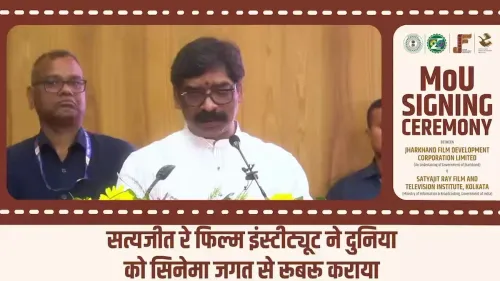
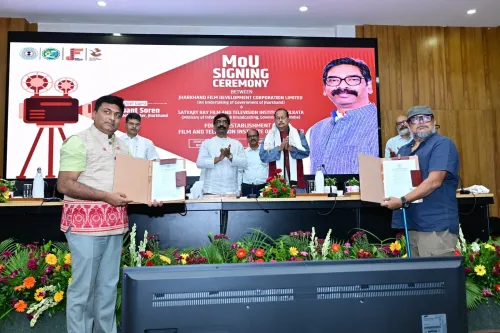
Ranchi, July 22, 2026 — The Chief Minister's Office of Jharkhand announced on Wednesday that Jharkhand Film Development Corporation Ltd. (JFDC) and the Satyajit Ray Film and Television Institute (SRFTI), Kolkata will sign a Memorandum of Understanding (MoU) to establish a Film and Television Institute in the state, in the presence of Chief Minister Hemant Soren.
Context
The Chief Minister's Office described the agreement as 'aitihāsik samajhautā' (a historic agreement), marking a formal step towards creating dedicated film education infrastructure in Jharkhand. The MoU signing brings together the state's film promotion body and one of India's premier national-level film training institutions under a single institutional framework.
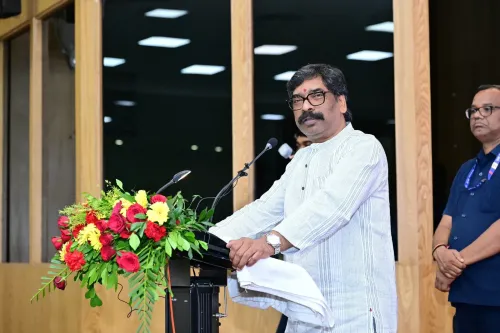
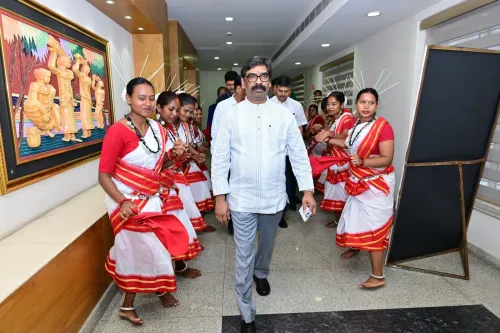
Chief Minister Hemant Soren of the Jharkhand Mukti Morcha (JMM) is personally presiding over the ceremony, signalling the political weight the state government attaches to the initiative.
Policy Backdrop
SRFTI was established in 1995 as an autonomous body under the Union Ministry of Information and Broadcasting, conceived as a national counterpart to the Film and Television Institute of India (FTII) in Pune — extending professional film and television training beyond western India. It is named after the legendary Bengali filmmaker Satyajit Ray.
The Jharkhand Film Development Corporation Ltd. is the state-owned entity mandated to promote film production, cultural infrastructure, and related creative industries within the state. A partnership between JFDC and SRFTI pools state administrative capacity with national academic expertise, a model increasingly adopted by Indian states seeking to decentralise professional media training.
Across India, several states have entered similar institutional partnerships with SRFTI and FTII to build regional film schools that simultaneously serve national skill-development goals and amplify local-language cinema. Jharkhand's move fits squarely within this broader pattern.
Stakeholders and Impact
The primary beneficiaries are aspiring filmmakers and media professionals from Jharkhand, who currently must travel to Kolkata, Pune, or other cities for comparable professional training. A state-based institute would lower geographic and financial barriers to quality film education.
The initiative also carries cultural significance for Jharkhand's tribal communities, whose stories and languages have historically received limited representation in mainstream Indian cinema. An institute rooted in the state could nurture storytellers equipped to document and amplify these narratives.
The state government, through the JFDC, stands to gain a structured institutional vehicle for positioning Jharkhand as a destination for film production and creative talent development.
What's Next
Observers will watch for the specific terms of the MoU, including the proposed location of the institute, course offerings, intake capacity, faculty arrangements, and any state budget allocations or land allotments for the campus. The timeline for the first batch of admissions will be a key indicator of how quickly the agreement translates into operational reality.
If executed on schedule, the institute could mark a significant milestone in Jharkhand's efforts to build institutional capacity in the creative economy — and set a template for other eastern Indian states with comparable cultural resources but limited media training infrastructure.
Point of View
Presiding over the signing carries political currency: it frames the JMM government as a facilitator of aspirational, knowledge-economy opportunities for Jharkhand's youth, not merely a welfare state. The choice of SRFTI as partner is also strategic — it lends national academic credibility to what is otherwise a state-level initiative, making it harder to dismiss as symbolic. The real test, however, will be whether the MoU translates into a functional institute with land, budget, and accredited courses within a credible timeframe.
NationPress
20 Oct 2026
Frequently Asked Questions
What is the MoU signed between JFDC and SRFTI about?
The MoU is an agreement between the Jharkhand Film Development Corporation Ltd. and the Satyajit Ray Film and Television Institute, Kolkata, to establish a Film and Television Institute in Jharkhand, aimed at providing professional training in cinema and television to youth in the state.
What is SRFTI and where is it located?
SRFTI, or the Satyajit Ray Film and Television Institute, is an autonomous national-level institute under the Union Ministry of Information and Broadcasting, established in 1995 and located in Kolkata. It offers professional training in filmmaking, direction, cinematography, and related disciplines.
Who is Hemant Soren and why is he associated with this announcement?
Hemant Soren is the Chief Minister of Jharkhand from the Jharkhand Mukti Morcha (JMM). He presided over the MoU signing ceremony, underscoring the state government's commitment to the initiative.
Where will the new Film and Television Institute in Jharkhand be located?
The specific location of the proposed Film and Television Institute in Jharkhand has not been publicly announced as of the MoU signing on July 22, 2026. Details such as the campus site, funding, and course offerings are expected to be disclosed in subsequent announcements.
How does Jharkhand's film institute plan compare to similar initiatives in other states?
Several Indian states have partnered with SRFTI and FTII to establish regional film training institutions, decentralising professional media education and supporting local-language cinema. Jharkhand's MoU follows this established national pattern of state-level creative-sector capacity building.