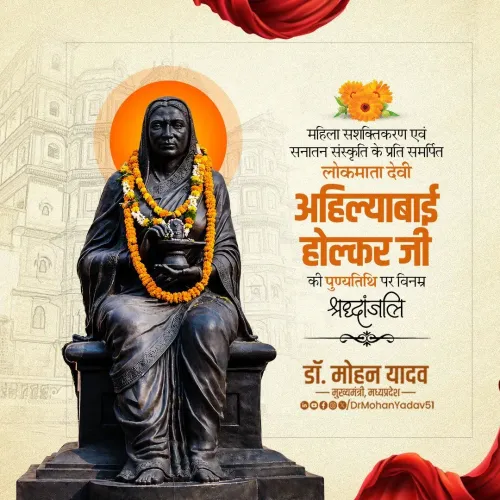
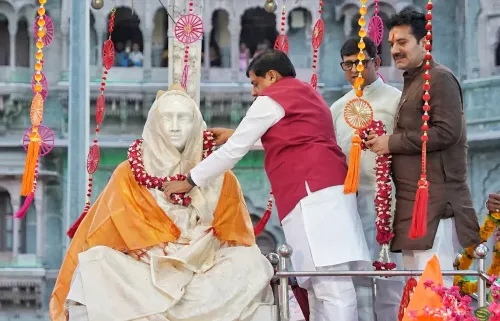
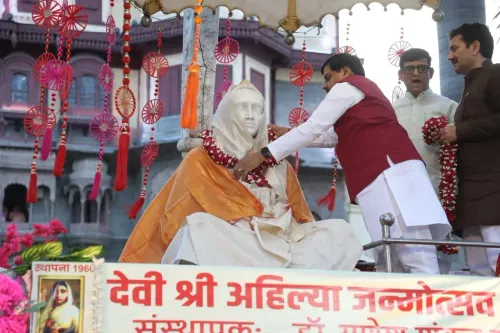
CM Mohan Yadav pays tribute to Ahilyabai Holkar on death anniversary
Synopsis
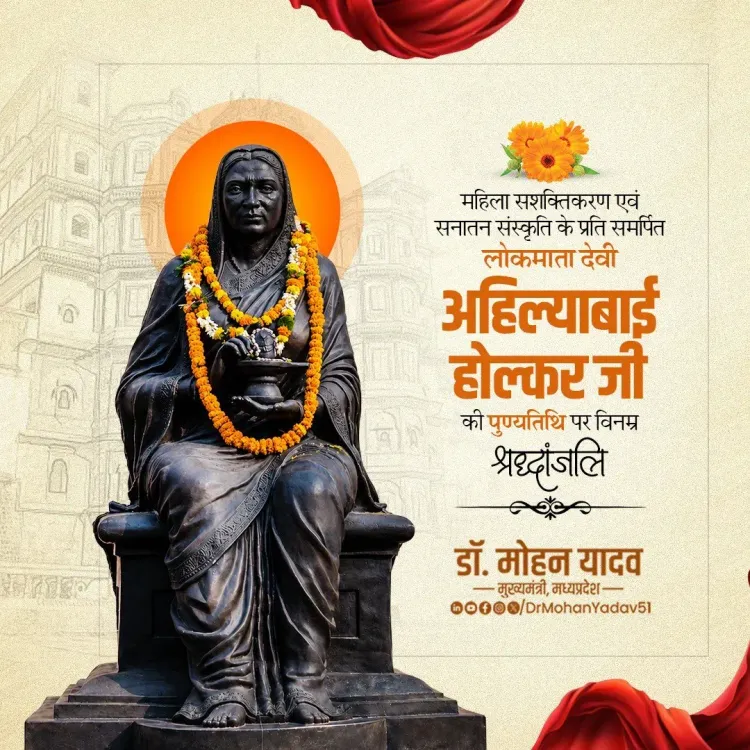
Madhya Pradesh Chief Minister Dr. Mohan Yadav paid tribute to 18th-century Malwa ruler Ahilyabai Holkar on her death anniversary, honouring her legacy of temple restoration, public welfare, and just governance as an enduring heritage of Indian culture.
Key Takeaways
Mohan Yadav , Chief Minister of Madhya Pradesh, paid tribute to Devi Ahilyabai Holkar on her death anniversary on August 13, 2026 .
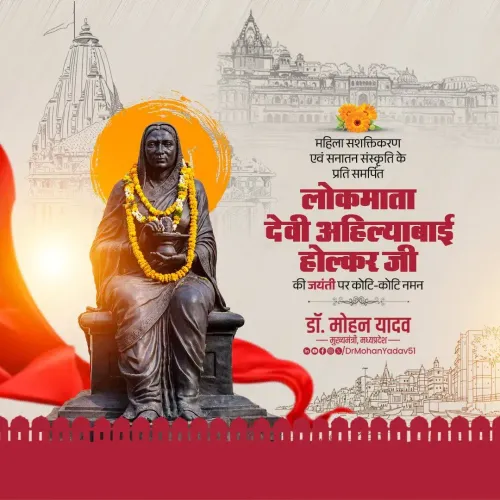
He referred to her as 'Lokmata' — mother of the people — and praised her dedication to public welfare and Sanatan culture.
Ahilyabai Holkar ruled the Malwa kingdom from Indore in the 18th century and is credited with restoring temples and ghats at pilgrimage sites across India.
The tribute fits a consistent pattern of BJP-governed states publicly honouring pre-colonial Hindu rulers on key anniversaries.
Madhya Pradesh , as the historic seat of the Holkar dynasty, holds a direct cultural and administrative connection to her legacy.
On the death anniversary of one of India's most revered 18th-century rulers, Madhya Pradesh Chief Minister Dr. Mohan Yadav offered his homage to Devi Ahilyabai Holkar on Thursday, August 13, 2026, honouring her legacy of righteous governance and the restoration of sacred sites across the subcontinent.
In his post, Dr. Yadav described Ahilyabai as 'Lokmata' — 'mother of the people' — and paid tribute to her as someone 'dedicated to public welfare and the preservation of Sanatan culture.' He called her resolve toward good governance, service, and justice 'inspirational,' and highlighted her contribution to the reconstruction and protection of temples, ghats, and religious sites across India as 'an invaluable heritage of Indian culture.'
The queen who rebuilt a civilisation's sacred geography
Ahilyabai Holkar ruled the Malwa kingdom from Indore in the latter half of the 18th century, and her reign is remembered not merely for administrative order but for an extraordinary programme of religious patronage. She funded the reconstruction or renovation of major Hindu temples and ghats at pilgrimage sites stretching from Varanasi to Dwarka — a network that cut across regions and dynasties. The Kashi Vishwanath temple in Varanasi and the ghats at several sacred river confluences bear the imprint of her patronage. For Hindu devotees and heritage scholars alike, she remains a singular figure: a ruler who wielded temporal power in service of cultural continuity.
Indore, the historic seat of the Holkar dynasty in Madhya Pradesh, holds a particular connection to her memory. The city's identity is inseparable from her reign, and the state government periodically invokes her legacy in the context of heritage conservation and cultural governance.
A BJP pattern — and why Madhya Pradesh leads it
Dr. Yadav's tribute is part of a consistent, deliberate pattern across BJP-governed states: publicly marking Ahilyabai Holkar's death anniversary with official statements that draw a direct line between her temple-restoration work and contemporary cultural priorities. For Madhya Pradesh specifically, the gesture carries extra weight — this is the land she governed, and the Holkar-era sites here remain active heritage and pilgrimage destinations. The state's cultural custodianship of her legacy is both historical and political, rooted in a broader project of foregrounding pre-colonial Hindu rulers in official memory.
What to watch: whether the anniversary triggers any concrete state-level announcements around Holkar-era heritage sites — restorations, tourism corridors, or commemorative events — that translate tribute into policy action.
Point of View
The Chief Minister of her home state draws a symbolic continuity between Holkar-era cultural stewardship and contemporary BJP rule in Madhya Pradesh. The framing of Ahilyabai as 'Lokmata' also signals an appeal to women voters and Hindu devotees simultaneously — a dual constituency that has proved electorally significant in the state. Whether the tribute translates into tangible heritage policy announcements will determine its lasting political weight.
NationPress
13 Aug 2026
Frequently Asked Questions
Who was Ahilyabai Holkar and why is she remembered?
Ahilyabai Holkar was an 18th-century ruler of the Malwa kingdom, based in Indore, known for her just administration and for funding the reconstruction of Hindu temples and ghats at pilgrimage sites across India, including the Kashi Vishwanath temple in Varanasi.
When is Ahilyabai Holkar's death anniversary?
Ahilyabai Holkar's death anniversary falls in August each year. In 2026, Chief Minister Dr. Mohan Yadav paid tribute to her on August 13.
Why did Madhya Pradesh CM Mohan Yadav pay tribute to Ahilyabai Holkar?
Dr. Mohan Yadav honoured Ahilyabai Holkar on her death anniversary, citing her contributions to public welfare, good governance, and the preservation of temples and religious sites, which he called an invaluable heritage of Indian culture.
What is the connection between Ahilyabai Holkar and Madhya Pradesh?
Ahilyabai Holkar ruled the Malwa kingdom from Indore, which is today a major city in Madhya Pradesh. Indore's identity and several heritage sites in the state are directly linked to her reign and patronage.
What does 'Lokmata' mean in reference to Ahilyabai Holkar?
'Lokmata' is a Hindi honorific meaning 'mother of the people.' It is widely used to describe Ahilyabai Holkar in recognition of her welfare-oriented governance and deep connection to ordinary citizens during her rule.