CM Mohan Yadav, Rail Minister Launch Vindhya Rail Sections
Synopsis
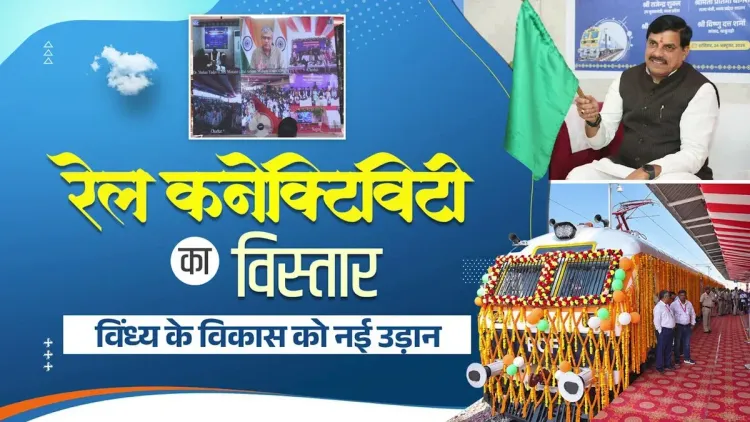
Chief Minister Dr. Mohan Yadav and Union Railway Minister Ashwini Vaishnaw virtually inaugurated the Satna–Devendranagar and Rewa–Churhat rail sections on 24 October 2026, expanding rail connectivity across Madhya Pradesh's historically underserved Vindhya and Bundelkhand regions.
Key Takeaways
Two new rail sections — Satna–Devendranagar and Rewa–Churhat — were virtually inaugurated on 24 October 2026 .
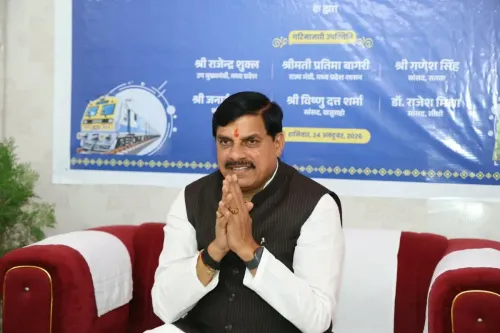
Mohan Yadav and Union Railway Minister Ashwini Vaishnaw jointly presided over the ceremony.
The sections expand rail access in Madhya Pradesh's Vindhya and Bundelkhand regions , historically underserved by rail infrastructure.
The inauguration follows a long-running central-state collaboration model for district-level rail expansion across MP.
Actual train schedules and operationalisation details have not yet been officially announced for either section.
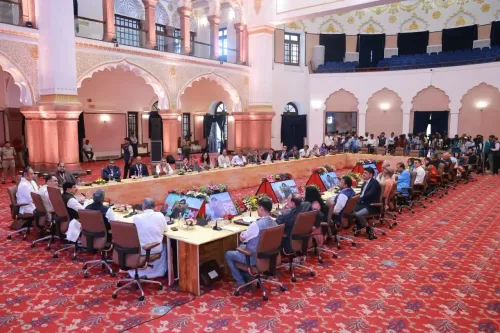
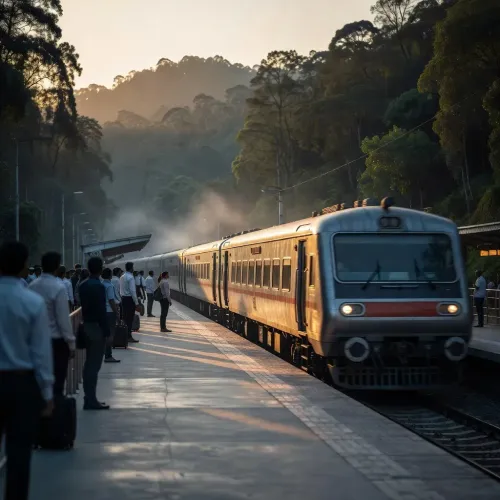
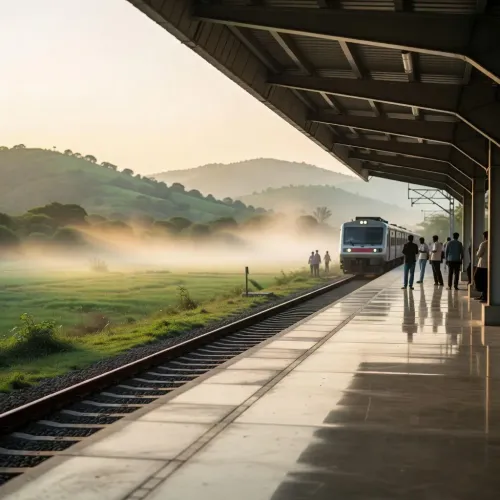
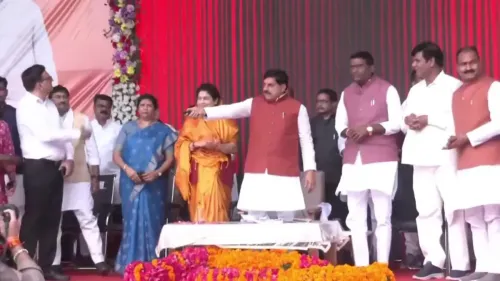
Two rail sections that have long been missing links in one of India's most underserved highland belts got their inauguration moment on Saturday, 24 October 2026 — as Chief Minister Dr. Mohan Yadav and Union Railway Minister Ashwini Vaishnaw jointly threw open the Satna–Devendranagar and Rewa–Churhat rail sections through a virtual ceremony, extending the iron network deeper into Madhya Pradesh's Vindhya and Bundelkhand regions.
The Chief Minister's Office announced the development on X, describing the inauguration as a 'reil connectivity ki nayi saugaat' — a new gift of rail connectivity — to the Vindhya belt. The event was marked by highlights from the joint programme, with both leaders participating remotely.
What the Satna–Devendranagar and Rewa–Churhat lines open up
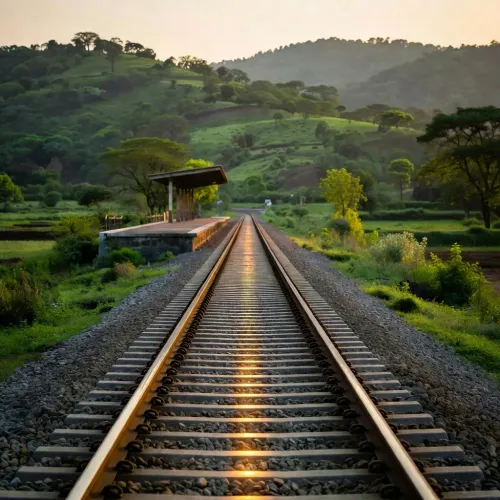
The Satna–Devendranagar section lies within Satna district, plugging a local gap in a district that already sits on the main Jabalpur–Allahabad trunk corridor but lacks branch-level reach into its hinterland. The Rewa–Churhat section extends rail access further into Rewa district, a densely populated but topographically challenging zone where road transport has historically carried the entire burden of passenger and freight movement.
Together, the two sections represent exactly the kind of incremental, district-level expansion that planners have argued matters more to daily commuters and small traders than headline high-speed corridors. For residents of villages and towns along these alignments, the difference is direct: a train instead of an hours-long road journey on winding routes.
Vindhya and Bundelkhand — why connectivity here is a long-pending promise
The Vindhya region — a hilly arc across eastern Madhya Pradesh — and the adjoining Bundelkhand plateau to the north have been cited repeatedly in development audits as areas where rail density lags far behind population and economic potential. Indian Railways has pursued new lines and gauge-conversion projects across Madhya Pradesh since the 2010s, but the terrain and the relatively lower freight density of these districts have historically slowed project timelines.
The central-state collaboration model — with the Union Railway Ministry funding and clearing projects while the state government coordinates land acquisition and local facilitation — has been the primary vehicle for these expansions. Saturday's virtual inauguration, co-chaired by a state chief minister and the Union railway minister, is a textbook instance of that joint framework in action.
What follows the ribbon-cutting
The operationalisation of newly inaugurated sections — actual train schedules, station staffing, freight agreements — typically follows weeks or months after a ceremonial launch, and no official schedule has yet been announced for these two sections. Watchers of Madhya Pradesh rail development will also track whether Saturday's event foreshadows further announcements on additional phases, station upgrades, or electrification along the broader Vindhya and Bundelkhand corridors.
For now, the message from Bhopal and New Delhi is unambiguous: the connectivity deficit in one of central India's most historically underserved regions is being chipped away, one section at a time.
Point of View
Visibly delivering rail connectivity in Vindhya and Bundelkhand — areas with significant voter populations and chronic development grievances — carries clear political logic. The deeper question is whether ceremonial launches translate into operational services on predictable timelines, which has been the historic weak link in central India's rail expansion story.
NationPress
24 Oct 2026
Frequently Asked Questions
Which two rail sections were inaugurated in Madhya Pradesh on 24 October 2026?
The Satna–Devendranagar and Rewa–Churhat rail sections were virtually inaugurated on 24 October 2026 by Chief Minister Dr. Mohan Yadav and Union Railway Minister Ashwini Vaishnaw.
Who inaugurated the Satna–Devendranagar rail section?
Madhya Pradesh Chief Minister Dr. Mohan Yadav and Union Railway Minister Ashwini Vaishnaw jointly inaugurated the section through a virtual ceremony.
Where is the Rewa–Churhat rail line located?
The Rewa–Churhat rail section is located in Rewa district of Madhya Pradesh, in the Vindhya region of eastern MP.
Why is rail connectivity important for the Vindhya and Bundelkhand regions?
Both regions have historically had limited rail infrastructure relative to their population size, forcing residents to depend on road transport across hilly and rural terrain for passenger and freight movement.
When will trains start running on the newly inaugurated sections?
No official train schedule has been announced yet for either section. Operationalisation typically follows the ceremonial inauguration by weeks or months.