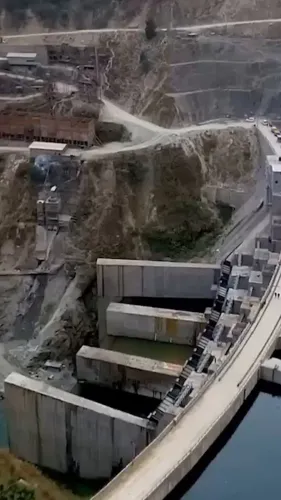
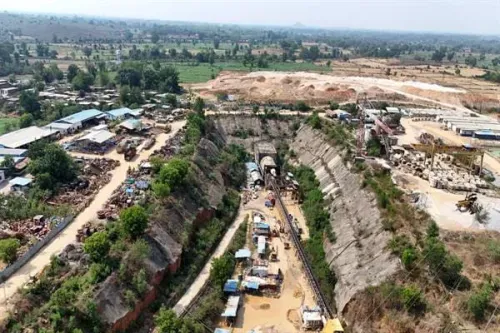
CM Mohan Yadav: Sleemanabad Tunnel to irrigate 2.5L hectares
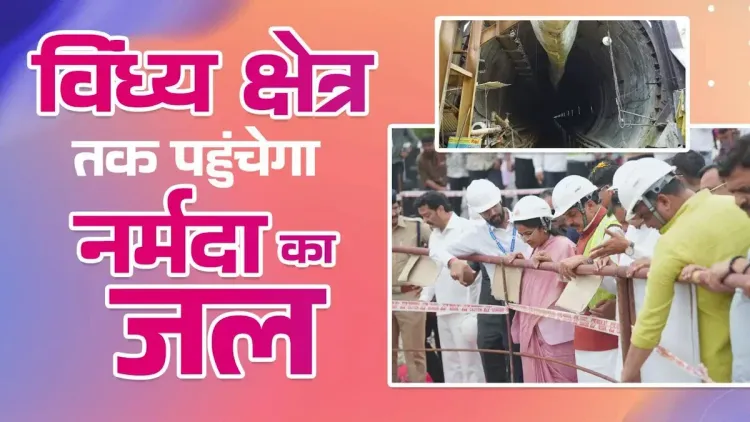
Synopsis
The Sleemanabad Tunnel in Madhya Pradesh has been completed in 2026 after 17 years, CM Dr. Mohan Yadav announced. The project will channel Narmada water to the Vindhya region, providing irrigation to 2.5 lakh hectares of farmland and marking a milestone in the state's water management strategy.
Key Takeaways
The Sleemanabad Tunnel was completed in 2026 after 17 years of sustained engineering effort in Madhya Pradesh .
Mohan Yadav described the project as an outstanding example of science, engineering, and water management.
The tunnel will transfer Narmada river water across the Vindhya range to historically irrigation-deficit districts.
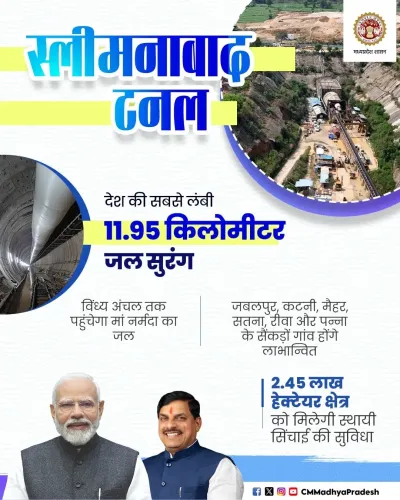
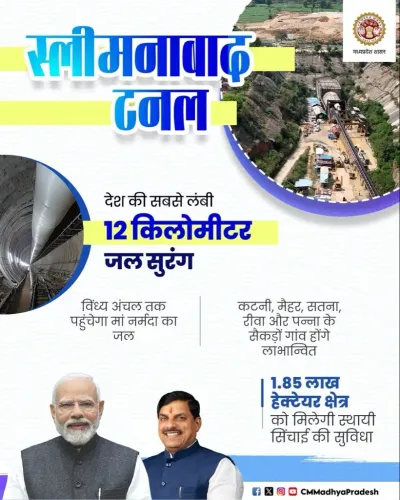
An estimated 2.5 lakh hectares of agricultural land in the Vindhya region will benefit from assured irrigation.
The project spans multiple political administrations, with roots in infrastructure plans dating to the late 2000s.
The next phase involves rolling out distribution canals and field channels to deliver water to individual farm holdings.
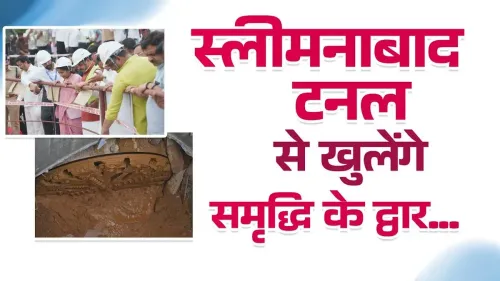
The Chief Minister's Office of Madhya Pradesh announced on 17 July 2026 that the Sleemanabad Tunnel — a long-gestating irrigation project designed to carry Narmada river water across the Vindhya range — has been completed after 17 years of engineering effort, with Chief Minister Dr. Mohan Yadav describing it as a landmark achievement for the state's farmers and water management.
Context
Announcing the completion, CM Dr. Mohan Yadav said: 'After continuous efforts spanning 17 years, the dream of the Sleemanabad Tunnel has been realised in 2026. Despite numerous technical challenges, this historic achievement was made possible by the unwavering resolve of engineers and experts.' The tunnel is intended to channel Narmada basin water into the Vindhya region — a geographic belt of Madhya Pradesh that has historically faced chronic irrigation deficits due to its position beyond the natural command area of the river.
The Chief Minister's post, shared on the official @CMMadhyaPradesh account, described the project as 'vigyan, engineering aur jal prabandhan ka utkrisht udaharan' — an outstanding example of science, engineering and water management — and said it would give 'new direction to farmers' prosperity and regional development.'
Policy Backdrop
Madhya Pradesh has pursued the expansion of Narmada-linked irrigation infrastructure through successive state water resource development plans beginning in the late 2000s. The Sleemanabad Tunnel is part of a broader inter-basin transfer strategy aimed at reducing the state's dependence on erratic monsoon rainfall for agricultural output in districts that lie beyond the river's natural valley command.
The project's origins predate the current administration: significant groundwork was laid during the long tenure of former Chief Minister Shivraj Singh Chouhan, who led the state from 2005 to 2018 and again from 2020 to 2023, and during whose years in office many Narmada-linked canal and tunnelling works were initiated. Dr. Mohan Yadav took charge as Chief Minister in December 2023 and has continued to prioritise hydraulic infrastructure as a pillar of farmer welfare policy.
Stakeholders and Impact
According to the Chief Minister's statement, the tunnel will bring irrigation benefits to 2.5 lakh hectares of agricultural land in the Vindhya region. Farmers in this belt — many of whom depend on rain-fed cultivation — stand to gain assured water access for at least one additional crop cycle per year, potentially transforming the local agrarian economy.
The project also carries significance for the broader engineering community: completing a tunnel of this scale through the geologically complex Vindhya terrain required sustained technical problem-solving over nearly two decades. The CM's post specifically acknowledged the 'unwavering resolve' of the engineers and specialists who drove the project to completion despite multiple technical setbacks.
What's Next
With the tunnel structure now complete, attention will shift to the rollout of distribution canals, field channels, and last-mile water delivery infrastructure from the tunnel outlet to individual farm holdings across the Vindhya command area. State budget allocations for this next phase of works, along with a formal commissioning timeline, are expected to be announced in the coming months.
The completion of the Sleemanabad Tunnel sets a precedent for long-gestation infrastructure in Madhya Pradesh and may accelerate political momentum behind other pending inter-basin water transfer proposals in the state, as the government positions hydraulic engineering as a central plank of its rural development agenda ahead of future electoral cycles.
Point of View
Requiring continuity of administrative will across governments. CM Dr. Mohan Yadav's decision to publicly claim the milestone signals an intent to anchor his tenure's identity around tangible delivery for the farming community, particularly in the electorally significant Vindhya belt. The 2.5 lakh hectare irrigation promise, if matched by swift distribution infrastructure, could meaningfully shift the agrarian calculus in a region that has long felt underserved by Narmada valley projects. More broadly, the project underscores Madhya Pradesh's role as a laboratory for inter-basin water transfer engineering in central India.
NationPress
17 Jul 2026
Frequently Asked Questions
What is the Sleemanabad Tunnel in Madhya Pradesh?
The Sleemanabad Tunnel is an irrigation infrastructure project in Madhya Pradesh designed to transfer water from the Narmada river basin across the Vindhya mountain range to irrigate farmland in the historically water-scarce Vindhya region.
How long did the Sleemanabad Tunnel take to build?
According to CM Dr. Mohan Yadav's announcement, the Sleemanabad Tunnel took 17 continuous years of effort before its completion in 2026, with engineers overcoming multiple technical challenges during that period.
How many hectares will the Sleemanabad Tunnel irrigate?
The Chief Minister's Office stated that the tunnel will provide irrigation benefits to 2.5 lakh hectares of agricultural land in the Vindhya region of Madhya Pradesh.
Who announced the completion of the Sleemanabad Tunnel?
Chief Minister Dr. Mohan Yadav announced the completion through the official Chief Minister's Office account on X on 17 July 2026, crediting engineers and experts for their resolve in finishing the project.
What river supplies water through the Sleemanabad Tunnel?
The Sleemanabad Tunnel channels water from the Narmada river, one of central India's major rivers, redirecting it to the Vindhya region which lies outside the river's natural command area.